
Truneh Girma
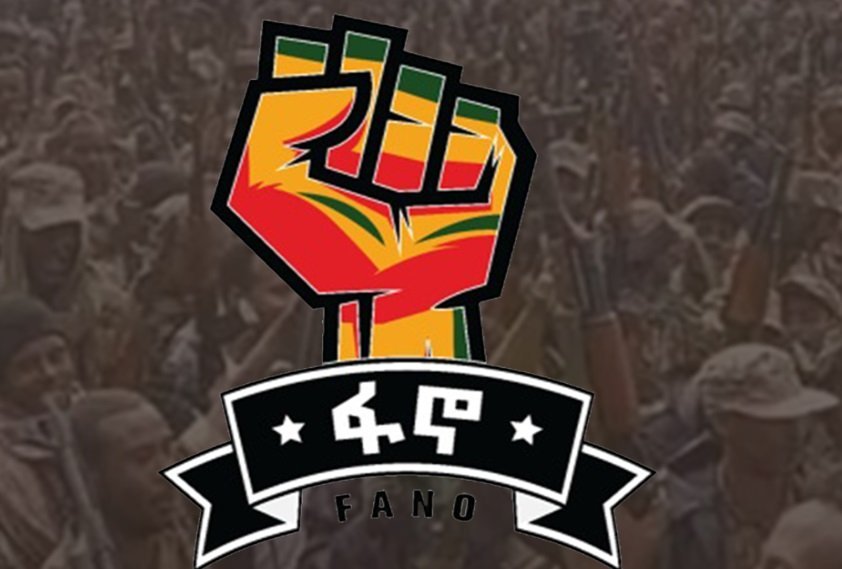
We have witnessed Fano’s unwavering bravery in the face of overwhelming odds—their courage carved into every scarred trench and fallen brothers and sisters. But equally it is true of their cowardice to make peace and unity among themselves. What happens on the battlefield does not occur at the table. Yes, brave in war but afraid to end it. They charge into the fire without a moment’s hesitation, yet they tremble at the thought of sitting across a table. Their victories are numerous and prove their determination, yet true victory remains out of reach—not from weakness, but from an unfinished story. Is it love of self that hinders unity? Fearing losing themselves in the embrace of their own brothers and sisters.
The current situation where divided Fano operate in their own narrow corner offers no ink for the final chapters—only repetitive lines and endless pain to themselves and to our people. Each decision, delayed or driven by self-interest, pushes resolution further from reach, and adds misery to Amharas and Ethiopians in general. But, for how long? The battlefield speaks in circles and talks of unity limps. Without clarity of vision or the courage to confront hard truths, we remain trapped in a story that repeats itself—louder, longer, but never concluding. We keep fighting in the same places repeatedly instead of advancing to new territories, closer to the center of power. What should be the closing act of healing and rebuilding has become a prolonged pause, heavy with uncertainty and silence and unending suffering to our people. There are reports daily, reports of victories and yet real victories elude us all.
Yes, it is frustrating not to advance to the next chapter because there is no final paragraph for this one. Fano groups talk of unity incessantly but beneath the surface there is no real movement, not willing to sacrifice something they hold dear.
Their slogans of togetherness while guarding their interests close to their vests do not take us anywhere . True negotiation demands vulnerability, compromise, and the courage to lose something for the sake of something greater, like safeguarding the Amhara people from the hands of criminal gangs led by Abiy Ahmed, but instead they drag their feet while the people wait in the shadow of false hope.
The true victor in our failure to unite is not one side or the other—it is Abiy’s criminal gang that thrives in the chaos we allow. Abiy does not need our permission, only our distraction, our disunity, our silence, our confusion and, strongly putting it, our lack of vision. It feeds on the cracks we refuse to seal, the bitterness we will not let go, and the unity we never fully realize. Our weakness is his strength.
As we delay real negotiation for unity, as we cling to fear of each other, we leave the doors wide open for those who destroy without cause but kill with absolute hate. In our failure to come together, they have found their greatest weapon: our division. Of course, Abiy is not alone in his endeavors, he has Amhara stooges at home and those king makers who meddle in fano affairs abroad.
Surprisingly or not, each side of fano claims to want unity, but none are willing to pay its price. Real unity is not achieved through words alone, it is forged for a cause in the discomfort of one’s grandeur, and the humility to admit they need one another. Until they face that, the promises of unity remain empty echoes, and the suffering of the people continues unabated, fulfilling the wishes of Abiy Ahmed and his lackeys. The cry of our people is real because the weight of harsh realities has fallen upon them. Amhara are starving and they are being killed regardless of their ages or their social standing in their respective communities. They are experiencing hardship not only because of war, but also due to a lack of collective action from Fano groups and the absence of support from those who could have advocated for them. Rather, they look away.
Glorifying individual success while ignoring the collective collapse unfolding around us is our failure to understand the existential threat we face. It is not that we do not see danger; it is that we refuse to look beyond ourselves. In our obsession with self-love, we have become blind to the bonds that once held us together. A people divided by ego cannot unite for survival. Our failure to unite and stand against our sworn enemy has left us vulnerable to an eventual demise. The enemy is not strong enough but we are weaker, not because of our fighting capacity, which is much greater than the enemy, but because of lack of unity. Our fano leaders’ posture with pride, our political wannabes debate in circles endlessly over petty grievances—meanwhile, the ground beneath us trembles.
Let fano leaders lay down their pride and come to terms—not for their own gain, but for the survival of a distressed people and a crumbling great country. Blaming one another is counterproductive and the time for that has passed; the time for unity is now, it was yesteryears. Every delay tightens the grip of suffering on our people, every refusal to compromise is another blow to the heart of our country, a bonanza to Abiy Ahmed. No ideology, no ambition, no past betrayal should outweigh the urgency of our collective salvation. If there is still a shred of love for this land, for our people in the hearts of fano leaders, let it manifest in action—let it be seen in the willingness to listen, to reconcile, and to build a common path forward. A fractured leadership cannot heal a broken people. Only together, with purpose and humility, can we begin to rescue what remains and restore the soul of our nation.
Think of the Amhara mother who wakes before dawn to fetch water from a long distance having slept only for a few hours. With meager resources, she stretches everything she has to feed her children and still, she finds a way to offer you, fanos, something to eat. She conceals her hunger and suffering behind a weary smile. That is the Amhara mother; that is the Ethiopian mother. If we cannot be moved by her sacrifice—if her struggle does not stir our will to change—then we are truly lost; Fano leaders, you are truly lost.
Editor’s Note : Views in the article do not necessarily reflect the views of borkena.com
__
Support Borkena : https://borkena.com/subscribe-borkena/
Join our Telegram Channel : t.me/borkena
Like borkena on Facebook
Add your business to Ethiopian Business Listing / Ethiopian Business Directory Business Listing Toronto
Join the conversation. Follow us on X (Formerly Twitter) @zborkena to get the latest Ethiopian News updates regularly. Subscribe to YouTube channel To share information or for submission, send e-mail to info@borkena.com
Great article if there is anyone to listen.