
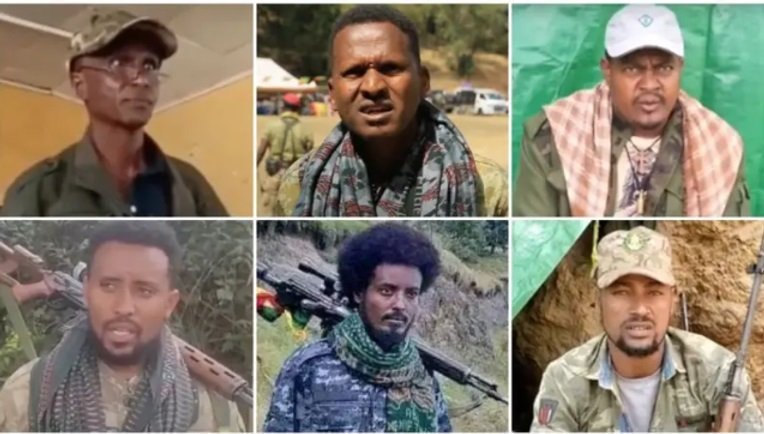
By Sisay Mulu
I know this is a long read. But before you scroll down or turn off, I ask you to read this all the way through. If you are among the thinkers, professionals, activists, and organizers; if you are among those who know what to do, have the resources to do it, and have the platforms to do it; if you’ve ever said you care about the future of our people, now is the time to show it. Unity is no longer a feel-good slogan; it’s our last remaining hope for survival.
By unity, I don’t mean fake alliances or staged public announcements. I mean “real, Amhara-centric unity” rooted in shared sacrifice and looks to uplift all of us. But instead of building that, many among us are helping the forces of division by staying silent, choosing provincialism over collective Amhara interest, by engaging in endless ego driven infightings.
And if the best among us don’t choose to rise above these distractions, then who will? If not now, then when?
This article talks about the main problems that are holding us back: lack of unity, sabotage from within, no strategy, failed narratives, provincialism, dysfunctional diaspora, and the unbearable burden we have put on our people. These are problems that won’t go away on their own. They need leadership. This is more than a request to reflect; it’s a request to act. Because the price of doing nothing now will be paid in lives, in dignity, and in the slow death of a people who still think they are not alone.
1. The Pain of Disunity and Fragmentation
This wasn’t how it was meant to be. Fano emerged out of desperation. But that isn’t the whole thing. Fano also rose out of love: love for our people, our land, our right to exist. The Fano movement began with a very simple and straightforward truth: IF WE DIDN’T DEFEND OURSELVES, NO ONE ELSE WOULD. And we were able to get through the last few years because of that spirit and that shared purpose.
But now? That solidarity is eroding.
Today, after two years, Fano groups are still functioning as autonomous islands throughout the Amhara region. While some communicate with each other, others do not. Each is conducting its own strategy, including its own commands, messages, and battles. The divisions haven’t healed even after umbrella organizations like AFPO and AFNF were established. By establishing those organizations, in a sense, we simply gave our fragmentation new names.
Some are so blinded by their desire for fame, attention, and power that they would prefer the movement to fail than succeed without them at the top. That’s the harsh reality. And it’s never merely a tactical error when teams that ought to be cooperating end up clashing, whether verbally or physically. It’s devastating. It’s a profound betrayal of the mothers who sent their sons to the front lines with only prayer and hope; of the young men who sacrificed their lives for a cause bigger than themselves; and of the elders who are now left to raise orphaned grandchildren at a time when they themselves should not be burdened but cared for.
We are spinning in circles if we don’t have a coordinated command structure or a unified voice. Plans don’t align. Our messages are unclear. In an existential battle against a genocidal regime that requires us to be a unified entity, each group is functioning as its own government. We are in competitions for leadership where coordination is urgently required.
Therefore, it is time for us to be painfully honest to ask ourselves: For what kind of future and for whom are we truly fighting for?
Because, let’s not forget, our adversary is fully committed to destroying us. We are working for them if we remain split in our struggle for survival.
2. When We Cannot Remember Why We Started
A few years ago, everything about Fano was crystal clear. The task. The cost. The pressing need. We were not here to seek fame or power. We raised our arms because our people were being targeted for genocide, uprooted, and wiped out. Since no one else could save us, we were forced to stand up and defend ourselves.
That was what made Fano unique. The toxicity of politics was not involved. Fanoism wasn’t a path to a political career. Life or death was at stake. However, it seems like something has changed recently. The energy surrounding the cause has changed, but the cause itself has not.
Instead of elevating the people, some are now using this struggle as a platform to further their own political ambitions. More attention is paid to those who are in charge than to the tasks at hand. Fano is being pulled in different directions by those trying to make it about themselves instead of the people it was built to protect. Petty rivalries; power games; finger-pointing, zone vs. zone, province vs. province; personality against personality.
Some have modified Fano into a brand —something to wear on social media to win over followers, to gain fame and to settle old scores. However, this is not how it was meant to be. It’s not a competition for popularity. The Fano movement is a popular resistance movement. AND WE LOSE SOMETHING SACRED EACH TIME THE TOPIC TURNS FROM SAVING LIVES TO SAVING REPUTATIONS.
And there are actual repercussions.
Our people are observing. They are disappointed. Disillusioned. Disenchanted. The same young people who proudly rushed to the front lines are now questioning whether this movement is still theirs. When the global community observes this dysfunction, they believe we are just another disjointed force lacking a common goal. Every internal conflict is used by our adversaries as evidence that we are unprepared.
We can’t allow that to be the reality.
This fight must go back to its origins. People must come first, not individual egos and aspirations. Not about who runs what committee, but about freedom and dignity. The battle must be refocused on what is most important: justice, survival, and a future our people can look forward to.
Because we won’t get where we’re going if we lose sight of why and where we started.
3. The Internal Enemy and the Dangers of Infiltration
Sometimes the bullets that kill us come from behind rather than the front. From people we believed to be with us. From people who wear our cause, speak our language, and sit among us, but covertly try to undermine, disparage, and destroy everything we are attempting to accomplish.
Let’s not pretend this isn’t happening.
Since the onset of the Fano resistance, the movement has fought against more than just a genocidal regime. Additionally, it has been gradually eroding from the inside out due to infiltrators, gatekeepers, and opportunists who have crept into our media outlets, diaspora communities, and even frontline organizations. They don’t have to press a button. All they must do is sow doubt. Propagate falsehoods. Claim to speak for unity but instead pit us against one another.
And the truth is… we have opened the doors for them.
Because toxic voices were so loud, we allowed them to take center stage. We confused credibility with charisma and oratorical eloquence. We allowed gossip to masquerade as a strategy. We have chosen to ignore those who destroy others in the name of “the cause”, while carrying out the regime’s work from within our circles.
The damage is real. Leaders are being defamed. Efforts at unity are being sabotaged. Mistrust has paralyzed potential formidable alliances. And while we argue about who is real and who isn’t, the real enemy moves forward in an organized, focused, and deadly way.
We cannot continue to allow saboteurs to act under our name. Those who profit from division cannot continue to control our movement.
This does not imply that we turn on one another or become paranoid. It means that we grow wiser. It means that we create accountable and trustworthy systems. It means that we vet those who speak, lead, and represent. It means that we must stop providing platforms to individuals and groups who profit from chaos and instead begin defending the integrity of Fano and its golden mission.
The Fano movement isn’t a playground. It is a battleground that is the only lifeline for our people. Furthermore, no amount of valor on the battlefield will protect that lifeline if we don’t defend it internally.
4. Provincialism (ጎጠኝነት): A Growing Threat from Within
Provincialism is a trend that is growing alarmingly with the potential to tear the Fano struggle apart from the inside.
What was once a taboo is now louder, bolder, and more destructive. People are using loyalty to their provinces, zones, or districts as a weapon, not for cultural pride, but for power plays, control, and gatekeeping. What should be a collective effort for survival is slowly breaking up into local agendas, each claiming to be the “real” Fano with an “authentic” agenda.
This is not an exaggeration; this is a real and immediate threat.
When we put local provincial loyalty over collective Amhara agendas, when we choose zone over people or districts over dignity, we are helping the enemy. Every tweet that puts one region’s Fano against another, every TikTok video that glorifies one and demonizes the others, every whisper campaign, and every time someone can’t work with someone else because they are from a different province, we are playing into the hands of the enemy. It breaks down the one thing the enemy is most afraid of: Amhara unity.
We need to deal with this threat right away: openly, honestly, and unapologetically. We need to speak out against those who are using factions for their own gain and those who say they are fighting for “their people or province” but are hurting everyone. We need to be brave enough to say, “Your province/zone/district can’t be free if the Amhara people aren’t free.”
Amhara Unity isn’t just a feel-good slogan. This is just plain fact that in a war for our collective future, there’s no space for provincialism.
5. A War Cannot be Won by Spirit Alone.
We would have won the war long ago if courage were all it took.
Fano is an embodiment of selflessness and courage. They have to survive state of the art UAV drones, hunger, sleepless nights, and the constant threat of death, all while carrying only their faith, courage, and an old rifle. But even with this unmatched bravery, for every battlefield victory, there is strategic setback. We still don’t have a system built to convert battlefield victories to long term strategic gains.
We don’t have a problem with resources; we have a problem with coordination.
The diaspora is full of goodhearted people who want to help. There is no shortage of people who are willing to give money, raise funds, and logistics coordination. But the lack of reliable systems and trustworthy structures create confusion, duplication, and fighting. One group says they are official representatives. One group says the other is fraud. A third one comes up with a completely new story. And in the meantime, the fighters, who this is all supposed to be for, are left waiting, hungry, and wounded.
Politics and pride have gotten in the way of our goals.
human and financial Resources are being mismanaged because we put competition to control the diaspora over coordination to synergize and mobilize the diaspora. Instead of one strong supply line, we have multiple scattered, weak, and broken ones.
This cannot continue.
We need to start taking logistics as seriously as we do the armed resistance if we want to win. We need systems that are centralized and have clear accountability, transparency, and shared ownership. We should not focus on who gets credit, but on who gets help.
The brave Fano fighters are dying not only from bullets, but also from being ignored.
And if we can’t give the people who are putting their lives on the line the support they need, what right do we have to ask them to keep fighting???
6. Losing the Narrative Means Losing the War.
What the world thinks about us matters.
And right now, far too many people believe the wrong story.
They don’t see people fighting back against a brutal genocidal regime.
They don’t see a grassroots movement sprung from pain, love, and desperation.
And in several cases …They see “bandits.” “Extremists.” “Rebels who don’t want peace.”
That is what the regime has been selling to the world. And without a strong voice to counter against that, that is what the world will buy.
It is not because our cause is not righteous. It is because we haven’t used the media to fight lies with truth. We still don’t have a single place to tell the Amhara story in a clear, bold, and professional way. So, other groups tell it for us. Our enemies make the headlines, frame the international agenda, and poison the global public perception about us.
While the enemy sets the global agenda about Amhara/Ethiopia, we argue over who should speak for us or who has the right to do so. In the meantime, the untrained, undesciplined, corrosive, amateurish and loud voices fill the silence. Some have good intentions. Some just want attention. For some it is a source of income. Some have anti-Amhara agendas. But no matter what, the result is the same: our story gets lost in the noise.
We need to understand something quite simple: This war is being fought with bullets and with narratives. And we are hopelessly losing the second one.
We need trained, informed and devoted spokespeople. We need coordinated messaging and content based on facts. We need professional teams handling traditional media, social media, press, and diplomacy. This isn’t an “extra.” It is very essential. Because if the world keeps hearing only one side of the story, we will lose support we haven’t even had the chance to earn.
We have the truth on our side.
We have the people, the history, the evidence.
Now we need the framework to make sure the world hears us.
Someone else will tell our story if we don’t.
And they will tell it in a way that makes our pain buried and justifies our suffering.
7. What are You Fighting For?
We all know what we are up against.
We have seen the mass graves, the gangrapes, the mass displacements, the mass killings, the drone strikes, and the mass arrests.
We have lived through lies, betrayals, and systematic and systemic violence.
But this is the million-dollar question: do we know what we are fighting for and how we need to fight against it?
We need to answer these questions in a practical political sense. What kind of system do we need to build to win over this genocidal war? What happens if we win tomorrow?
Who will be in charge? What rules do we have to follow today, tomorrow and after tomorrow? How do we make sure that justice is delivered, communities are rebuilt, and our people are safe in the long run?
There aren’t any clear answers right now.
Even with all the tragedies we went through, with the systemic violence inflicted up on Amharas in Ethiopia, with all the deaths, broken homes, and burned fields, there is still no Pan Amhara strategic plan or a unified political vision.
This is a warning sign for the rest of the world. They ask, “Are they ready to lead, or will they just make things worse?” This isn’t good for our people.
This doesn’t mean we give up the fight. It means we fight more wisely.
Military valor is important. But even the best military victory can fall apart if there isn’t a clear political direction.
It is okay that different people in the fight have different ideas. But all those ideas need to be in one place, under one roof. We need to get leaders, thinkers, fighters, and citizens together in a room and decide on a shared roadmap for the future.
We need to know what victory looks like so we can tell if we’ve reached it.
And even worse, we might end up recreating the very chaos we fought to dismantle.
Let’s not only protect our people but also show them what they can achieve when they do it together. Let’s not only show our people how to fight, but also why we fight and what we’re building together.
8. When Diaspora’s Help Becomes Sabotage
The Amhara diaspora has lots of untapped potential. They are doctors, lawyers, professionals, businesspeople, academics, journalists, activists, and community leaders dispersed across different continents but are connected by a shared history, pain, and desire for justice In every sense, the diaspora should be the backbone of Fano resistance, giving the movement strategic, financial, diplomatic, and moral support.
Sadly, the diaspora has become increasingly fragmented and unhelpful instead of being a pillar of strength. On digital platforms like TikTok and Zoom meetings, Twitter spaces, and Clubhouse discussions, what often comes out is not unity or strategy, but toxic division.
Different groups in the diaspora are entangled in a web of personal and group rivalries, public accusations, and organizational duplications. Instead of amplifying the voices of the oppressed and defending the truth, most of the media platforms are engaged in turf wars and performative activism. Self-proclaimed “Fano representatives” in the diaspora say they are in charge without consensus, legitimacy, or accountability. Even those who were officially appointed by Fano leaders and groups face a crisis of legitimacy and aren’t widely accepted in the diaspora community.
The core tragedy is not just that there is division, but that this division is based on the wrong reasons. It’s not deep ideological differences that keep us apart; it’s our egos, pride, and relentless pursuit for credit and control. Much-needed resources aren’t reaching the ground not because they don’t exist, but because they are being withheld. Petty rivalries within the diaspora, growing public fatigue, and exhaustion from all the unnecessary drama have created a bottleneck.
It has been said time and again that the diaspora is not the front line; it is the support line. It is not their job to lead from afar, but to serve: by mobilizing logistics, through advocacy and diplomacy, sharing technical expertise, and collaborating on a shared strategy. But this help can’t happen unless the diaspora itself is unified: clear in purpose, grounded in principles, and focused on the bigger picture.
The diaspora doesn’t need any more committees, splinter groups, or people who say they speak for everyone. We need a single, coordinated, and open structure that puts the cause ahead of status and collective action ahead of personal ambitions.
Without unity and clarity, the diaspora risks shifting from being a vital strategic asset to a destabilizing force. And in a time when the very survival of the Amhara people is at stake, that’s a risk we simply can’t afford to take.
9. Poor Amhara Farmers Can Only Carry so Much
We need to anchor this struggle where it belongs: with the Amhara people in Ethiopia.
The farmers who worked hard in the farm fields are on the battle fields. The mothers who sheltered and fed Fano fighters; the youth who gave up safety and comfort to protect their communities; the elders who are left to care for younger children…. These are the heart and soul of the Fano struggle.
For more than five years, they have had to deal with constant hardship, like drones raining terror from the sky, forced displacement, the destruction of livelihoods, the destruction of infrastructure and losing loved ones. Many Amharas have been subjected to arbitrary mass arrest with no single shred of evidence for criminal activity. Through it all, the Amhara people held on to hope that Fano would not only protect them but also lead them to victory, justice and dignity in the end.
And yet, they are still waiting.
Ignoring the truth on the ground would be both dishonest and unfair. Our people are tired, not because they lack courage. They are tired because they have given everything they could. They are now being asked to give even more, even though they are starving, broke, and dealing with the psychological trauma of a genocidal war. The communities that have given the most are now on the verge of falling apart.
We need to admit that we can’t keep making demands on a population that has been systematically impoverished and exhausted. We can’t expect a lasting resistance to come from broken bodies and spirits, especially while those in positions of influence expend their energy on infighting and self-promotion rather than building synergy and radiating hope for victory.
This moment should be a wake-up call. If we don’t quickly invest in building support systems, providing humanitarian aid, and restoring hope, we risk destroying the very foundation on which the Fano resistance was built.
Yes, the regime’s drones are deadly. But, for a resistance movement, nothing is more deadly than prolonged despair.
So, let’s step up to the occasion. Let’s listen to what our people need, take real steps to help, and lead with kindness and clarity. The Amhara people have been strong even when things seemed impossible. It is now every one’s moral obligation including the Fano leaders to stand firmly for the people and do so with unity, with structure, and with an unwavering commitment to end genocide, deliver justice and restore equality and equity.
CONCLUSION
The Amhara Fano’s war against genocide is built on a solid foundation of bravery, selflessness, and a deeply righteous cause. It has no shortage of heroes, martyrs, and moral clarity. But what it really needs is coordination, discipline, and a shared sense of purpose. These shortcomings aren’t just technical; they are critical threats to the future of the struggle.
We can’t afford internal disputes, disjointed initiatives, or competing structures while our people are bleeding physically, emotionally, and financially, while those with power and influence. The poor Amhara farmers have had to bear the brunt of keeping Fano’s war against genocide going, while the more capable and connected actors have not yet been able to build a strong and effective front.
This is a time to face the truth. History will not remember us as the generation that stood up for the Amhara people if we keep going down this broken and distracted path. Instead, it will remember us as the generation that wasted a fair and necessary fight right when a breakthrough was about to happen.
Yes, there is still hope if we choose to act now.
To the fighters, this is a call to end petty rivalries, come together and form a single command and message.
To the diaspora, it is a call to coordinate efforts, make support systems more professional, and put service to the above status and personal ambition.
To our leaders on the battlegrounds, it is a call to put aside ego and individual political ambition and come together around a common table to form a single, clear, and inclusive plan for the road ahead.
We owe the Amhara people no less. We owe the fallen heroes the honor of a principled and well-organized war against genocide.
Unity is not a choice; it is a matter of life and death.
Editor’s Note : Views in the article do not necessarily reflect the views of borkena.com
__
Support Borkena : https://borkena.com/subscribe-borkena/
Join our Telegram Channel : t.me/borkena
Like borkena on Facebook
Add your business to Ethiopian Business Listing / Ethiopian Business Directory Business Listing Toronto
Join the conversation. Follow us on X (Formerly Twitter) @zborkena to get the latest Ethiopian News updates regularly. Subscribe to YouTube channel To share information or for submission, send e-mail to info@borkena.com
You deserve an appreciation, for being realistic about Fano’s political crisis and open criticism towards your Amhara ethnic nationalist fellow comrades Ras Zemene Kassie and fellow ” Feet Awrrarirs ” are infantile ethno-fascist