
Editor’s Note : Views in the article do not necessarily reflect the views of borkena.com
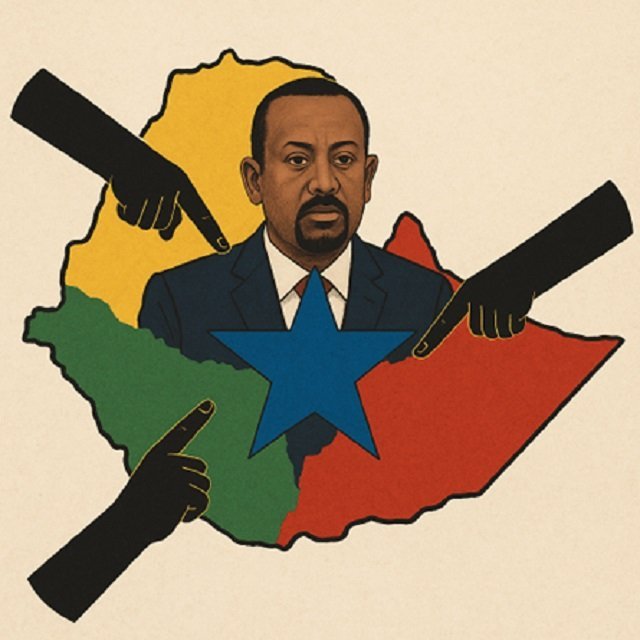
By Sultan Abda Neja (PhD)
Abstract
This article critically examines Prime Minister Abiy Ahmed’s political trajectory, exposing how his leadership represents a fundamental betrayal of Ethiopia’s multinational federalism and, more specifically, the Oromo struggle for national self-rule and self-determination. Although Abiy rose to power on the back of the Oromo protests (2014–2018), his administration has since pursued centralized, authoritarian policies reminiscent of imperial Ethiopia, dismantling the limited gains made through the 1995 Constitution. Using several scholarly analyses, this article argues that Abiy’s Prosperity Party regime is ideologically and politically opposed to the interest of Oromo nation as well as the broader aspirations of Ethiopia’s nations and nationalities. The consequences of this authoritarian drift have been the rise of armed resistance, deepening ethnic tensions which he intensively manipulated, widespread human rights violations, and an erosion of political legitimacy across the federation. The article concludes with a call for a return to genuine federalism through inclusive dialogue, democratic reform, and respect for the rights of Ethiopia’s constituent nations.
1. Introduction: The False Messiah of the Oromo Struggle
In 2018, following a wave of sustained popular protests, largely led by Oromo youth movements like Qeerroo, Abiy Ahmed emerged as Prime Minister, hailed as a reformer and the symbolic culmination of decades of Oromo resistance to centralized domination. His Oromo identity and rhetoric of unity sparked hope for meaningful transformation. Yet, in the years since, Abiy has proven to be a counter-revolutionary actor. His administration has actively undermined Ethiopia’s multinational federalism, clamped down on Oromo political voices, and aligned itself with reactionary forces that seek to reverse constitutional self-determination rights.
2. Federalism and the Oromo Question: Constitutional Foundations
The 1995 Constitution of the Federal Democratic Republic of Ethiopia (FDRE) is unequivocal in its recognition of the rights of nations, nationalities, and peoples. Articles 39 and 47 provide for:
- The “unconditional right to self-determination, including secession” (Art. 39.1);
- The right to preserve culture, language, and identity (Art. 39.2);
- The establishment of states on the basis of settlement patterns, language, identity, and consent (Art. 47).
These constitutional provisions were responses to historical injustices, especially the imperial and military regimes (Menelik II, Haile Selassie, and the Derg), that imposed Amhara language, culture, and centralism while marginalizing the Oromo and other nations. Scholars like Asafa Jalata and Kjetil Tronvoll have long argued that Ethiopia’s modern state-building efforts relied on colonial conquest and internal suppression, particularly of the Oromo.
3. Abiy’s War on Federalism: From EPRDF to Prosperity Party
Abiy Ahmed’s first major act was dismantling the Ethiopian People’s Revolutionary Democratic Front (EPRDF), a coalition of ethnic-based parties, and replacing it with the unitary Prosperity Party (PP). While the EPRDF had many flaws, it at least nominally respected federalism. The PP, in contrast, seeks to centralize power and dissolve ethnonational identities into a homogenized Ethiopian identity. “The creation of Prosperity Party marked the beginning of a coordinated policy of re-centralization under the guise of national unity.” (Addis Standard, Dec 2019). This marked a clear ideological shift toward imperial nostalgia and assimilation, undermining Oromo aspirations for self-rule (Elite comment OMN, Dirre-walo program). As political scientist Merera Gudina notes, Abiy’s unitary project is antithetical to the Oromo people’s core demand for Abba Biyyummaa, sovereignty in their own land.
4. Betrayal of the Oromo Protest Legacy
The Oromo protests (2014–2018) were sparked by deep grievances, land dispossession, cultural marginalization, exclusion from national power, and the encroachment of Addis Ababa into Oromia. They demanded self-administration, language rights, and federal protection. Yet under Abiy, these demands have been reversed:
- Language and Cultural Suppression: Despite being the most spoken language in Ethiopia, Afaan Oromo remains excluded from federal working language status, contrary to the demands of the 2014–2018 protests.
- Political Repression: Key Oromo opposition figures, Bekele Gerba, Jawar Mohammed, and members of the Oromo Federalist Congress (OFC) as well as OLF officials, were jailed during and after the 2021 elections.
- Militarization of Oromia: Government offensives against the Oromo Liberation Army (OLA) have led to massive civilian casualties, extrajudicial killings, and displacement, documented by BBC Afaan Oromo and Amnesty International.
“Civilians in Oromia are being detained, disappeared, and even killed without due process. The government is waging a war against its own people.” (BBC Afaan Oromo, Nov 2021)
5. Abiy and Amhara Nationalism: Tactical Alliances for Centralized Power
Abiy’s alliance with Amhara nationalist forces during the Tigray war revealed his ideological affinity for centralization. These forces participated in ethnic cleansing campaigns in Western Tigray, as documented by Human Rights Watch and Amnesty International. Abiy’s silence on Fano’s incursions into Oromia, especially in Horo Guduru and North Shewa, further highlights his complicity in attacks against Oromo civilians. As Addis Standard reported in July 2023: “Fano militias crossed into Oromia zones, attacking civilians and displacing entire communities. The federal government failed to intervene.” When this alliance collapsed after the Tigray peace deal, Abiy turned his forces against Amhara elites, demonstrating that his commitment is to authoritarian consolidation, not ethnic reconciliation or democratic reform.
6. The Consequences: Resistance, Fragmentation, and Democratic Collapse
Abiy’s betrayal of federalism has led to widespread insurgency and unrest:
- Armed Resistance: The OLA and Fano represent growing militarized opposition to the federal government, fueled by unresolved ethnic grievances and political exclusion.
- Ethnic Polarization: His governance model has reignited the very ethnonationalist sentiments it sought to suppress, creating an environment of fear, distrust, and mutual hostility.
- Illegitimacy: The 2021 elections, widely regarded as neither free nor fair, excluded major opposition parties, especially in Oromia, deepening the crisis of legitimacy.
- Humanitarian Crisis: Conflicts in Oromia, Amhara, and Tigray have displaced millions, destabilized the economy, and led to worsening famine conditions (UNOCHA, 2024).
7. The Path Forward: Reclaiming the Federal Vision
One of Abiy Ahmed’s most insidious strategies has been his calculated use of divide-and-rule politics, deliberately inflaming tensions between major nations such as the Amhara, Oromo, and Tigray to prevent the emergence of a unified resistance. After weaponizing Oromo grievances to rise to power, he quickly pivoted to align with Amhara elites during the Tigray war, only to later betray them in the name of constitutional restoration. He allowed the demonization of Tigrayans as scapegoats for national crises, criminalized Oromo nationalism as terrorism, and turned a blind eye to Fano militia attacks inside Oromia, only to later label Fano itself as a security threat when it no longer served his agenda. By fueling inter-ethnic suspicion and violence, Abiy’s regime maintains power through chaos while discrediting the legitimate federalist aspirations of each group. In this context, a principled coalition among the Oromo, Amhara, and Tigray forces who share a commitment to genuine federalism, democracy, and justice is not only possible but necessary. Only such a unified front can dismantle Abiy’s mafia-like authoritarian network and lay the foundation for an inclusive political order that respects the sovereignty and rights of Ethiopia’s nations and nationalities.
To salvage Ethiopia’s future, a radical shift in political direction is essential:
- Inclusive National Dialogue: All major political actors, including armed groups, regional opposition parties, and civil society, must be part of a credible, externally mediated national dialogue.
- Democratizing Federalism: The constitution must not only be upheld but democratized. Self-rule must be respected, with constitutional guarantees for linguistic and cultural rights, regional governance, and power-sharing.
- Accountability and Transitional Justice: Human rights violations committed by the PP government and its allies must be investigated and perpetrators held accountable.
- International Engagement: Donors and international actors must condition aid on human rights, ceasefire, and democratic transition. Silence or appeasement only enables further abuses.
8. Conclusion: Abiy Is Not the Oromo Prime Minister, He Is Their Adversary
Though he emerged from Oromia, Abiy Ahmed is ideologically divorced from the Oromo struggle. His government has become a vehicle for reactionary centralism and authoritarian rule. His regime represents a revival of imperial Ethiopia, a project fundamentally incompatible with the aspirations of Ethiopia’s oppressed nations and nationalities. For the Oromo, Abiy is not a product of Oromummaa; he is a product of its betrayal. Real peace in Ethiopia will not come through forced unity or coercive state-building. It will come through honoring diversity, upholding federalism, and embracing democratic self-determination. Until then, the Oromo struggle, and that of other nations, nationalities and peoples of Ethiopia, will continue, not as rebellion, but as a rightful resistance. Therefore, a principled coalition among all Ethiopians, particularly the majority Oromo, Amhara, and Tigray forces, who share a commitment to genuine federalism, democracy, and justice, is crucial.
Select References
- Federal Democratic Republic of Ethiopia Constitution (1995)
- BBC Afaan Oromo News Reports (2021–2024)
- Addis Standard Investigative Reports (2019–2024)
- Oromia Media Network (OMN) Reports https://omn.today
- Human Rights Watch (2022), “Ethiopia: Crimes Against Humanity in Western Tigray”
- Amnesty International (2021), “Beyond Law Enforcement: Human Rights Violations in Oromia”
- Kjetil Tronvoll, “The Ethiopian Federation: Ethnic Federalism or Federalism Based on Ethnicity?”
- Asafa Jalata, “Oromo Nationalism and the Ethiopian Discourse”
- Merera Gudina, “The State, Competing Ethnic Nationalisms and Democratisation in Ethiopia”
- UNOCHA Reports on Ethiopia Humanitarian Crisis (2023–2024)
Editor’s Note : Views in the article do not necessarily reflect the views of borkena.com
__
Support Borkena : https://borkena.com/subscribe-borkena/
Join our Telegram Channel : t.me/borkena
Like borkena on Facebook
Add your business to Ethiopian Business Listing / Ethiopian Business Directory Business Listing Toronto
Join the conversation. Follow us on X (Formerly Twitter) @zborkena to get the latest Ethiopian News updates regularly. Subscribe to YouTube channel To share information or for submission, send e-mail to info@borkena.com
First and foremost , there had never been an Oromo nations existance registered historically in Ethiopia and East Africa . All the political jargons your are alluded to in your writing namely ” ethnic federalism and constitution , Oromo nations” were the creation and manipulations of OLF and TPLF. When was the Guji, the Borona , the Yegu , the Arsi , The Jima Ab Jefar united and formed admistrative territory under one flag?
Federalism is already part of Ethiopian histry, Ormo nation is the majority nation i Ethiopia and recognized to have its regional state. Why you deny this?
In other words, you would not have gone to this length excoriating Abiy, had he fallen in line with the objective of protecting Oromo interests, right?