
By Ali Belew
Part 2
(Part I is available here )
Pretoria-The beginning of the End of National Liberation Politics
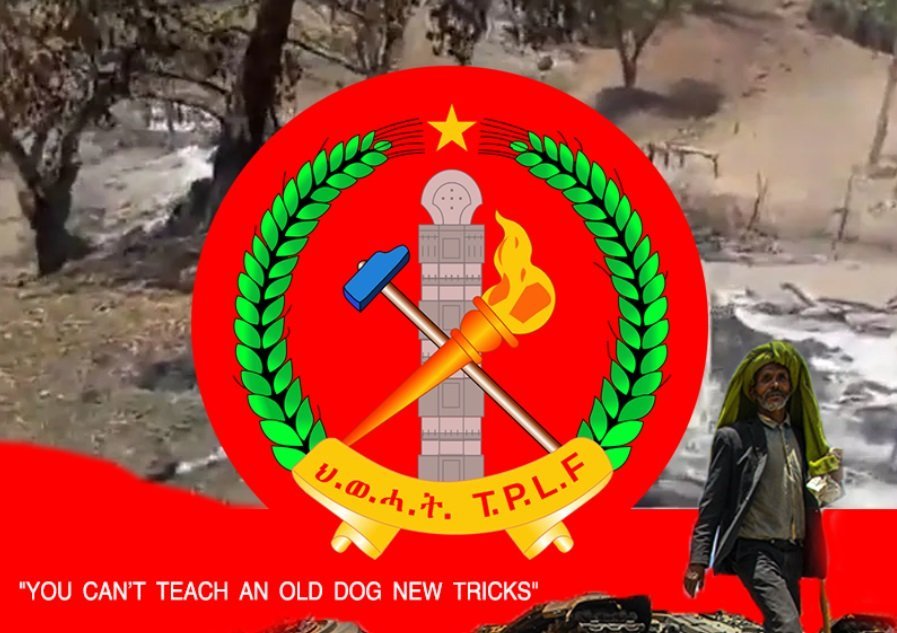
The war in Tigray exposed the limits of national liberation politics in Ethiopia. For TPLF, the “sacred” cause was the restoration of Tigray’s dominant role lost after Menilik became emperor of Ethiopia. While Emperor Yohannes’s rule was not contested by other ethnic groups, TPLF’s ideologues saw Emperor Menilik and subsequent Ethiopian rulers as usurpers of Tigray’s legitimate position in Ethiopia’s political structure. Hence the formation of a national liberation movement led by TPLF to fight an oppressor nation. That “Amhara nation” was the creation of TPLF rule did not get in the way of their theory, but it was convenient to have a defined enemy as a target for their struggle. If their cause seemed a flimsy excuse to initiate a war of liberation, it probably was. As their war was successful in bringing down an inept military regime, it became easy to rationalize the cause. Their success was not an indication their cause was just, but it cemented the narrative of the brave oppressed people who defeated a much stronger oppressor nation. History is often written by the winner, and TPLF’s win helped rewrite Ethiopian history to fit its narrative. On their way to Addis Abeba, the TPLF leaders realized the absurdity of liberating Tigray from Ethiopia; instead, ruling a unified country became a more tantalizing and pragmatic solution. Tigray secession lost its appeal in favor of ruling Melnik’s Ethiopia.
Once in power, together with another prominent national liberation front – OLF, they drafted a constitution that transformed Ethiopia into an amalgamation of “nations and nationalities,” whose separation from each other was emphasized over their common identities. To accentuate this character, the constitution provided a generous provision for “nations and nationalities” to secede if they so desired. However, neither the constitution, nor the ethnic federal arrangement was enough for OLF to accept the Ethiopian nation. Arguing that Oromo national oppression” has continued under another ethnic group, OLF exited the coalition to wage war. The incentive for OLF to reject the government came in handy. OLF intellectuals reasoned that if the national liberation struggle worked for TPLF which, in their view, was part of Amhara-Tigray or northern supremacy, struggling for the liberation of Oromia would have more resonance with Oromo people to succeed. Oromia has larger territory, more population, rich resource endowment and stronger claim, at least on paper, to historical oppression. If a small minority like Tigray could be galvanized by a sense of historical oppression which never really existed, the Oromos had a more potent claim: Menilik’s expansion to the south, depicted as a war of conquest against “an Oromo nation,” trampling their language, culture and civilization, would prove more salient. Again, there was no Oromo nation to conquer, but who would bother with such legal niceties, when you can demonize Menelik’s expansion as barbaric and imperial.
The ethnic federalism that existed in the last 30 years provided ample opportunity for this narrative to take hold bolstering OLF’s demand for self-determination – euphuism for an independent Oromia. TPLF saw OLF’s maximalist position as a threat not just to Ethiopia’s independence, but also to all the other ethnic groups whose economy and culture was interwoven with Oromia. And so, TPLF waged a brutal war on OLF, resulting in the arrest of thousands of OLF supporters. As in Tigray during the Derg, EPRDF’s harsh war against OLF, in turn, forced people of Oromia to see OLF as their liberator and TPLF as their oppressor. The dynamic of the struggle – resistance and counter resistance meant that the liberation movement, independent of the merit of its cause, was able to recruit supporters. The peasants of Oromia in the EPRDF era, as did their Tigray counterparts during the Derg, were swept into this national movement fervor becoming instruments of elites’ ambition for power.
So, it should come as no surprise that the Amhara elite would copy their Tigrayan and Oromo brothers and embark on a “national liberation project.” As in Oromia and Tigray, the existence of an “Amhara nation” meant the cultivation of not just a separate identity, but a sense of victimhood and oppression “sanctioned” by the constitution. The massacre that occurred in the early days of EPRDF rule, the demonization of Amhara in the bureaucracy, the forced disappearance, and more recently, the internal displacements from some states and the burning and looting of Amhara businesses and properties in Oromia areas became the causes belli for liberation.
In a phone conversation between General Teferra Mamo and one of the Fano leaders, the former Ethiopian general redefines Amhara nationalism. He told the Fano leader “Eskender Nega lacks Amhara consciousness (psychology); his identity is Ethiopian.” If a leader who built his political persona around the struggle for the “oppressed Amhara” people can be accused of being not Amhara enough, who is an Amhara? Does it even matter? How could a person who grew up identifying primarily as an Ethiopian and secondarily as Wolloye, or Gojame, or Gondere, or Shewee, etc., be expected to suddenly identify as an Amhara? Maybe, the number of people who see themselves as Ethiopians first, is fast dwindling so that they don’t matter. However, while ethnic identity eclipsed Ethiopian identity in the last 30 years, the public need for a transcendent identity that encompasses all people of all ethnic groups has never been weakened. One reason is the people’s common sense that can see through the absurdity of this separate identity. Aside from languages, Ethiopians are, by blood, a mix of all ethnic groups. Ethnic identity is not as primordial as the elites make it to be.
It is often said that “We are a nation of hybridity (Adeno). That is why the search for purity on which to build an Amhara nationalism is a fool’s errand. Now, elements of the Fano accuse one another of not being pure enough to promote the cause of the Amhara. It is not uncommon to accuse a Fano fighter of lacking Amhara loyalty because he/she is a product of mixed ethnic parentage. Some are accused of being Agew and Kemant – groups that are suspected of undermining the Amhara cause. The search for an elusive purity in the Amhara identity can never be realized.
One would think it would be more sensible to embrace one’s Ethiopian identity more forcefully and treat everyone as an equal member of the community writ large. In this bigger tent, one would be able to give varying levels of importance to their other identities: Orumuma, Tegaru, Amhara, Welayeta, Afar, Somali, etc. If people want to go even further and want to identify as Kereyu, Agew, Laste, Agame, etc they will be free to do so. Their common Ethiopian identity would embrace it. The transcendent Ethiopian identity is a categorical imperative because there is no way we will be able to survive if we want to divide Ethiopia into its constituent parts.
Nothing shows the absurdities of national liberation struggle as the OLF/OLA and the Fano armed resistance in Oromia and Amhara respectively. The OLA intensified its armed struggle against a federal government in which the Oromos are fully represented. The Fano intensified its struggle after the territories that they claimed were wrongly taken from them were returned to their control. It is true this happened because of TPLF’s attack on the national government, not because of the government’s decision, but it does not make any logical sense for the Fano to take arms against a government that has restored its claimed territory – even when the final status is to be settled through some constitutional provision. Despite the clear ascendancy of the Oromo party in Ethiopian politics, the OLF stuck to its national liberation agenda and conducted what could only be described as a nihilistic war. This war was bloody, destructive, and confusing. It was a civil war waged under the guise of national liberation (to give the Oromo nation, the right to self-determination – euphemism for independence). In this case, the ideology meant more than the reality on the ground. The Oromo people’s agency rebuffed the snake oil salesmen masquerading as their liberators. Of course, since the allure of an independent Oromia, free of its alleged oppressors, is engrained in the average fighter, this war has taken longer to end. But every day that passes seems to bring fighters who have reached, both military and ideologically, a dead end.
What have liberation wars brought to the people they purport to liberate? Haile Selassie’s government failure to recognize that the land-holding system was unjust bolstered the national oppression feeling among the Oromo and the people of the South. The land holding system became symptomatic of national oppression and hence a great mobilization factor for nationalists. The Oromo peasant did not see the Amhara as enemy, but the landlord that exploited them spoke Amharic and he saw himself as inherently superior. This class of exploiters did not represent all the Amharic speaking people. In fact, among the landlords were people of Tigray, Eritrea, and Oromo origin. The Amhara peasant in Wollow didn’t see himself as an exploiter of the Oromo peasant. He saw himself as a victim of the local bureaucrat who abused his power and made his life miserable. One can’t be exploited and exploited at the same time.
For all the ethnic intellectuals who are steeped in this history of national oppression and resistance, the absence of national oppression is not an idea they would even entertain. They will state the revolutionary land reform act, the use of local language for education, in courts and the pride that people now feel in their own identity as achievements of national liberation politics. This is easy to accept if it ends here. The problem is their extension of liberation politics to include separation. Of course, the land reform act was enacted during the Derg regime. The ESM, before it divulged into ethnic national liberation movements and fought against each other, put this issue on the national agenda. Derg implemented it but received no credit for it because it did not give in to the national liberation politics. The Derg was working on dividing Ethiopia into language zones for the purpose of enabling people to use and develop their own languages when it was toppled.
It should therefore be right to still ask what liberation wars have brought that could not have been achieved without the enormous human and material cost resulting from armed struggle? If national liberation was successful, why do we still have national liberation politics after more than half a century?
I understand it is easy to dismiss the statement that national liberation has run its course, as too optimistic in the face of a raging civil war in Amhara and Oromia States. That is true. But the decision to end the war that TPLF triggered through the Pretoria Agreement means that the national liberation war has run its course. It signifies that price that Tigray, Oromia, or Amhara or any other state has to pay in order to realize what appears to be ephemeral liberation can’t be justified. The simple question that must be answered is what did Tigray lose by remaining a part of the ancient regime as opposed to going on the independent route? Independence at what cost and for whose benefit?
Without dismissing the potency and the destructiveness of the wars in the two regions, the end of the war in Tigray and the subsequent leadership crisis and deep division of the most successful national liberation organization must have raised profound questions in all the actors who adhered to this ideology.
The end of the war has resulted in soul searching in Tigray society. What has Tigray’s ascent to the helm of power brought to the people? What has Tigray benefited from a revolutionary party that attempted to reorganize Tigray as a Spartan state? How do people yearning for individual rights, political freedom, and civil liberties flourish in a society wholly dominated by a party whose sole mission is liberation. But liberation for what? Most importantly, young people now question if these periodic wars fought on Tigray soil have benefited the people of Tigray? Tigrayans who have lived everywhere and prospered were looked at suspiciously by other communities during TPLF rule. They want to live in a country where they are equal to others and not overlords. Fifty years of hyper nationalist propaganda extolling the virtues of separate Tigray has not totally frayed the connection they have to other Ethiopians.
This is a positive development that gives rise to my hope that national liberation politics that has consumed our politics for so long has now been shaken at its core. If Tigray and its organization that has done so much to ethnicize politics questions its validity, others may follow. If TPLF loses its ideological and political foundation grounded in the liberation struggle, it is not unreasonable to hope the others will follow.
The Pretoria Agreement’s unintended result was the rise of Fano and the Amhara national movement. This armed movement was organized during the war in Tigray. While the Amhara state was mobilizing the public to fight the TDF forces that ran over the “Amhara” hinterland, clandestinely, the Fano was being organized with the goal of overthrowing the elected Amhara government. At the height of its power, the Fano sought to march to Addis using the Amhara Sate as a springboard, much like TPLF tried to do. Unlike TPLF, which had a centralized command structure and conventional army that conducted positional warfare, the Fano was an amorphous group of fighters each with its own territory and Gobez Aleka. Its lack of central structure meant that it would never be able to militarily challenge the national army, but it also made it difficult to dislodge it from the vast Amhara territory with its formidable natural barrier that is a haven for any determined fighter and even Shifta. The well-armed Gojam province with its history of peasant rebellion proved particularly difficult to subdue. The Fano movement has succeeded in making the state lawless with significant tracts of land unreachable by the nascent security forces of the state. Even the involvement of the national army, while successful in clearing them out from big cities, can’t easily dominate an insurgency unless the peasants repudiate them. Until now, the peasantry seemed to give them the necessary cover to operate in some areas, but the public is becoming suspicious of their methods. For now, the peasants are afraid to challenge them but realize that they have only brought chaos and mayhem and destabilized their peaceful life.
Paradoxically, elements of the Fano and the old TPLF guard have developed some sort of understanding to work together to bring down the government. This alliance is fraught with contradictions. It is also not clear how they will be able to sell this alliance to their public. The Amhara public was told that TPLF was its historical enemy. All the bad things that Amhara had experienced in the EPRDF era were done at the behest of TPLF. TPLF accused Fano of raping Tigray women and conducting ethnic cleansing. How would the respective people of Amhara and Tigray see this change of heart in TPLF and Fano? Of course, some Fano are violently opposed to this nascent alliance. Just the same, these alliances expose the cynicism of national liberation politicians.
The TPLF old guard is preparing Tigray for another war. As in the previous conflict, the goal would be to restore their rule in Ethiopia and if that fails, establish an independent Tigray regardless of the cost to the people. If they succeed against all odds, it will result in the resurrection of national liberation politics which I argue above has reached a dead end. It also means that this politics is not going to wither away on its own unless the public rejects it. For the public that was fed the virtues of national liberation politics for so long, it is not that easy to abandon it unless the new politics takes hold and starts to produce results that lift their livelihood. Failing to do that, it enables cynical politicians to exploit these shortcomings and undermine the public trust in electoral politics.
National liberation politics is an open invitation to foreign interference
Increasingly, Eritrea is using the liberation groups to undermine the Ethiopian state. Pretoria wrecked the cooperation between the Ethiopian government and Eritrea. The Ethiopian government, under pressure from the international community, took a courageous action to end the war. In so doing, it undermined its cooperation with the Eritrean government which was determined to root out TPLF as an entity. The Ethiopian government did not receive the credit it deserved for negotiating Pretoria, and its extraordinary effort to make it work. It tried to give the people a chance to have peace and nurture it. It reasoned that peace with all its limitations was a better deal for Ethiopia as a whole and Tigray in particular. It wanted to create a peace momentum and a peace dividend that will convince the Tigray people not to pay attention to those who want to wage war on their behalf. Unfortunately, TPLF’s iron grip on society made it nearly impossible for this message to reach the public. On the other hand, TPLF vilified the Federal government for all the hardships of the war that it started itself. It cleverly used the explosive issue of the displaced people to prepare the public for another round of fighting as Getachew Reda testified.
If war starts, it does not mean, national liberation politics still defines politics in Ethiopia. But if TPLF succeeds partially or wholly, my argument that the end of national liberation politics is near will be refuted. It was premature to sing its death.
What gave national liberation the staying power?
As I reasoned above, the seductive nature of this politics is easy to see. It reaches the public emotionally. Even a peasant can easily be swayed by it. It has emotional resonance. It is instrumental to divide the public into us and them. You can bring historical injustices, oral histories to create an enemy that can be blamed for your misfortune. National liberation politics is easy to manipulate for ethnic entrepreneurs who want to gain power, resources and money.
Ethiopian society, especially the highlanders have a fascination with weapons and those who wield them. The precursor of the national liberation warrior is the Shifta, who leaves his village to avenge wrongdoing, or make a living by pillaging people who want to live by their sweat. In some parts of the country, especially in Gojjam and Tigray, and Balle, there is a history of peasant rebellion which ESM glorified as a heroic act of resistance. The First Woyane movement was the precursor of the Woyane movement that became organized as TPLF. The Fano can trace back its ethos to the rebellion of Belay Zeleke against the Emperor. Belay Zeleke may have led a peasant revolt that did not articulate a political program, but his fighting spirit and courage has created legends to be emulated by the Fano.
For the Oromo also, there is a rich history of rebellion against the landholding system which was rigged against the Oromo peasantry. The Mecha Tulema is often used as a movement of the Oromo people for equality. The rebellion in Bali led by a military officer, set the example for the Oromo to take up arms. This rebellion was the precursor of OLF. Unfortunately for OLF, its politics remained ill defined. Initially, it was to violently stand an Oromo state despite the likelihood that it will face enemies from the neighboring people, the Amhara, the Somali, the Guraghe, the Sidama, etc. Now, it does not push for independent Oromia openly. Instead, it has settled on an old political slogan which gives it some ambiguity to maneuver so it can attract both the separatists and those who want to live in an Ethiopia dominated by Oromia.
OLF is convinced that its politics has borne fruit for the Oromo, but it has not resulted in political power for it. Its leaders still face the long hand of the state now dominated by Oromo. Its conflict with the government is for political power; It is increasingly difficult to make the case that the government is the enemy of the Oromo. Its armed wing, OLA, on the other hand, wants to wrestle political power by violent means. Both OLF and OLA faced what can be called the EPRP dilemma. EPRP’s beef with the Derg was political power. EPRP thought that it was entitled to power by virtue of its first adoption of Marxism and its penetration of the youth, trade and teachers’ union. The Derg coopted EPRP’s ideology and using its muscle shut EPRP off from power. When faced with the same situation, the Meison understood the balance of forces and decided to provide critical support to Derg in return for a political space to operate within the working class and peasantry. The Derg reneged on its promise and prosecuted Meison as they did EPRP, but Meison, at least, made the correct political assessment on the balance or forces and adjusted its tactics accordingly. A determined dictator like Mengistu also meant that the chance for civilian opposition had little chance of success at that time.
Faced with a similar dilemma, OLA failed to assess the balance of forces and defined an Oromo friendly state as anti-Oromo. This propaganda could only go so far as the reality in Oromia slowly changed. The government provided needed services that lifted the Oromo while fighting the OLA in battle. The fight did not make sense to the Oromo and increasingly, the OLA, was seen as a nihilist organization that wants to fight for the sake of fighting. Its political goal lost its appeal. It split within itself. The armed element of the national liberation politics is losing in Oromia and Amhara. Their only hope is of course the resurgence of the TPLF faction that wants to battle the Federal government. Both organizations want to ride TPLF’s coattail to reemerge from sure defeat.
This is the last stand of the armed element of the national liberation movement. A lot is riding on the government to defeat this new threat. But the government must do everything it can to win the public trust. The least costly way of asserting victory is winning the propaganda war. This time around, the public should not have any doubt as to who is responsible for starting the war. The government must go a long way to show Ethiopians and the world that it has no interest in war, that it is willing to settle any remaining political differences through peaceful means.
It also must be prepared to fight and win if war is forced on it. Building its military to overcome any challenge – internal or external – is the deterrence needed to avoid war in the first place.
The writer can be reached at : alibelewmeta@gmail.com
Editor’s Note : Views in the article do not necessarily reflect the views of borkena.com
__
Support Borkena : https://borkena.com/subscribe-borkena/
Join our Telegram Channel : t.me/borkena
Like borkena on Facebook
Add your business to Ethiopian Business Listing / Ethiopian Business Directory Business Listing Toronto
Join the conversation. Follow us on X (Formerly Twitter) @zborkena to get the latest Ethiopian News updates regularly. Subscribe to YouTube channel To share information or for submission, send e-mail to info@borkena.com