
By Wondmagegn Ejigu Kebede
Uppsala, Sweden
Many will wonder, What is gentrification?
Gentrification is a process in which urban neighborhoods change due to an influx of wealthier residents, often leading to increased property values and higher living costs. This can result from redevelopment, new investments, or marketing efforts aimed at attracting more affluent populations, in theory. However, Gentrification hurts the poor and long-standing residents. Just to mention some of them :
– Displacement: As property prices and rents rise, long-standing residents, often low-income or marginalized communities, can no longer afford to live in their neighborhood and are forced to move.
– Loss of Community and Culture: Gentrification can erode the cultural fabric and social networks of existing communities, leading to a loss of identity and heritage.
– Limited Access to Resources: The change can alter the availability and affordability of essential services, such as healthcare, education, and local businesses that serve the original residents.
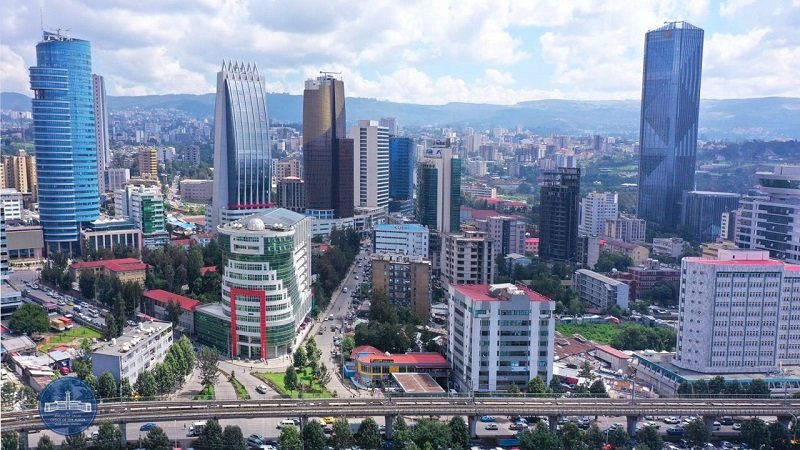
The list may be extensive, but the three negative impacts mentioned above effectively summarize the issues and provide a clear understanding of gentrification, especially in the context of what is occurring in Addis Ababa. It is also important to highlight and emphasize that gentrification, in practice, constitutes a clear violation of the basic human rights of residents. Right to Adequate Housing: Many argue that displacement infringes on the human right to adequate shelter and housing without arbitrary eviction or discrimination. The right to adequate housing is a fundamental entitlement for residents. In this context, the Addis Ababa administration bears the responsibility to provide housing for its residents, who in turn have the right to such accommodation. One of the primary duties of the Addis Ababa Mayor’s Office is to ensure that residents have access to adequate housing. The residents of Addis Ababa, through their tax payments, essentially contract the administration to fulfill this obligation. Therefore, this right is not merely a matter of goodwill on the part of the Addis Ababa Mayor’s Office or the political party in power; it is a legal right that must be exercised and upheld by the administration. Equality and Non-Discrimination: Gentrification can disproportionately affect marginalized groups, contributing to social and economic inequality. The current regime in Addis Ababa claims that its gentrification efforts are part of a “corridor development” initiative, but in reality, it functions as a cover-up. The regime has displaced thousands of families without any coherent plan in place. The brutality of this displacement is evident, as it harms the marginalized residents of Addis Ababa, exposing them to social and economic inequalities.
In a just world, the city’s administration would address these issues by implementing development programs that involve full participation and the will of the residents, allowing them to remain in their communities and maintain their rightful place in the city. Instead, what the administration is doing is essentially demolishing the city, handing land over to regime-affiliated property developers, and constructing infrastructures of little real value, such as fountains and flashy street lights made from imported Chinese materials.
This approach is akin to applying makeup to an already wounded face; a superficial fix that ignores the fundamental problems. The face, like the city, needs proper medical attention before any cosmetic enhancements are considered. Perhaps the mayor, Adanche Ababe, is confusing an extreme makeover she is undergoing with genuine city development, believing that a few fountains and glittering streetlights will solve the deeper issues facing Addis Ababa. Community Rights: It raises concerns about the rights of residents to maintain their living conditions, cultural identity, and community connections. Like any other metropolitan and capital city, Addis Ababa possesses its unique essence and character. Notably, Addis Ababa is the only African city built by non-colonizing actors—specifically, Ethiopians—giving it a distinctive identity. The city serves as a symbol of Pan-Africanism and Africans’ struggle for independence. It is a diplomatic hub within Africa and plays a central role in regional and international affairs. Addis Ababa acts as a unifying force, an attractive center, and most importantly, a political powerhouse in Ethiopia’s political landscape.
However, the current regime appears to be attempting to erase this special and beautiful essence of Addis Ababa. They seek to incorporate the city into the Oromia region through a so-called “corridor development”—a vague, spiritual, and somewhat mystical form of development, which is unequivocally against the wishes of Addis Ababa’s residents and most Ethiopians at large.
It is not just gentrification; it’s gentrification on steroids.
Gentrification is a global issue, and countries are trying to address it both locally and internationally. However, the gentrification happening in Addis Ababa under the Prosperity regime is far beyond normal—it is occurring at an accelerated, extreme level. If it is not stopped soon, it will pose a clear and present danger to the country and the wider region.
Ethnic Dimension:
The gentrification in Addis is not solely about displacing residents for economic reasons. It also carries a toxic and dangerous ethnic politics component. Through this process, the Prosperity regime and the city administration favor ethnically Oromo property developers,
individuals, and authorities, enabling them to profit and own parts of the city. There exists a structural and well-designed system of eviction, displacement, and harassment targeting non-Oromo citizens. This situation is akin to pouring gasoline on a fire, especially in a country that has already endured numerous ethnic civil wars and conflicts.
Lack of Understanding of Addis Ababa’s Significance among Opposition Elites:
I doubt that most opposition elites understood the concept of gentrification. I wish they did and viewed the current situation differently. Instead, many are focused on exacerbating ethnic civil wars and conflicts, either consciously or unconsciously deepening the political turmoil. Most opposition leaders prefer to align themselves with ethnic-based groups. What they overlook is Addis Ababa’s vital role in resolving and healing some of the country’s ethnic tensions. It is astonishing how many miss the fact that Addis Ababa is the political heart of Ethiopia. To gain power and influence, one must have a presence in the city.
Conclusion:
It’s already too late. Addis Ababa is losing its unique character—the city that has historically been a space for all Ethiopians. The current regime is not only Oromoizing Addis through ethnic-based gentrification but also pursuing other political strategies that undermine its autonomy and independence, both politically and economically. Moreover, the residents’ right to self-governance has been eroded through the implementation of the current constitution. While various opposition groups’ struggles across different parts of the country are encouraging, their efforts will fail if they exclude Addis Ababa from their strategies. Re-engaging in the politics of Addis Ababa is neither a luxury nor a matter of choice, as some elites may perceive it. Instead, it is an essential step to ensure success in the political struggle, while also healing and managing the ethnic tensions that have arisen so far.
The writer can be reached at : wenneve@gmail.com
.
Editor’s Note : Views in the article do not necessarily reflect the views of borkena.com
__
Subscribe : https://borkena.com/subscribe-borkena/
Join our Telegram Channel : t.me/borkena
Like borkena on Facebook
Add your business to Ethiopian Business Listing / Ethiopian Business Directory Business Listing Toronto
Join the conversation. Follow us on X (Formerly Twitter) @zborkena to get the latest Ethiopian News updates regularly. Subscribe to YouTube channel To share information or for submission, send e-mail to info@borkena.com