
As violence escalates in northern Ethiopia, Western governments continue to prioritize regional stability over human rights—with potentially disastrous consequences
Zegeye Amare
While the crisis in Ethiopia’s Amhara region deepens, Western foreign policy has adopted a calculated silence. Despite credible reports of mass killings, displacement, and repression, the United States and European Union are opting for quiet diplomacy and security cooperation instead of meaningful action.
This isn’t just a moral failure—it’s a strategic miscalculation.
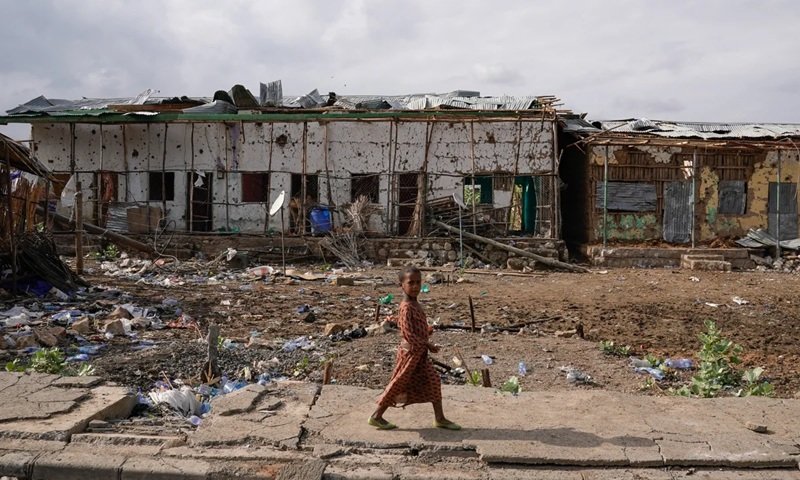
In recent years, Ethiopia has returned to the top of the Horn of Africa’s volatility index. The 2020–2022 war in Tigray drew international outrage, but since then, conflict has reignited in Amhara, where federal troops are locked in battle with regional militias. Thousands of civilians have reportedly been killed or displaced, and rights groups warn of worsening abuses.
Yet, the West remains muted.
Washington’s Missed Opportunity
In 2022, the U.S. Congress introduced the Ethiopia Peace and Stabilization Act, a bill aimed at supporting peace, democracy, and accountability. It proposed diplomatic and development aid tied to human rights benchmarks, and sanctions for those obstructing peace or humanitarian access.
The bill passed out of committee with bipartisan support. But it stalled—and quietly died.
Since then, the Biden administration has favored limited sanctions and diplomatic engagement, prioritizing Ethiopia’s cooperation on counterterrorism and migration over confronting its domestic repression. The policy shift is clear: from values-based engagement to realpolitik.
Europe’s Empty Resolutions
The European Parliament has also weighed in—on paper, at least. It has issued several resolutions condemning violence in Amhara and calling for ceasefires and independent investigations. But the resolutions have been non-binding, couched in vague appeals for “dialogue” and “reconciliation,” and notably devoid of enforcement mechanisms.
EU officials continue to express “concern,” while backing Ethiopia’s tightly controlled National Dialogue process. Their words have had little effect on the ground.
What explains this caution? Ethiopia remains a key partner in Europe’s efforts to curb migration, and no one in Brussels wants to provoke instability—or lose access to Addis Ababa’s cooperation.
A War Ignored
In June 2024, Chatham House published a sobering report titled The Forgotten War in Amhara. It detailed intensifying violence since April 2023 between federal forces and Amhara’s Fano militias, widespread civilian casualties, and a brutal campaign to recentralize power in Ethiopia.
The report accused the international community of turning away—distracted by other global crises and content to accept the Ethiopian government’s framing of the conflict as a counterinsurgency against “extremists.”
But this framing misses the point. Beneath the violence lie deeper political grievances: ethnic marginalization, power struggles, and historical exclusion. Ignoring these drivers will not produce peace. It will deepen the crisis.
Stability Over Rights—At What Cost?
A pattern has emerged in U.S. and EU responses:
Human rights violations in Amhara are acknowledged but not prioritized.
Engagement is preferred over accountability.
Security partnerships outweigh democratic principles.
The consequences are stark. Ethiopia’s government has interpreted the West’s restraint as a green light to escalate military operations. Civilian suffering has intensified. Meanwhile, the credibility of Western human rights advocacy—already damaged by selective enforcement—continues to erode.
By turning a blind eye to the political roots of the Amhara conflict, Western policymakers are fueling the very instability they hope to contain.
A Dangerous Bet
It’s not too late to change course. The U.S. and EU can recalibrate their approach by:
Conditioning aid on human rights protections.
Imposing targeted sanctions on officials responsible for atrocities.
Supporting inclusive political negotiations beyond the government-led National Dialogue.
These steps will be politically costly—but far less costly than allowing Ethiopia to spiral further into violence.
If Western governments continue to trade human rights for short-term stability, they will not only betray the people of Amhara. They will also undercut their own long-term interests in a stable and democratic Horn of Africa.
Editor’s Note : Views in the article do not necessarily reflect the views of borkena.com
__
Subscribe : https://borkena.com/subscribe-borkena/
Join our Telegram Channel : t.me/borkena
Like borkena on Facebook
Add your business to Ethiopian Business Listing / Ethiopian Business Directory Business Listing Toronto
Join the conversation. Follow us on X (Formerly Twitter) @zborkena to get the latest Ethiopian News updates regularly. Subscribe to YouTube channel To share information or for submission, send e-mail to info@borkena.com