
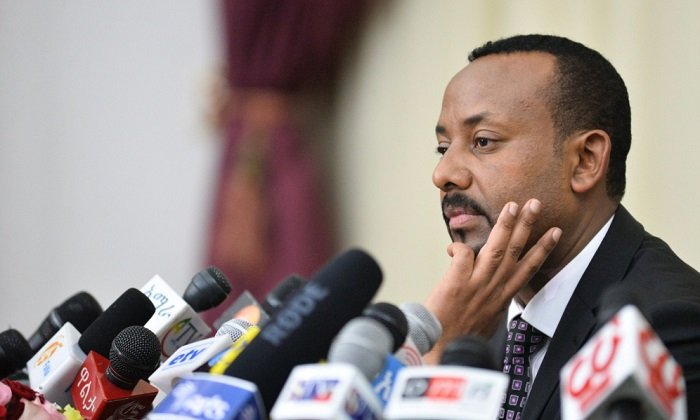
Amsal Woreta
Ethiopian Prime Minister Abiy Ahmed’s leadership has shifted from early democratic reforms and peace efforts to greater authoritarianism and extended military actions. Popular discourse often interprets these shifts as signs of personal ambition, hypocrisy, or incompetence. However, this article argues that Abiy’s political volte-faces are not merely individual failings but structural symptoms of Ethiopia’s enduring political crisis. Anchored in the contradictions of ethnic federalism, institutional fragility, and the legacies of centralized party-state rule, Abiy’s leadership reflects the constraints imposed by a deeply fragmented and volatile political system. A sustainable path forward requires not only leadership change but foundational institutional and constitutional transformation.
The Puzzle of Political Reversals
The rise of Abiy Ahmed in 2018 was heralded as the beginning of a democratic renaissance in Ethiopia. His early tenure was marked by political liberalization, diplomatic breakthroughs, and a rhetorical commitment to national unity. Yet within a few years, his administration came to embody many of the autocratic practices it initially vowed to dismantle suppression of dissent, militarized governance, and centralized power consolidation.
This apparent contradiction—between the reformist image and increasingly repressive reality—raises a central question: Why did Abiy Ahmed change? This paper contends that his reversals should be interpreted not merely as personal inconsistencies but as products of Ethiopia’s structural dysfunctions. Without addressing these foundational issues, no leader—regardless of intent—can maintain a consistent or transformative path.
Structural Pathologies of the Ethiopian State
Ethnic Federalism: Institutionalizing Division
Ethiopia’s 1995 constitution codified ethnicity as the primary axis of political identity, administration, and territorial governance. This framework:
– Legitimized ethnic nationalism as the basis of political competition;
– Created regional states with de facto sovereignty and the constitutional right to secede;
– Undermined the development of a shared civic national identity.
Rather than fostering decentralization for democratic inclusion, the system encouraged fragmentation, elite capture, and recurring conflict. It embedded instability into the very design of the Ethiopian state, making consistent national governance impossible without provoking backlash from one or more regional or ethnic constituencies.
Institutional Fragility: Weak Checks and Balances
Ethiopia’s modern political history—from the imperial regime to the Derg and the Ethiopian People’s Revolutionary Democratic Front (EPRDF)—has been characterized by centralized, hierarchical power structures with limited institutional autonomy. Abiy inherited a state marked by:
– A judiciary lacking independence and legitimacy;
– Security and intelligence institutions fractured along ethnic lines;
– A bureaucracy weakened by decades of patronage and politicization.
These institutional weaknesses severely constrained Abiy’s capacity to implement reforms or maintain political stability without resorting to authoritarian tactics.
Abiy Ahmed in Context: A Reformist Trapped by Systemic Forces
Liberalization Without a Political Base
Abiy’s initial liberalization efforts—freeing political prisoners, inviting exiled opposition groups, and opening media space—occurred without a solid governing coalition or institutional backing. These reforms unintentionally unleashed suppressed grievances and emboldened rival ethno-nationalist actors. With no robust political base to manage the fallout, Abiy’s administration quickly found itself overwhelmed by escalating demands, armed insurgencies, and centrifugal pressures.
Reactive Governance: Militarization and Recentralization
As opposition movements gained momentum—first the TPLF, then Fano in Amhara and the OLA in Oromia—Abiy’s government adopted increasingly coercive methods:
– Military operations became the default response to political dissent;
– States of emergency and anti-terror laws curtailed civil liberties;
– Key opposition figures, journalists, and civic actors were imprisoned or silenced.
Rather than representing mere betrayal of reformist ideals, these shifts reflected a reactive posture shaped by regime survival imperatives in a fractured state.
International Misreadings: The Reformist-Despot Binary
The international community, especially Western observers, initially viewed Abiy through the lens of liberal democratization, celebrating his reforms and awarding him the Nobel Peace Prize. When conflict erupted, many recalled their assessment, casting him as an emerging authoritarian. Both narratives—of the visionary reformer and the power-hungry despot—oversimplify the structural constraints of Ethiopian politics. They obscure:
– The centrality of ethnic federalism in shaping political outcomes;
– The lack of institutional support for peaceful reform;
– The near absence of a civic political culture rooted in shared citizenship.
This binary understanding hinders meaningful international engagement and distracts from the need for systemic, rather than purely individual, reform.
The Structural Limits of Leadership in Ethiopia
The Ethiopian experience under Abiy Ahmed demonstrates that reformist intentions, however genuine, are insufficient in the absence of enabling political structures. Lasting change requires:
Constitutional reform, particularly a rethink of ethnic federalism and the right to secession;
Strengthening independent institutions—including the judiciary, election board, civil service, and national media;
National dialogue and reconciliation—inclusive of all ethnic, political, and civic actors;
A shift in political culture—from ethno-nationalism to inclusive, citizenship-based governance.
Until such transformations occur, Ethiopia will continue to cycle between charismatic reformers and authoritarian retrenchment, driven not by personality but by systemic design.
Diagnosing the Deeper Crisis: Breaking the Cycle
Abiy Ahmed’s repeated political reversals are not historical accidents or isolated betrayals—they are the predictable symptoms of a political system engineered for fragmentation, mistrust, and crisis governance. While it is essential to hold leaders accountable for their actions, doing so without examining the structure that shapes and limits those actions misses the root of Ethiopia’s dysfunction. The country’s problem is not just leadership, it is design. Ethiopia does not merely need a new leader. It needs a new foundation.
Unless Ethiopians—and the international community—acknowledge this truth, we will remain trapped in a vicious cycle: bold beginnings collapsing into violence, reform followed by repression, hope giving way to heartbreak. The dream of a democratic, unified, and peaceful Ethiopia will remain forever postponed.
To escape this cycle, Ethiopians must confront a hard but necessary truth: we have not yet grappled with the root causes of our instability. For too long, we have treated each war, displacement, or political failure as an isolated event—blaming individuals, ethnic scapegoats, or foreign enemies—while ignoring the deeper question: What is broken in the way we live together, and how we govern ourselves?
From the imperial era to the Derg, from the EPRDF to the current regime, each chapter of Ethiopian history has followed a familiar pattern—rising expectations crushed under authoritarianism, and unity promises undermined by division and violence. This is not a coincidence. It is a structural pattern. And patterns only change when we have the courage to question the system itself.
Our crisis is not simply one of failed leadership—it is a crisis of political architecture, fractured civic identity, and a society conditioned to see difference as danger. We live under a constitutional system that rewards division, amplifies fear, and enables power through exclusion. No charisma, election, or reform can succeed while this system remains intact.
This is a collective mirror: a reflection not only of flawed rulers but of our own habits of silence, denial, and evasion. Too often, we allow ourselves to be distracted by shallow narratives—ethnic suspicion, historical revenge, or the empty promises of strongmen—while the deeper wounds of mistrust, fragmentation, and institutional collapse remain untreated.
We must ask ourselves, urgently and honestly: What kind of Ethiopia do we want to build? And what are we each willing to give up, risk, or change to build it?
Until we embrace this moment of reckoning, the cycle will continue. The suffering of one region today will become the suffering of another tomorrow. The forces that destroyed Gondar will shake Shashamane. The displacement in Oromia today may become the crisis in Sidama next year. No community, no region, no party will be spared.
What Ethiopia needs is not just new leadership—it needs new awareness. A shared awakening that declares we are done with the politics of destruction. We are ready to confront our shared problems together, as one person.
This means:
- Confronting the failures of ethnic federalism that institutionalize division.
- Rejecting the glorification of identity politics that tear the nation apart.
- Demanding strong, accountable institutions that outlive individuals.
- Embracing a civic identity that transcends ethnicity, region, and lineage.
Until we take this step—until we look honestly at ourselves, our fears, and the system we inhabit—the same cycle will replay war, repression, displacement, and despair.
But it does not have to.
We can choose differently. If we have the courage to name, the real problem—together—we can begin to solve it. That is the only path forward.
Editor’s Note : Views in the article do not necessarily reflect the views of borkena.com
__
Subscribe : https://borkena.com/subscribe-borkena/
Join our Telegram Channel : t.me/borkena
Like borkena on Facebook
Add your business to Ethiopian Business Listing / Ethiopian Business Directory Business Listing Toronto
Join the conversation. Follow us on X (Formerly Twitter) @zborkena to get the latest Ethiopian News updates regularly. Subscribe to YouTube channel To share information or for submission, send e-mail to info@borkena.com
Your analysis deserves attention and acknowledgment, for those seeking a political solution in Ethiopia’s internal civil war. Blaming Abey Ahmad as sole progenitor of current political crises, and blindly glorifying FANO’s insurgency as march for liberation of Ethiopia are illusory . you diagnosed superbly the sociopolitical of Ethiopia along the remedial prescription for current crisis .
I would like to thank and appreciate the Author for such extremely informative and important information regarding the wellbeing of our Country. If we do not wake up do as he tells us we will sink in the whirlpool of fundamental Crisis which we have already and unfortunately embracing it. This vicious ethnicity is devouring Ethiopia mercilessly.
Thank you very much for your thoughtful and encouraging feedback—I genuinely appreciate your kind words and the depth of your reflections. Just a gentle clarification: Amsal is a woman’s name, while the male equivalent is Amsalu. Again, I am grateful for your supportive comment and your shared concern for our country’s wellbeing.