
By Getahun Tsegaye
Staff Reporter
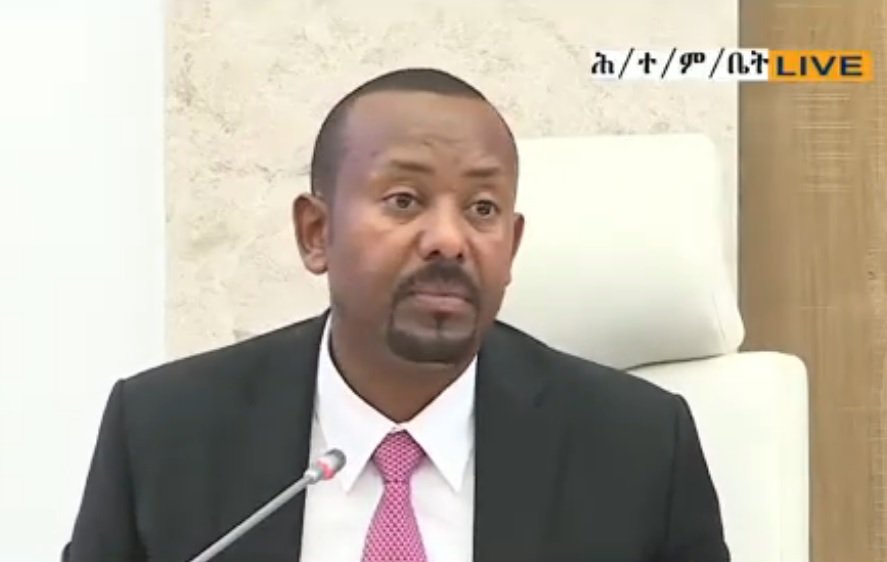
Addis Ababa, Ethiopia – Prime Minister Abiy Ahmed responded to questions related to the ongoing nationwide strike by healthcare professionals during the 42nd regular session of Parliament.
Abiy denied claims made in front of the chamber that his government had disregarded the demands of physicians. He emphasized that the doctors’ complaints were not disregarded and stated, “We agreed and discussed the doctors’ requests before parting ways.” The Prime Minister claims that the talks were fruitful and concluded with understanding. He did, however, also raise the possibility that outside agendas may have intruded into the discussion by posing as valid worries. “After coming to a consensus and having a thorough discussion, we shook hands and left the meeting on the doctors’ demands,” he said.
Demanding better pay, better working conditions, and institutional reforms, doctors, specialists, and other healthcare workers started the walkout on May 12. Some medical specialists in Ethiopia are said to make as little as $80 a month, making them some of the lowest paid in the region. Over the past two years, there has been a significant widening of the gap between earnings and the real cost of living, which has prompted physicians to take unprecedented collective action.
The government has reacted with mass arrests and intimidation measures in spite of assertions of fruitful discussions. By late May, over 120 medical personnel had been arrested without formal charges or warrants, according to Amnesty International and several other sources. Security personnel were reportedly conducting home invasions, seizing computers and phones, and arbitrarily detaining medical professionals. A few of those arrested were charged with sabotage, incitement, or working with anti-government groups.
In place of punitive actions, the government has been urged by the Ethiopian Human Rights Commission and other rights organizations to free those in custody and hold sincere talks, though majority of them were believed to have been released later.
Abiy also discussed the more general issue of public sector compensation in Parliament. He urged them not to compare their pay to that of their neighbors, even though he acknowledged that doctors, teachers, soldiers, and civil servants all make low salaries. “Even a police officer in another nation might make more money than a prime minister or member of parliament here,” he stated. “But serving our country is our job.” He urged patience but made no specific promises to raise wages or enhance working conditions.
The strike by healthcare workers coincides with a larger national crisis brought on by rising living expenses. Inflation stayed in double digits, at about 13.6 percent as of March 2025, despite a slight decrease from its peak of over 30 percent in 2023. Numerous economic surveys continue to rank Ethiopia as the most expensive country in Africa to live in. Rent, electricity, food, and transportation have all become extremely expensive.
The core cause of the healthcare workers’ strike and the reason it has struck a chord with other facets of society is the disparity between income and living expenses. Many Ethiopians see the doctors’ demands as part of a larger fight by public employees to make ends meet in an increasingly costly economy.
The Prime Minister’s tone in Parliament was a mix of caution and assurance. He reiterated the government’s readiness to consult with interested parties, but he recommended weighing calls for wage reform against the nation’s financial limitations. However, many felt that his comments were insincere given the high number of detentions and the worsening economic conditions. Although the strike’s outcome is still up in the air, its effects are significant. In addition to the future of Ethiopia’s healthcare system, the government’s legitimacy in resolving fundamental public complaints is also in jeopardy. Frustrations are growing not only among physicians but also throughout the country as there is no indication of wage adjustments or cost-of-living relief.
Subscribe : https://borkena.com/subscribe-borkena/
Join our Telegram Channel : t.me/borkena
Like borkena on Facebook
Add your business to Ethiopian Business Listing / Ethiopian Business Directory Business Listing Toronto
Join the conversation. Follow us on X (Formerly Twitter) @zborkena to get the latest Ethiopian News updates regularly. Subscribe to YouTube channel To share information or for submission, send e-mail to info@borkena.com