 announced yesterday the detention of Dr. Daniel Fentaneh. Read more.)
By: Getahun Tsegaye
Staff Reporter
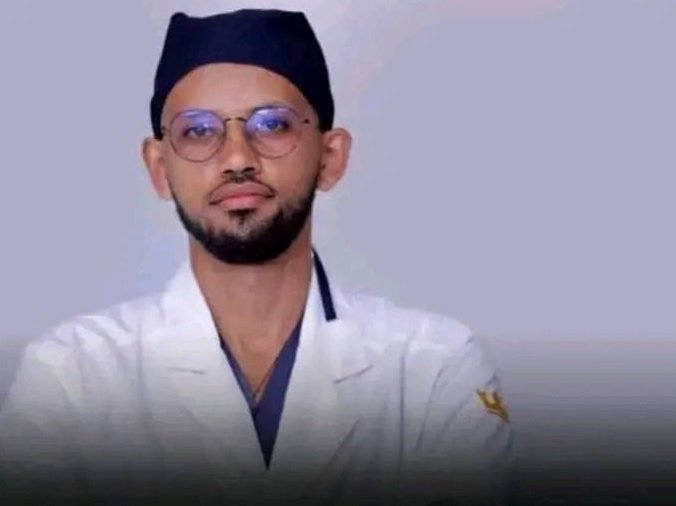
Addis Ababa, Ethiopia – The Ethiopian Health Professional Movement (EHPM) announced yesterday the detention of Dr. Daniel Fentaneh, a 4th-year Obstetrics and Gynecology resident, by security forces in Bahir Dar. This arrest comes amidst a month-long nationwide strike by public healthcare providers demanding better working conditions and adequate pay, a movement that has seen a government crackdown.
Dr. Daniel, a prominent voice in the healthcare community, is known for his advocacy for improved healthcare professional welfare and sector reform. He is the founder of MAC-Ethiopia and a key figure behind the “Dr. Debol Facebook page,” platforms that have raised awareness about the struggles faced by medical professionals. “Our esteemed colleague, the courageous Dr. Daniel Fentaneh, has been unjustly arrested simply for demanding his rights and the rights of health professionals in Ethiopia,” the EHPM stated, adding, “This is not just an attack on Dr. Daniel. It is an attack on freedom of speech, the dignity of the health workforce, and the fundamental human rights guaranteed by our Constitution.” The EHPM has demanded his immediate and unconditional release, asserting that “silencing voices of truth will never silence the truth itself.”
Human Rights Watch (HRW) echoed these concerns in a June 25 report, urging Ethiopian authorities to “immediately rescind the suspension of a prominent health professionals organization and meaningfully address public healthcare workers’ outstanding grievances.” The report highlights that the government suspended the Ethiopian Health Professionals Association (EHPA) in early June following the ongoing strikes. During the work stoppages, authorities “arbitrarily detained dozens of public healthcare workers across Ethiopia, either without charge or for peacefully exercising basic liberties.”
Laetitia Bader, deputy Africa director at Human Rights Watch, criticized the government’s approach, stating, “Since May, the Ethiopian authorities have resorted to repressive tactics instead of addressing healthcare workers’ concerns about their livelihoods and safety.”
The strike, which began with a social media campaign, escalated on May 13 when healthcare workers halted non-emergency services at public hospitals and medical teaching institutions nationwide. The Health Ministry responded on May 15, ordering striking workers to return or face legal action, alleging that “unnamed healthcare workers had spread false information.”
The dire financial situation faced by healthcare workers is a key driver of the strike. According to 2022 World Health Organization data, Ethiopia’s public healthcare spending is significantly below international benchmarks, with only 0.7% of GDP allocated compared to an average of 1.2% for other low-income countries. A surgeon interviewed by Borkena Watch revealed a monthly salary of just US$80, stating, “I cannot even change my shoes. I cannot even properly feed my child.”
The government’s response has included the suspension of the EHPA by the Ethiopian Authority for Civil Society Organizations (ACSO). The EHPA president, Yonatan Dagnaw, believes the suspension is directly linked to the health workers’ movement, despite ACSO’s claims of non-compliance with administrative guidelines. Prime Minister Abiy Ahmed met with a select group of healthcare professionals on June 21, but these discussions have yet to resolve the ongoing issues.
The crackdown has seen numerous arrests and detentions. The Ethiopian Police Commission announced on May 23 that 47 healthcare workers had been detained, while an online group claimed 148 arrests between early May and early June, though this figure remains uncorroborated. Notable cases include the detention of Dr. Mahlet Guush, a pathologist, for over three weeks after an interview with BBC’s “Focus on Africa” about the conditions faced by medical professionals. While initially investigated for inciting violence, she and others were released without charge.
While Ethiopia’s labor proclamation prohibits strikes by medical practitioners, the civil servants’ proclamation, which governs public healthcare workers, does not. However, authorities have accused striking healthcare workers of misconduct. Human Rights Watch emphasizes that international human rights law protects the right to strike, and while some restrictions are permissible for essential services, these do not allow for harassment, criminal charges, or the deprivation of freedom of expression and peaceful assembly.
“The Ethiopian authorities won’t be able to tackle the country’s serious healthcare problems by suspending doctors’ associations or by harassing and jailing healthcare workers,” Bader concluded. “The government should instead address healthcare workers’ legitimate concerns through meaningful dialogue.”
Subscribe : https://borkena.com/subscribe-borkena/
Join our Telegram Channel : t.me/borkena
Like borkena on Facebook
Add your business to Ethiopian Business Listing / Ethiopian Business Directory Business Listing Toronto
Join the conversation. Follow us on X (Formerly Twitter) @zborkena to get the latest Ethiopian News updates regularly. Subscribe to YouTube channel To share information or for submission, send e-mail to info@borkena.com