
By Mohamud A. Ahmed – Cagaweyne

This morning, as I rose and browsed through the global news streams, one story seized my attention with the force of a thunderclap reverberating through the halls of history. Israel’s preemptive, multi-pronged strike on Iranian nuclear and military infrastructure – code-named Operation Rising Lion – was not just a strategic maneuver. It was a blazing declaration across the skies of West Asia, a reminder that deterrence is not measured by rhetoric but by the ability to deliver fire before words can even form. Though my pen often roams the complexities of African affairs, today, it veers eastward, to the fault line of civilization where theology meets thermonuclear ambition – and where a single misstep can drag the world into a catastrophe scripted in prophecy and pride.
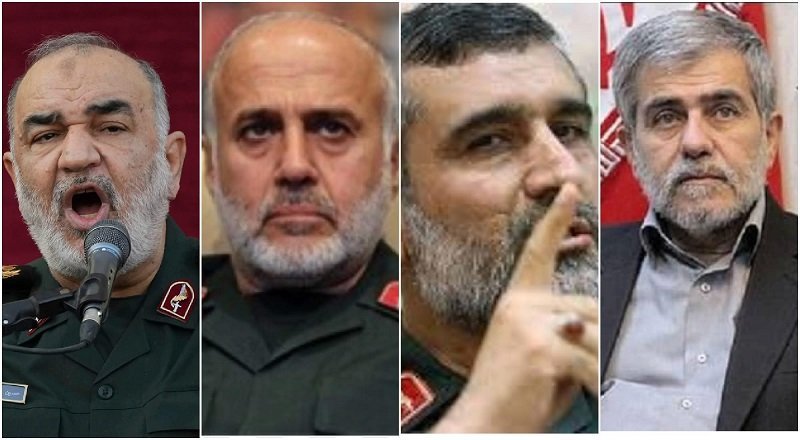
The operation was not merely an assault; it was a theatrical demonstration of air superiority and intelligence mastery. Over 200 Israeli aircraft sliced through Iran’s skies with surgical precision, targeting more than 100 high-value sites in less than six hours. Facilities in Natanz, Arak, and Isfahan were struck. Ballistic missile stockpiles reduced to smoking craters. IRGC headquarters decimated. Commanders like Salami, Bagheri, and Shamkhani—figures once veiled in myth and marble – were either eliminated or wounded. It was not a message. It was a sentence.
For Ayatollah Ali Khamenei, supreme but now supremely cornered, the walls have closed in. At 86, encircled by yes-men, weakened proxies, and imploding public morale, he now faces a trilemma more existential than ideological. One path beckons toward surrender – diplomatic retreat that salvages the regime’s shell but obliterates the theological spine of the revolution. Another urges military reprisal, a move already initiated with a flurry of drones and missiles that barely scratched Israeli territory, intercepted mid-air as if scripted by algorithms rather than war. The third, darkest road leads toward nuclear brinkmanship: a calculated acceleration toward breakout capability that would invite preemption, sanctions collapse, and perhaps a multi-front war of attrition.
And yet, each path is paved with ruin.
The mathematics of this moment are grim. Khamenei’s equation is no longer theological— it’s probabilistic.
• War = p×devastationp \times\text {devastation}
• Nuclear breakout = q×catastropheq \times text {catastrophe}
• Capitulation = r×irrelevancer \times \text {irrelevance}
Where p+q+r≤1p + q + r \ leq 1, because even in sum, the future offers no full salvation—only permutations of collapse.
What Operation Rising Lion achieved was not just tactical brilliance – it stripped the mythology of Iranian invincibility. For decades, the Islamic Republic played grandmaster to a regional chessboard filled with obedient proxies. Hezbollah, the Houthis, PMF units in Iraq, and hidden networks in Syria – all once moved with precision. But now, the grandmaster has been struck squarely in the face, and the pieces – disoriented, leaderless – scatter without coordination. Hezbollah, battered by Lebanon’s economic implosion, can bark but not bite. The Houthis, while menacing, are geographically removed. Iran’s empire of shadows has been lit up – and exposed for what it has become: brittle, overstretched, and fragmented.
Internally, the ground is shaking. For years, the Ayatollah governed through ideological hypnosis: the revolution, the West as the enemy, martyrdom as currency. But now, a new generation, born after 1989, educated, connected, and disillusioned, is no longer hypnotized. Their slogans – “Not Gaza, not Lebanon, my life for Iran” – are not whispered in back alleys but shouted in defiance. The gap between state mythology and lived reality has become unbridgeable. The strikes did not merely obliterate facilities; they obliterated illusions.
Yet Tehran’s voicebox remains defiant. “Israel has prepared for itself a bitter, painful fate,” Khamenei declared on national television, his voice a mixture of trembling fury and weary resolve. “We will not let this Zionist crime go unpunished,” roared IRGC spokesman Brigadier General Shekarchi. But words, once swords, now clatter like broken glass. In the age of satellite-guided weaponry and real-time intelligence, vengeance has a half-life shorter than uranium. Fury may fuel ideology, but it does not intercept jets. Anger does not reconstruct reactors. Emotion cannot reconstitute deterrence.
The geopolitical ramifications are tectonic. The United States, cautious but clearly aligned with Israel, walks the tightrope between strategic solidarity and regional containment. Russia, entangled in Ukraine, has little bandwidth to meaningfully intervene beyond UN statements and whispered diplomacy. China, heavily invested in Iranian oil, watches nervously – not because of ideology, but because instability imperils economic flow. Gulf monarchies, long fearful of Iran’s regional overreach, are now strategizing how to capitalize on Tehran’s weakened hand without igniting a wider fire.
This is a moment of reckoning not just for Iran, but for the very architecture of Middle Eastern power. The old balance – where proxy warfare, rhetorical bravado, and mutual deterrence held chaos in check – is collapsing. Israel has demonstrated that the calculus has changed: it will no longer wait for the mushroom cloud to form before it acts. Preemption, once taboo, is now doctrine. The Begin Doctrine, forged in 1981 against Iraq’s Osirak reactor, has been reborn – and its consequences will echo far beyond Tel Aviv or Qom.
And what of Iran’s nuclear ambition? It has now become both a shield and a noose. A test detonation might galvanize the base, but it would also isolate Iran diplomatically, economically, and possibly militarily. The moment Iran crosses that threshold, it invites a coalition of containment – led not just by Israel, but by regional powers who now view the Ayatollah’s vision as a threat to the very scaffolding of the Middle East.
The tragedy here is Shakespearean. A regime built on martyrdom and revolution is now trapped by its own mythology. To bend is to betray the martyrs. To fight is to destroy the nation. And to hesitate is to be dismantled by an enemy that no longer plays by yesterday’s rules.
This is not a clash of civilizations. It is a duel between relevance and extinction. Khamenei does not lead a rising empire – he presides over an ideological ruin, bracing for collapse behind walls painted with sermons and guarded by ghosts.
And yet, the most dangerous moment is precisely this: when a regime has nothing left to lose. It is here, in the twilight of deterrence, that logic departs and fanaticism floods the vacuum. The world must tread carefully. For Iran’s agony is no longer hidden. It is televised, tweeted, and tracked by satellites. Every decision from here on will echo across borders, markets, and minds.
Let history record this not merely as a strike, but as a signal. The age of illusions is ending in the Middle East. What comes next – order or oblivion – depends on whether the remaining actors can rise above revenge and step back from the edge.
The writer is a columnist, Political and Security Analyst, Researcher at Greenlight Advisors Group – Somali Region of Ethiopia. He can be reached at +251900644648
Editor’s Note : Views in the article do not necessarily reflect the views of borkena.com
__
Subscribe : https://borkena.com/subscribe-borkena/
Join our Telegram Channel : t.me/borkena
Like borkena on Facebook
Add your business to Ethiopian Business Listing / Ethiopian Business Directory Business Listing Toronto
Join the conversation. Follow us on X (Formerly Twitter) @zborkena to get the latest Ethiopian News updates regularly. Subscribe to YouTube channel To share information or for submission, send e-mail to info@borkena.com
I am reading an editorial page from ” Jerusalem post” kkk . I agree with your analysis. In Islamic Shiea history Hassen and Hussain both the grand sons of Prophet Muhammed : Hussain martyred himself Hassan capulated for tyrany . The fate of Iran remains one of the two Hussain or Hassen.