
By Surafel Getahun
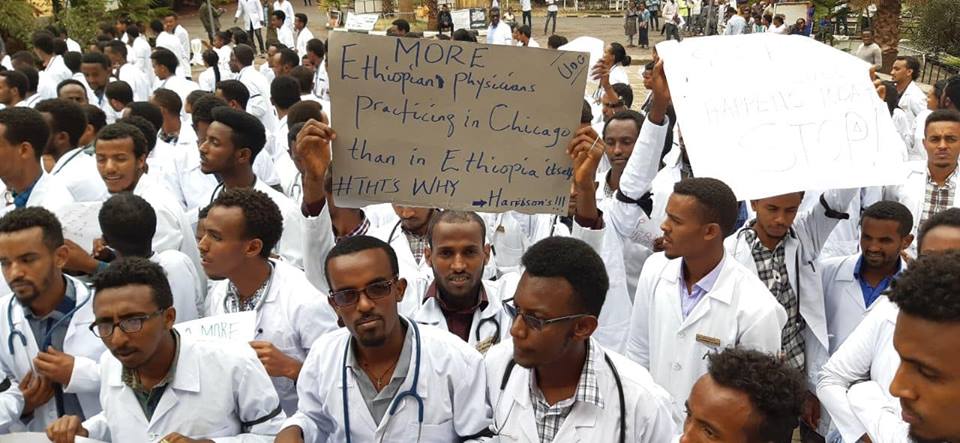
Ethiopia is currently facing a severe healthcare crisis as thousands of doctors, nurses, and medical professionals go on strike, demanding better wages, improved working conditions, and an end to government repression. The strike, which has paralyzed hospitals across the country, highlights the deepening rift between the ruling Prosperity Party (PP) and essential public sector workers. The government’s heavy-handed response—including arrests, intimidation, and forced conscription—has drawn widespread condemnation and risks exacerbating Ethiopia’s already fragile healthcare system. This essay examines the causes of the strike, the government’s crackdown, and the long-term consequences for Ethiopia’s public health and political stability.
1. Causes of the Medical Professionals’ Strike
A. Poor Working Conditions and Low Salaries
Inadequate Pay:Despite working in high-risk environments (especially during conflicts and disease outbreaks), Ethiopian doctors earn as little as $200–$400 per month, far below regional standards.
Lack of Medical Supplies:Hospitals frequently run out of basic medicines, gloves, and oxygen, forcing doctors to work with limited resources.
Overcrowded Facilities: Due to underfunding, public hospitals are overwhelmed, with doctor-to-patient ratios among the worst in Africa.
B. Government Neglect and Broken Promises
The Prosperity Party has repeatedly ignored union demands for salary increases and better infrastructure. Promises of hazard pay during COVID-19 and the Tigray war were never fully honored.
C. Political Repression and Fear of Retaliation
Medical professionals who previously protested were arrested or fired, creating a climate of fear. The government labels striking doctors as “anti-peace” or “terrorists,” discouraging dissent.
2. The Government’s Response: Crackdown and Forced Labor
A. Mass Arrests and Intimidation
– Security forces have detained dozens of doctors and healthcare workers in Addis Ababa, Oromia, and Amhara regions. Threats to medical licenses—the government warns striking professionals they will lose their accreditation.
B. Forced Conscription Under State of Emergency
Using emergency decrees, the government has drafted striking doctors into military service, claiming they are needed for “national duty.” Some doctors report being forced to work in military camps under threat of imprisonment.
C. Propaganda and Smear Campaigns
State media portrays striking doctors as “traitors” or agents of opposition groups like the Oromo Liberation Army (OLA) and Fano militia. Government officials accuse them of “abandoning patients while ignoring their legitimate grievances.
3. Impact on Ethiopia’s Healthcare System
A. Collapse of Public Health Services
Hospitals are turning away patients, with only emergency cases receiving minimal care. Rise in preventable death of pregnant women, chronic disease patients, and war-wounded civilians are at extreme risk.
B. Brain Drain: Doctors Fleeing Ethiopia
Many medical professionals are seeking asylum abroad or moving to private clinics, worsening the public healthcare crisis. Ethiopia already has one of the lowest doctor-per-capita ratios in the world (0.1 doctors per 1,000 people) the strike will worsen this.
C. Erosion of Trust in Government
The crackdown has turned public opinion against the Prosperity Party, with many Ethiopians blaming the government, not the doctors. Protests are spreading to other sectors (teachers, university staff), signaling a broader labor movement.
4. Future Implications: A Looming Disaster
A. Long-Term Damage to Healthcare .
If the strike continues, Ethiopia could face a generation of understaffed hospitals, worsening maternal mortality, infectious disease outbreaks, and malnutrition crises. Foreign aid cuts may follow if donors lose confidence in Ethiopia’s healthcare governance.
B. Escalating Civil Unrest.
The government’s repression could radicalize more professionals, pushing them toward opposition movements. General strikes could destabilize the economy, similar to the 2019 Sudanese protests that toppled Omar al-Bashir.
C. International Repercussions
The World Health Organization (WHO) and Amnesty International have condemned Ethiopia’s treatment of doctors. If abuses continue, Ethiopia risks further sanctions** and isolation from global health partnerships.
Conclusion: A Government at War With Its Own Health System
The Ethiopian medical strike is not just a labor dispute—it is a symptom of systemic governance failure. The Prosperity Party’s brutal crackdown may suppress protests temporarily, but it will accelerate the collapse of Ethiopia’s healthcare system and deepen public anger. If the government continues to prioritize coercion over dialogue, the consequences will be catastrophic: more deaths, more instability, and a nation stripped of its healers.
Editor’s Note : The article appeared first on the personal SM page of Kebour Ghenna
__
Subscribe : https://borkena.com/subscribe-borkena/
Join our Telegram Channel : t.me/borkena
Like borkena on Facebook
Add your business to Ethiopian Business Listing / Ethiopian Business Directory Business Listing Toronto
Join the conversation. Follow us on X (Formerly Twitter) @zborkena to get the latest Ethiopian News updates regularly. Subscribe to YouTube channel To share information or for submission, send e-mail to info@borkena.com