
By: Getahun Tsegaye
Staff Reporter
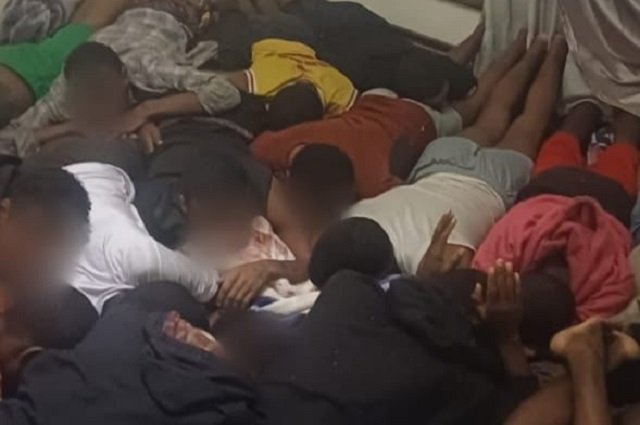
Addis Ababa, Ethiopia —South African police have rescued 44 Ethiopian migrants — including 17 minors — from a house in the affluent suburb of Sandton, Johannesburg, in what authorities are calling another alarming case of human trafficking, the Times of India reported.
Officers were alerted by cries for help coming from the home, leading to the grim discovery. “We found that there were 44 illegal immigrants that were locked in rooms,” said SAPS spokesperson Lieutenant Colonel Mavela Masondo in an interview with Newzroom Afrika. “Seventeen of them were minors.”
The case adds to a growing string of similar incidents across Johannesburg, where Ethiopian migrants, many fleeing poverty and unemployment, are being exploited by smuggling networks. In January, 26 Ethiopians were rescued from a house where they were found unclothed and severely malnourished. In August, more than 80 were discovered locked inside a small suburban residence, suffering under “inhumane conditions,” according to police.
“These young people are desperate. They’re promised a better life, and they end up locked away like animals,” said a neighbor near the Sandton house, who asked to remain anonymous. “We need to ask: who is protecting them once they arrive here?”
Three suspects were arrested Thursday night, and an illegal firearm was recovered at the scene. Police say they are still trying to gather more information from the victims with the help of interpreters.
South Africa has long been a magnet for undocumented migrants from across Africa, particularly from Ethiopia. Migrants often traverse thousands of kilometers through Kenya, Tanzania, and Zambia in search of a better life in the continent’s most industrialized nation. But for many, the dream becomes a nightmare.
Earlier Borkena reported that regions like Kembata and Hadiya in southern Ethiopia have become hotspots for migration. A study found that between 2016 and 2018 alone, an estimated 300,000 Ethiopians attempted the overland journey. Many never make it.
Tadios Abebe from Hadero Woreda is one of countless Ethiopian parents enduring the agony of silence. His son, Ephrem, disappeared more than a year ago after passing through Zambia. “We waited with anticipation, expecting him to call day or night. But we haven’t even heard his voice,” Tadios said, tears gathering in his eyes. “I am still waiting for my son.”
Labor expert Ashenafi Lalago points to systemic unemployment and false promises by smugglers as major drivers. “Even university graduates are now joining the migration wave,” he explained. “Brokers convince families to sell their homes to fund these journeys — it’s a calculated exploitation of hope.”
Bereket Abebe, a former migrant, spent six years imprisoned in Zambia’s notorious Chimbo Kalila Prison after being caught. “That place was hell,” he said. “If you don’t see someone in the morning, you can be almost certain they’ve died overnight.”
In an effort to curb such tragedies, the Ethiopian government has launched a National Anti-Trafficking Hotline in partnership with the International Organization for Migration (IOM). It has also unveiled a five-year National Communication Strategy and a joint action plan with the Ministry of Women and Social Affairs to promote safe migration and regular pathways.
Yet despite these initiatives, trafficking operations remain deeply entrenched. “There’s a deep cultural belief that South Africa is the gateway to a better life,” said Bereket. “Even when deported, many try again.”
In Hadero, Tadios has left Ephrem’s bedroom just as he left it. “I believe that God will help me, and one day, my son will come back.”
The rescue of the 44 Ethiopians in Johannesburg is another stark reminder of the human cost of migration without protection — a crisis fueled by desperation and sustained by silence.
__
Subscribe : https://borkena.com/subscribe-borkena/
Join our Telegram Channel : t.me/borkena
Like borkena on Facebook
Add your business to Ethiopian Business Listing / Ethiopian Business Directory Business Listing Toronto
Join the conversation. Follow us on X (Formerly Twitter) @zborkena to get the latest Ethiopian News updates regularly. Subscribe to YouTube channel To share information or for submission, send e-mail to info@borkena.com
These are the lucky ones to be discovered alive. We had read news in the past where such migrants were found suffocated and starved to death. I don’t see any end of such tragedy involving citizens of the old country any time soon. It will instead be getting worse as long as the population size keeps exploding, not enough sustainable jobs to absorb the young workforce, the disappearance of arable land due to human and climatic factors and lack of peace and stability due to senseless and destructive conflicts. Look at what is going on both in Amhara and Oromia regions. It is reported that millions of students cannot get their education because their schools are shuttered and their teachers are either killed or had to flee to save their lives. Those young students have nothing else to do. They are rendered hapless and are forced to lose hope inside the country making them vulnerable to conniving human traffickers. So the tragedy will go on no matter who is cooking at Arat Kilo.
First and foremost the runaway population has to be addressed and the only way that can be achieved is with an all out industrialization. Industrialization will liberate women whether misogynists like it or not. Women in their millions will be flocking into factories instead of staying at home incubating babies every 12 months. What saddens me most is an all out industrialization does not seem possible due to lack of peace and stability n the two most populated Amhara and Oromia regions.