
By Mekonnen Solomon
After successful sea trial shipment of flowers to Europe in Dec 2023, Ethiopian Flower producing and exporting companies demonstrated their commitments to intensify blossom exports through sea transport option.
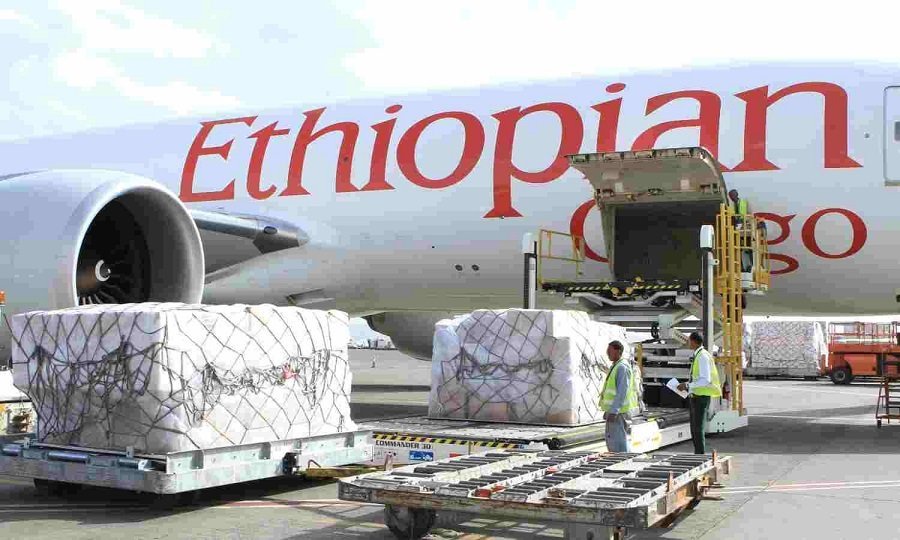
In mid-April 15, 2025, 20 palleted flower constituting 188,000 stem or 5382 kg of summer and rose flower was consolidated by four companies, in refrigerated truck in Bishoftu town , and loaded on the vessel in Djibouti and left Jedda, Saudi Arabia. Once it arrives in Jeddah it will be loaded on a ship by Mediterranean Shipping Company and sail to Spain, specifically to Valencia. The current trend in flower transportation focuses on sustainability including global warming, food safety fuel price, with a growing emphasis on ocean freight.
Today environmental risks are prompting countries to adopt improved practices through various strategies. These include adoption of alternative transportation modality, promotion of innovative cool chain management, implementing green initiatives, and fostering collaboration between exporters, governments, service providers and other stakeholders. As flower importing countries become increasingly aware of environmental and global market turmoil , flower farm operators, logistics service providers and input suppliers are adapting the best transport option to ensure a greener future. The cut flower industry, which traditionally had a significant environmental footmark, is embracing more sustainable practices at every stage, from cultivation to delivery. Sea freight is now considered as the most viable option for addressing multiple challenges faced by the floriculture industry.
Very recently the Ethiopian floriculture industry is constrained by the occurrence of quarantine pests on its flower shipments. The False Codling Moth, a pest that could damage fruits and vegetables, leading to economic losses in the citrus and other agricultural industries is a major concern for European flower imports, particularly from East African Nations. The European Union has increased inspections of flower shipments, especially rose exports, from Ethiopia, due to the risk of false codling moth infestation. This concern has led to increased inspection rates which has a profound consequence on trade restriction to Ethiopia.
Today sea frights have been considered as a viable means to manage false codling moths. The False Codling Moth is not well-adapted to low temperatures for extended periods and believed to slay all stages of pest’s life cycle. Exposure of flower to stable temperatures below 2 degrees centigrade with specific humidity level for extended periods could only work if flower is transported by sea. Extended transit time and prolonged journey typically lasting 3-4 weeks create an ideal condition to kill the egg of the pests. By contrast very short transit time and quick journey of flower by air cargo could not give a chance or an opportunity to control this quarantine pest. Due to this reason some farms gradually believed that ocean freight is beneficial for mitigation of false codling moths .
There is also a growing concern on flower carbon footprint among European flower retail shops who are the major buyers of Ethiopia blossom, the concern surrounding flowers’ carbon footprint primarily stems from the air transport energy-intensive practice. The European Union is deeply anxious about reducing its carbon footprint and achieving climate neutrality. The EU has set ambitious targets for emissions reduction, including a legally binding target to reduce net greenhouse gas emissions by at least 55% by 2030 and achieve net-zero emissions by 2050.which is regarded as a big risk for growers who export their flower product through plane.
Many research in the logistics field reveal that air freight can have a carbon footprint that’s something around 10 to 50 times higher than sea freight for the same amount of cargo over the same distance. Airplanes burn a ton of jet fuel to stay in the air and move quickly. This results in a much higher carbon footprint per ton of flowers. Unlike Vessels, airplanes use jet fuel, which is more refined and contributes significantly to carbon dioxide emissions. By contrast Sea freight has lower toxic and carbon dioxide Emissions, Ships can carry massive amounts of cargo on trips. While they do burn fuel, the number of emissions per ton is significantly lower compared to airplanes.
Thus, ocean freight is considered more advantageous than air freight. Ships are much slower, which means longer transit times. But this slower pace is what makes them more fuel-efficient. They’re like the tortoises of the transportation world. Ships use heavy fuel oil, which is cheaper but also dirtier. However, even with the dirtier fuel, the sheer volume of goods they carry makes the per-unit carbon footprint lower.
The other concern and frustration is the fuel Price of existing transport options. As the price of fuel increases there is a natural tendency to increase tariffs and surcharges to cover those extra expenses. Ships often use a heavy, thick, sludgy, and relatively inexpensive type of fuel that’s left over after the refining process of crude oil. It’s not the cleanest, least refined and readily available fuel. The lower cost of fuel contributes to the overall lower operating costs. By contrast cargo /Airplanes use jet fuel, which is a highly refined form of kerosene. Jet fuel is significantly more expensive than heavy fuel oil. This higher fuel cost is a major factor in the overall higher cost of air freight. Thus, using ocean transport is much cheaper than air transport Since the freight cost of sea transport is greatly less than Air cargo charge, exporters who prefer ocean freight are more advantageous than exporters who prefer air transport. Although Air Fright takes less time there can be enormous temperature peaks during the journey which can negatively influence flowers. By contrast sea transport the temperature remains stable and the flowers remain dormant.
Sea freight has another feature. one largest cargo ship in the world that can carry 24,346 twenty-foot equivalent units of cargo. In other words, the ship can carry 24,346 20-foot containers. Each standard 20-foot container has 1,172 cubic feet of volume.
The capacity of air freight is just a fraction of this. The Boeing 747 is one of the largest aircraft in the world. When you configure this plane as a freighter, it can hold only about 26,000 cubic feet of cargo. So, if you are transporting bulky or heavy items, it is better to pick sea freight. This rule is also applicable to large-scale shipments.
Nevertheless, both sea freight and air freight come with their own set of restrictions. The extent of limitations can also vary depending on factors like cargo type, regulations, and destination. However, if you compare in terms of overall flexibility, sea freight seems to have an edge here.
Air freight tends to have a lot more restrictions when compared to sea freight. Not talking only about the stringent security measures at airports or weight limitations set by air cargo carriers. Restrictions on flower filler materials are also pretty common in air transport. Sea freight is generally more accommodating in terms of the types of cargo it can handle. on the whole, the more stringent rules posed by air freight make sea freight a more versatile option for loading. The choice between sea freight and air freight ultimately boils down to a delicate balance of priorities.
Generally, sea freight transport has been considered by many as a feasible means to control pests like false codling moths, cheap means of transportation, very low carbon footprint, and bulk transport advantage.
However, it doesn’t matter which channel we choose, navigating the complex landscape of global logistics is not easy. We need to stay constantly informed and make data-driven decisions. This is where Freight, a cutting-edge freight tech platform, emerges as a game-changer. It offers real-time insights into sea freight and air freight rates and ensures that you are always one step ahead of your shipment, whether it is information about its cost, schedules or charges.
Mekonnen Solomon is Horticulture Export Coordinator at the Ministry of Agriculture (MOA). He can be reached at ehdaplan@ gmail.com
Editor’s Note : Views in the article do not necessarily reflect the views of borkena.com
__
Subscribe : https://borkena.com/subscribe-borkena/
Join our Telegram Channel : t.me/borkena
Like borkena on Facebook
Add your business to Ethiopian Business Listing / Ethiopian Business Directory Business Listing Toronto
Join the conversation. Follow us on X (Formerly Twitter) @zborkena to get the latest Ethiopian News updates regularly. Subscribe to YouTube channel To share information or for submission, send e-mail to info@borkena.com