 Read more.)
Since assuming power in 2018, Ethiopian Prime Minister Abiy Ahmed has presided over a nation that has spiraled into chaos, division, and despair. Initially hailed as a reformer for his early peace initiatives, such as the 2018 agreement with Eritrea that earned him the Nobel Peace Prize, Abiy’s tenure has devolved into a period marked by political repression, widespread suffering, institutional decay, and ethnonationalist policies that have fractured Ethiopia’s social fabric. Over the past seven years, his leadership has not only failed to deliver on promises of unity and prosperity but has plunged the country into a multifaceted crisis, cementing his legacy as one of catastrophic failure.
Political Repression: Silencing Dissent
Abiy Ahmed’s rise to power was accompanied by promises of democratic reform, yet his rule has been characterized by relentless political repression. Opposition leaders, journalists, and activists have faced arbitrary arrests, prolonged detentions, and violent crackdowns. The government has systematically targeted voices critical of its policies, particularly those from ethnic groups opposed to Abiy’s centralizing agenda. Laws such as the 2020 Hate Speech and Disinformation Prevention Proclamation have been weaponized to stifle free expression, while internet shutdowns and media censorship have become routine tools to suppress dissent. This authoritarian turn has eroded any pretense of democratic governance, replacing it with a regime that rules through fear and intimidation.
Humanitarian Crisis: Hunger, Displacement, and Abduction
Under Abiy’s leadership, Ethiopia has witnessed a humanitarian disaster of staggering proportions. Millions have died or been left vulnerable due to famine, exacerbated by conflict and government neglect. In regions like Tigrai, Amhara, and Oromia, ongoing wars have displaced millions of people, forcing families into overcrowded camps or precarious cross-border migrations. Kidnappings for ransom have surged, particularly in conflict zones, with security forces often complicit or absent. The lack of free movement, as roads are blocked by militias or military checkpoints, has severed access to food, healthcare, and livelihoods, leaving 21 million Ethiopians in dire need of aid. Cholera outbreaks and starvation deaths underscore a government incapable of—or unwilling to—address its people’s suffering.
Collapse of Independent Institutions
Abiy’s administration has dismantled the foundations of independent governance. The judiciary, once a potential check on executive power, has been reduced to a tool of the state, with judges pressured to rule in favor of government interests. Parliament operates as a rubber stamp, passing laws without debate or opposition, as Abiy’s Prosperity Party dominates through coercion and electoral manipulation. The police and security apparatus have grown unchecked, accused of extrajudicial killings, torture, and mass arrests, particularly during protests or in restive regions. This erosion of institutional integrity has left Ethiopia without mechanisms for accountability or justice, entrenching Abiy’s authoritarian grip.
Education in Crisis: Millions of Children Denied Schooling
The education system has crumbled under Abiy’s watch, with millions of children unable to attend school due to conflict, displacement, and economic collapse. In war-torn areas like Amhara and Tigrai, schools have been destroyed or repurposed as military bases, while in other regions, poverty forces families to prioritize survival over education. UNICEF estimates that millions of children are out of school, a number worsened by the government’s failure to rebuild infrastructure or ensure safety. The government itself has admitted that 7.6 million children are out of school in areas of conflict in the North of the county. This educational crisis threatens to create a lost generation, further deepening Ethiopia’s long-term instability.
Conflicts: A Nation at War with Itself and Beyond
Abiy’s tenure has been defined by unrelenting conflict. Internally, the Tigrai War (2020–2022) devastated the region, with allegations of genocide and ethnic cleansing leveled against federal forces and their allies. Violence has since spread to Amhara and Oromia, pitting ethnic militias against each other and the state. Regionally, tensions with Sudan over the Al Fashaga border dispute and with Egypt over the Grand Ethiopian Renaissance Dam have escalated, risking broader instability. Internationally, Abiy’s early peace with Eritrea has unraveled, with Asmara now being accused of fueling Ethiopia’s internal wars. These conflicts have drained resources, killed tens of thousands, and shattered any hope of national cohesion.
Stalled Reconciliation and Truth-Finding
Abiy promised reconciliation to heal Ethiopia’s historical wounds, yet his government has made no meaningful progress. The Transitional Justice Working Group, established to address past abuses, has been criticized as a superficial gesture, lacking independence or enforcement power. In Tigrai and elsewhere, victims of atrocities demand accountability, but Abiy’s administration has prioritized political survival over truth, refusing to investigate its own forces or allies. This failure has deepened mistrust among Ethiopia’s diverse ethnic groups, fueling cycles of revenge and violence.
Economic Collapse: Stagflation and Widespread Poverty
Ethiopia’s economy, once a regional promising unit, has faltered under Abiy’s mismanagement. Stagflation—high inflation coupled with stagnant growth—has eroded purchasing power, while currency devaluation and foreign debt have crippled state finances as well as savings. Unemployment has soared as businesses shutter amid conflict and instability, and poverty rates have climbed to 72% of the population, according to recent estimates. Grand projects like the dam have so far yielded little tangible benefit for ordinary citizens, who face skyrocketing food prices and shortages. Abiy’s economic vision, once touted by allies as transformative, has instead thrown millions into deeper hardship.
Rigged Elections: Undermining Democracy
Abiy’s hold on power rests on a foundation of electoral fraud. The 2021 general election, delayed by the pandemic and conflict, was marred by irregularities, including voter intimidation, opposition boycotts, and the exclusion of entire regions like Tigrai. The Prosperity Party’s purported landslide victory was widely seen as orchestrated, with independent observers barred or harassed. By rigging the game, including chairing the session where his own election as prime minister was held, Abiy has ensured his continued rule without a legitimate mandate, further alienating large swathes of the population and undermining any claim to democratic legitimacy.
Ethnonationalist Divide-and-Rule Tactics
Perhaps Abiy’s most damning failure is his reliance on ethnonationalist strategies to consolidate power. Rather than fostering unity, he has exploited ethnic divisions, aligning with certain groups—most notably Oromo elites—while marginalizing others, such as the Tigrayans and Amharas. Policies like ethnic gerrymandering and forced evictions have inflamed tensions, turning neighbors into enemies. This polarizing approach, rooted in a vision of centralized control masked as federalism, has unraveled Ethiopia’s fragile multiethnic tapestry, pushing it toward disintegration.
Conclusion: A Legacy of Failure
Seven years into Abiy Ahmed’s leadership, Ethiopia stands as a shadow of its former self—a nation ravaged by repression, conflict, and despair. His ethnonationalist coup, cloaked in reformist rhetoric, has delivered neither peace nor prosperity, but instead a litany of failures: a silenced populace, a starving and displaced citizenry, broken institutions, an uneducated youth, endless wars, a stalled reconciliation process, a collapsing economy, sham elections, and a divided society. Far from the visionary leader he promised to be, Abiy has led Ethiopia into an abyss, leaving a legacy that will take generations to repair—if it can be repaired at all.
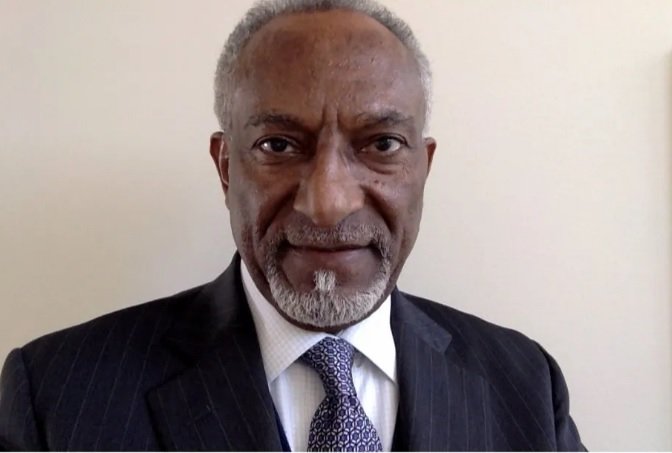
Teshome Abebe, PH.D. is Professor of Economics and a Former Dean, as well as Provost and Vice President for Academic Affairs of various institutions.
*While researching for this opinion piece, I have come across work by Sisay M. under the name of @amorawwub in X that shows a list of 25 points under the topic “Abiy Ahmed’s 7-Year Scorecard ‘Success’.” I have expanded my list in article form to provide context. That the list of ‘Success’ appears to coincide is purely coincidental.
Editor’s Note : Views in the article do not necessarily reflect the views of borkena.com
__
Subscribe: https://borkena.com/subscribe-borkena/
Join our Telegram Channel : t.me/borkena
Like borkena on Facebook
Add your business to Ethiopian Business Listing / Ethiopian Business Directory
Join the conversation. Follow us on X (Formerly Twitter) @zborkena to get the latest Ethiopian News updates regularly. Subscribe to YouTube channel To share information or for submission, send e-mail to info@borkena.com
Sir, we have a pile of information about the current prevailing political crisis in Ethiopia. The hard fact lies what we are missing an intellectual who proposes a pragmatic algorithmic solution for public awareness.
The Tale of ‘Two Abiys’(!?): Abiy is an Ethiopian Hero who rescued Ethiopia from the TPLF-designed self-extinction [inter-ethnic bloodshed/economic collapse/swift demise]. This Hero kept Ethiopia afloat despite TPLF’s fascism: youtu.be/Pg3WuF1eXww?t=5
Abiy/Ethiopia/Democracy/Election: Ethiopia’s last election was held under on-site scrutiny of UN, EU, US, AU, NGOs, etc. Abiy’s Party won! The Party elected Abiy as the PM!
Abiy’s Ethiopia: Abiy took Ethiopia from “World’s Poster Child of Poverty & Famine” to “World’s Poster Child of Prosperity & Greenery.” Go & See! Seeing is Believing!
‘Amaras & Genocide’: Christian Tadelle told Simeneh [Walta TV 2019]→“Over 15 million Amaras live in Oromia.” Isn’t that almost twice the Amaras in Amara Zone? Are those the ‘Genocide-Proof’ Amaras? [Cf.: Never met any Oromo in Gojjam & Gonder].
The Amara Pied Pipers [APP]: The Pseudo Amara Fanno [PAF] that toils to gas-light Amaras to self-destruction reminds me of the Pied Piper and his revenge on the village. [NB: Ask Seyoum Teshome & Abebech Kahsay for Zèmènè Kassie’s Eritrean passport].
Amaras/War Crimes [WC]/Human Rights Violations [HRV]: Why accuse Abiy for all the WC & HRV enumerated below orchestrated/perpetrated/committed by the APP/PAF?
(1). Using Amara civilians as Human Shields; (2). Using churches & monasteries as bases & battle fields; (3). Desecrating mosques; (4). Closing schools & denying Amara children the education they deserve; (5). Burning harvest-ready crops & truck loads of export cereal; (6). Carjacking ambulances & trucks loaded with fertilizer/medicine/fuel; (7). Burning enterprises/farms; (8). Killing Amara intellectuals/teachers/students; (9). Shaming & executing Peace Envoy elders/priests/imams; (10). Blocking roads/disrupting services; (11). Kidnapping/Ransom/Murder; (12). Unholy alliance with Egypt [TPLF-EPLF-OLF].
Now, our country Ethiopia needs not a-one-Man show. We urgently need a collective solution to stop the miserable situation our children confronted with. First and foremost is the war in Amhara, Oromia, region should stop; not with bla bla accusations but from innermost sincerity that comes from the Very Will of the innocent victimized civilians.