
By Habte H.
The Rise of an Unlikely Leader
Abiy Ahmed’s ascent to Ethiopia’s highest office was as unexpected as it was momentous. Prior to his rise, he was a relatively obscure figure in national politics, with few considering him a contender for prime minister. Yet, in 2018, he emerged as a symbol of hope in a country yearning for change.
His appointment was greeted with widespread enthusiasm. Urban professionals, rural farmers, intellectuals, religious leaders, and ethnic groups long pushed to the margins all rallied behind him. Even the skeptical Ethiopian diaspora saw in Abiy a chance to finally unify a fractured nation and break free from the cycle of authoritarian rule.
He presented himself as a reformer – young, energetic, and articulate, speaking the language of peace, development, and reconciliation. The excitement was palpable; for the first time in decades, Ethiopians across the political spectrum dared to believe in a brighter future.
Early Reforms and the Illusion of Progress
In his first year in office, Abiy launched a wave of reforms that seemed to confirm the public’s faith in his leadership. Political prisoners were released, banned media outlets reopened, and exiled opposition figures were welcomed back home. His philosophy of Medemer, meaning synergy or coming together, was positioned as a new social contract.
Internationally, Abiy’s popularity soared. His peace deal with Eritrea earned him the Nobel Peace Prize and painted him as a beacon of hope in a region known more for conflict than cooperation.
But the optimism was short-lived. The reforms, though symbolically powerful, lacked structural depth. The euphoria masked the absence of genuine institutional change. Within a short time, it became clear that Abiy’s leadership was less about inclusive reform and more about consolidating power under the guise of transformation.
Power Consolidation and Authoritarian Turn
As cracks in his leadership began to show, Abiy pivoted from reformer to strongman. He began centralizing power, side-lining voices of dissent, and replacing institutions meant to serve the people with ones loyal only to him. Checks and balances were stripped away. Independent institutions, once pillars of democracy, became instruments of control.
Trusted allies who had championed his rise – figures like Dr. Lemma Megersa, Mr Demeke Meonen and Dr. Gedu Andargachew – were marginalized or politically neutralized. Opposition leaders who had once engaged with his government found themselves persecuted, imprisoned, or forced into exile.
Ethnic tensions, rather than being resolved, were inflamed. Instead of healing longstanding divisions, Abiy weaponized them, pitting communities against each other in pursuit of political dominance. His rhetoric of unity gave way to the politics of fear, loyalty, and suppression.
Civil War and the Tragedy of Tigray
One of the most devastating consequences of Abiy’s authoritarian shift was the eruption of full-scale war in Tigray. What began as a political dispute escalated into a brutal military conflict after Abiy ordered a military offensive against the region’s leadership.
The consequences were catastrophic. Civilians bore the brunt of the violence. Massacres, famine, displacement, and systemic destruction unfolded on a horrifying scale. Millions were forced from their homes, countless lives were lost, and the region was left in ruin. International outrage grew, but the government remained defiant, justifying its actions under the guise of national security.
This war not only devastated Tigray – but it also tore the social fabric of the entire country, exacerbating ethnic divisions and dragging Ethiopia into a humanitarian crisis of historic proportions.
From Ally to Enemy: The Amhara Crisis
Even as the war in Tigray wound down, Abiy’s government turned its focus toward the Amhara region – ironically, one of his strongest bases of support during his rise. Citing security concerns, his forces launched military operations that quickly turned into violent crackdowns on civilians.
Drone strikes, mass arrests, village raids, and extrajudicial killings became commonplace. The Amhara people, once seen as key allies, were now cast as enemies of the state. Their loyalty was repaid with bullets and bombs. Entire communities have been left scarred, with many still trapped in an atmosphere of fear and repression.
This betrayal underscored a central theme of Abiy’s rule: no alliance is permanent, and no loyalty is sacred when power is at stake.
War on Faith: Attacks on Religious Institutions
Beyond politics and war, Abiy’s administration also launched an unprecedented assault on Ethiopia’s religious traditions. Longstanding religious institutions, particularly the Ethiopian Orthodox Tewahedo Church and prominent Islamic communities, found themselves under attack.
Efforts to undermine their leadership, install political loyalists, and interfere in internal religious affairs were met with outrage. These actions not only disrupted centuries-old religious practices but also inflamed public tensions. For many Ethiopians, this was more than political interference – it was a violation of spiritual and cultural identity.
Faith, which had often served as a unifying force during times of national hardship, became yet another battleground under Abiy’s rule.
Economic Collapse and Widespread Poverty
While conflict and repression have dominated the headlines, the economic toll of Abiy’s leadership is equally devastating. The promise of prosperity has been replaced by rampant inflation, unemployment, and financial ruin.
Today, even educated professionals like doctors and university lecturers struggle to earn a living wage. Basic necessities have become unaffordable luxuries. Fuel prices have surged by over five times, and food prices have skyrocketed, with staples costing up to 100 times more than they did just a few years ago.
Families go hungry, public servants live in poverty, and businesses shut their doors. Ethiopia, once one of Africa’s fastest-growing economies, now teeters on the edge of collapse.
A Legacy of Betrayal, Bloodshed, and Ruin
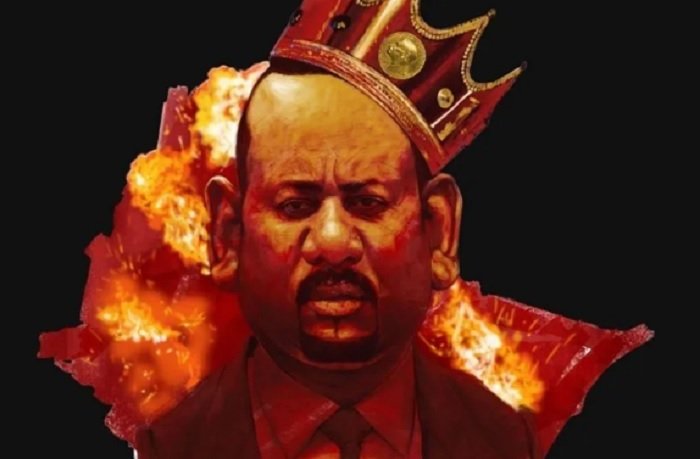
Abiy Ahmed’s rule has been defined not by the unity he once promised but by division, conflict, and authoritarianism. His initial promises gave way to systematic repression, ethnic warfare, and economic despair. What was once a moment of national hope has become a prolonged nightmare.
He has betrayed allies, persecuted opponents, weakened institutions, and brought the nation to the brink of disintegration. The hope of a unified and democratic Ethiopia has given way to fear, suspicion, and national exhaustion.
Conclusion: Ethiopia Must Reclaim Its Future
The story of Abiy Ahmed’s leadership is one of wasted opportunity and deliberate destruction. His time in power has left Ethiopia deeply wounded – politically, socially, spiritually, and economically. But the future is not yet lost.
To move forward, Ethiopia must break free from the cycle of authoritarianism and rebuild the democratic institutions that were dismantled. Healing will require courage, collective will, and visionary leadership – leaders who listen, unite, and prioritize the people above personal ambition.
Only by confronting the past with honesty and committing to a new path of peace, justice, and accountability can Ethiopia begin to reclaim its future. The road ahead is difficult, but the alternative – continued division and decline – is far worse.
Editor’s Note : Views in the article do not necessarily reflect the views of borkena.com
__
Subscribe: https://borkena.com/subscribe-borkena/
Join our Telegram Channel : t.me/borkena
Like borkena on Facebook
Add your business to Ethiopian Business Listing / Ethiopian Business Directory
Join the conversation. Follow us on X (Formerly Twitter) @zborkena to get the latest Ethiopian News updates regularly. Subscribe to YouTube channel To share information or for submission, send e-mail to info@borkena.com
Seven Years of strong progress and growth!
Mama Ethiopia is now at unbreakable stage!
Mama Ethiopia will no longer pushed around!
Mama Ethiopia is growing while fighting local Idiots with no plan!
Mama Ethiopia will soon be self-sufficient in food and so many other things! she will pay her own bill soon!
The rest of the world is following the progress and they are egger to own something in Ethiopia while some Ethiopians feel like Ethiopia is about to fall apart, luck of knowledge?
Most politicians in Ethiopia are not qualified to be a politician, bunch of unmatured, stubborn, sometimes garbage who are only listening themselves while the country needs something else. Here it is she finally got him, Enjoy King Dr Abiy!!!
Drone strikes, mass arrests, village raids, and extrajudicial killings became commonplace
The promise of prosperity has been replaced by rampant inflation, unemployment, and financial ruin.
Longstanding religious institutions, particularly the Ethiopian Orthodox Tewahedo Church and prominent Islamic communities, found themselves under attack.
One bus full of people/70/pax disappeared and three days later each were asked a million birr ransom to be freed. Kidnapping is a daily routine… for seven years continously…
Abiy Ahmed’s rule has been defined not by the unity he once promised but by division, conflict, and authoritarianism. His initial promises gave way to systematic repression, ethnic warfare, and economic despair. What was once a moment of national hope has become a prolonged nightmare.
He has betrayed allies, persecuted opponents, weakened institutions, and brought the nation to the brink of disintegration. The hope of a unified and democratic Ethiopia has given way to fear, suspicion, and national exhaustion.
I totally agree with the author of this fundamental article, which is crystal clear and obvious to all of us. What do we need more to understand these interminable agonies?
When will be ending these tragedies in Ethiopia?
A week ago ,one full bus of a 70 Pax, was kidnapped and three days after they were asked to pay a ransom of one million ethiopian bir per head?? Two buses fortunately escaped these chaos of barbarism. It’s now a daily routine, for almost seven years now! No guarantee for one’s well-being!