
Editor’s Note : Views in the article do not necessarily reflect the views of borkena.com
By: Habtemariam H.
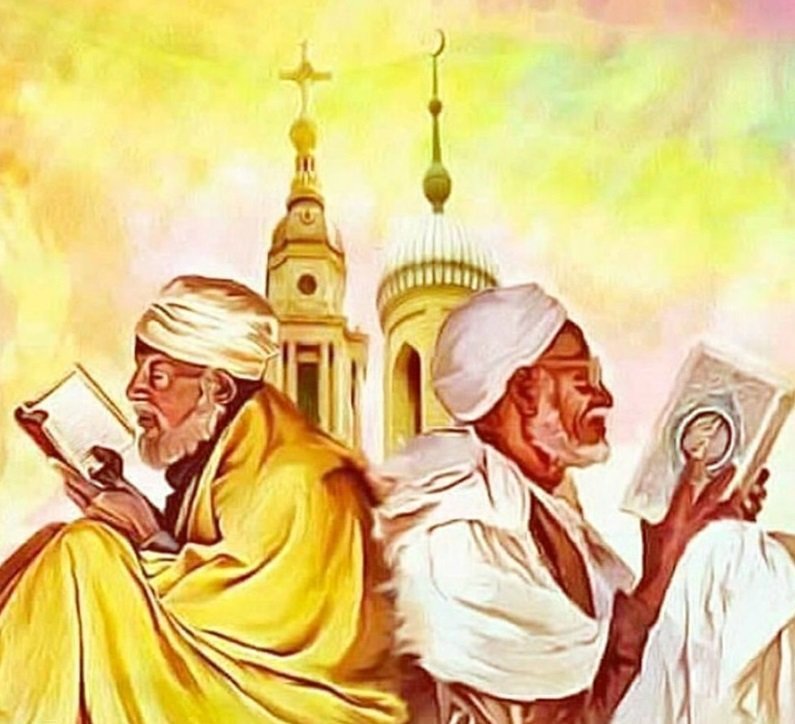
Ethiopia, a land steeped in history and spirituality, has long been a beacon of religious coexistence and heritage. Home to two of the world’s oldest religions, Christianity and Islam, the nation has served as a sanctuary for faith and tradition for centuries. However, today, these ancient religions face an existential threat. The Ethiopian Orthodox Tewahedo Church (EOTC) and Islam, both integral to Ethiopia’s cultural and spiritual identity, are under systematic attack by the current government led by Prime Minister Abiy Ahmed. Here I delve into the historical significance of these religions, the threats they face, and the urgent need for unity and action to preserve Ethiopia’s spiritual legacy.
Ethiopia: The Cradle of Ancient Religions
Ethiopia’s religious heritage is unparalleled. The country is one of the earliest adopters of Christianity, with the EOTC tracing its roots back to the 4th century. As Professor Ephrem Isaac, a renowned scholar, highlights, the EOTC is uniquely connected to the first church of Jesus Christ, often referred to as the Church of Paul and Peter. This direct link to the apostolic era makes the EOTC a living relic of early Christianity, a treasure not just for Ethiopia but for the entire world.
Similarly, Ethiopia holds a special place in Islamic history. During the early days of Islam, the Prophet Mohammed advised his followers to seek refuge in Ethiopia to escape persecution in Mecca. This event, known as the First Hijra, underscores Ethiopia’s role as a protector of faith. The Prophet himself decreed that Ethiopia, then known as Al-Habesh, should be left in peace, a testament to the nation’s historical significance in the Islamic world.
The Systematic Targeting of Ancient Religions
Despite this rich history, Ethiopia’s ancient religions are now under threat. Since Abiy Ahmed and his Prosperity Party (PP) came to power six years ago, there has been a systematic campaign to undermine and dismantle these religious institutions. The PP’s ideology, as outlined in its indoctrination book, views the EOTC and Islam as obstacles to prosperity and development. This narrative has been used to justify a series of attacks on both religions.
The government’s strategy follows a disturbing pattern: demean, tag, and eliminate. First, religious institutions are labeled as anti-development or backward. Next, they are tagged as obstacles to progress. Finally, they are targeted for elimination through violence, displacement, and land grabs. This three-step process has been meticulously applied to weaken the influence of these religions.
The Ethiopian Orthodox Tewahedo Church: A Primary Target
The EOTC has become the primary target of systematic attacks over the past six years under Abiy Ahmed’s government. The church has endured mass killings of its followers, displacement of communities, harassment of clergy, and the seizure of its lands. Churches have been desecrated, and historical sites destroyed—all part of a calculated effort to erode the EOTC’s influence and authority. Its deep-rooted connection to Ethiopian identity makes it a potent symbol of resistance against government overreach, yet the resilience of its followers has made dismantling it a formidable challenge.
Adding to the outrage, Abiy’s Prosperity Party (PP) banned the return of His Grace Abune Petros, a highly respected archbishop, after his mission in the United States. This shocking decision stands in stark contrast to the government’s allowance of a foreign Protestant pastor recently. Such actions reveal a deliberate attempt to undermine the church’s unity and doctrinal integrity.
High-ranking officials, including members of the Holy Synod such as Abune Lucas, have publicly condemned these injustices. Abune Lucas has repeatedly denounced the government’s actions in his sermons, exposing the desecration of holy sites, displacement of communities, and the introduction of foreign influences into the church’s leadership. His powerful testimony highlights the systematic nature of the attacks and the government’s broader agenda to weaken the EOTC.
The denial of Abune Petros’s return to his homeland, coupled with systematic and government backed attacks of the EOTC, underscores the PP’s blatant assault on the EOTC. These actions target not only the church but also Ethiopia’s spiritual and cultural heritage. The time has come for the faithful to unite and resist this calculated erosion of their ancient faith. The EOTC’s survival depends on solidarity, resilience, and a collective stand against these divisive and destructive tactics.
Islam: A Target in Waiting
While the EOTC has been the primary focus of the government’s attacks, Islam is not immune. The government’s rhetoric and actions suggest it is only a matter of time before Islam faces similar persecution. Despite its historical significance, including its role in the First Hijra, Islam has not been spared from the government’s agenda of undermining ancient religions.
One glaring example is the removal of Hadji Mufti, a respected Islamic leader, from his position, signalling the government’s intent to control religious institutions. Additionally, over 50 mosques were destroyed in Shgeger city of Oromia, erasing symbols of Islamic heritage. The government also monitors mosques, silences religious leaders, and restricts Islamic schools and community programs, aiming to suppress the Muslim community’s influence.
This approach mirrors the strategy used against the EOTC: labeling religions as anti-development, tagging them as obstacles, and targeting them for elimination. While attacks on Islam have been less overt, the destruction of mosques and removal of leaders like Hadji Mufti show Islam is already in the crosshairs.
The time has come for Ethiopia’s ancient religions to unite. The EOTC and Islam have coexisted peacefully for centuries, and their shared history demands collective action against this systematic assault. If they fail to stand together, both risks being dismantled. The government’s tactics, seen in Addis Ababa’s “corridor development,” are now targeting religious institutions. Only through solidarity can these ancient faiths survive.
The Cost of Inaction
Lateness will cost these religions dearly. Every day that passes without a unified response brings the government closer to its goal of eradicating these ancient faiths. The destruction of religious institutions is not just a loss for Ethiopia but for humanity as a whole. The EOTC’s connection to the early church and Islam’s historical ties to Ethiopia are irreplaceable treasures that must be preserved.
Preserving Ethiopia’s Spiritual Legacy
Ethiopia’s ancient religions are at a crossroads. The choices made today will determine whether these faiths continue to thrive or are consigned to history. The EOTC and Islam must rise above their differences and confront this shared threat with unity and resolve. The international community, too, has a role to play in holding the Ethiopian government accountable for its actions.
Ethiopia’s spiritual legacy is a testament to the resilience and faith of its people. It is a legacy that must be protected, not just for Ethiopians but for the world. The time for action is now. Lateness will cost us everything.
Editor’s Note : Views in the article do not necessarily reflect the views of borkena.com
__
Subscribe: https://borkena.com/subscribe-borkena/
Join our Telegram Channel : t.me/borkena
Like borkena on Facebook
Add your business to Ethiopian Business Listing / Ethiopian Business Directory
Join the conversation. Follow us on X (Formerly Twitter) @zborkena to get the latest Ethiopian News updates regularly. Subscribe to YouTube channel To share information or for submission, send e-mail to info@borkena.com