
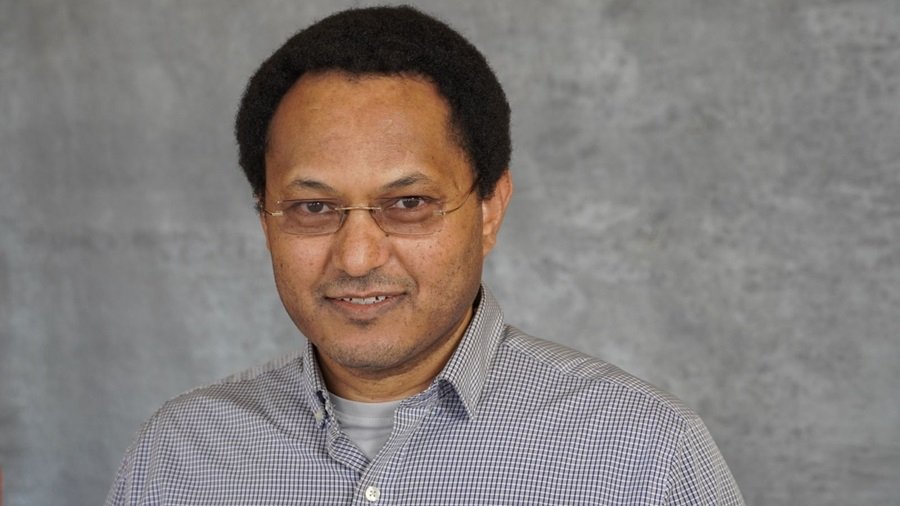
By Professor Habtamu Tegegne
The study of humanities and social sciences teaches us not only how to think about complex information critically and logically, but also how to do so with empathy, morality and social responsibility. Such interdisciplinary wisdom can help us understand other perspectives; how people with different histories and cultures make sense of the world. Today, more than ever, scholars and academics have a moral duty to actively examine and assess current issues, to raise their public voices about injustice and inequity, to question destructive or dangerous political and economic trends, or present controversial and unpopular opinions from an informed position. As public figures, they can play a crucial role in separating fact from fiction, truth from lies, and reality from propaganda in times when social norms and mass media seem to have abandoned the effort and fake news underwritten by the digital echo chamber reigns supreme.
Academic freedom should still mean that scholars can publicly discuss and examine controversial topics without fear of backlash or reprisal—a sacred right protected by and enshrined in the United States Education Act, which allows accepted beliefs and long-established ideas to be questioned.
As a member of the academic community, I deeply value public scholarship and for a number of years have been motivated to share my work with larger audiences. Through numerous social media appearances I have discussed topics that many find uncomfortable, such as exposing the flawed foundations of some oft-repeated popular and academic narratives about the Amhara people and Ethiopian history. Along with other colleagues I have recently used the International Fano Coordinating Committee’s (IFCC) YouTube channel to discuss wide-ranging issues which often integrate current events such as genocide, oppression and violence, with history, accountability, and future change. My goal is to promote a higher awareness of civic humanism in which the general public can engage.
For me, this means taking responsibility for sharing knowledge with integrity on any topic for which I can claim expertise—even under the protection of legislated academic freedom. As anyone who has done so can attest, it is a never-ending challenge to balance that freedom with the requirements of scholarship, audience expectations and broader community values. From my vantage point as a historian of Ethiopian culture, I am painfully aware that to go beyond the relative safety of the university classroom and embrace public scholarship is to enter a proverbial minefield in which actual history, pseudohistory, political correctness and various other trends vie for attention.
An unfortunate consequence of public scholarship has been the degeneration of normal comment and inquiry into vilification and “open letter” campaigns urging some university administrations to take disciplinary action against their more outspoken academics—basically for doing what they were trained and hired to do. I myself have received a spate of slanderous emails from an individual whose behavior is widely regarded as far beyond the pale. For nearly a month in the fall of 2024, he engaged in an intense personal crusade to tarnish my reputation and dash my career. His actions included several extremely vile emailed letters written under various names imploring Rutgers University to take disciplinary measures against me and expel me from my teaching and research post. When his demands went unheeded, he turned to social media echo chambers whose followers aligned with his views, spreading fake news about me and shamelessly exposing his personal spite. Despite being an individual of advanced age and education and supposedly advanced experience, this man crossed every moral boundary in his denunciation of me. It was sad to see someone decline into a bottomless pit of profanity and blind extremism. There was practically not any moral boundary left.
It was clear from the outset that my public call for justice toward Ethiopia’s Amhara people who face existential challenges had touched a raw nerve in this man’s psyche, which prompts me to ask—and this is not a rhetorical question—Why should the concept of holding individuals and groups accountable for crimes as serious and massive as genocide raise someone’s hackles to such an extreme extent? I, along with numerous others, cannot wrap my head around the fact that a call for justice should elicit such visceral and personal reactions from someone not even remotely linked to the subject. Why would this man have responded as vehemently as he did is anyone’s guess. But one thing is clear. So far as I am aware, I had not crossed paths, heard about, read about, nor ever met or talked with this person before October of 2024. All the same, his behavior exemplifies an extreme abnormality of diaspora anti-Amhara sentiment that we have sadly become so accustomed to within Ethiopian political culture. At worst, this person’s virulent outburst was born of an exaggerated (and false) anti-Amhara ideology which most Amhara of his generation subconsciously internalized. Just talking about anything positive about Ethiopian history and the Amhara people triggers such individuals. At best, it was an embarrassing and misguided show of solidarity and parochial sentiment directed at those (many of them criminals) with whom he shared a common regional background.
This negativity strikes very close to home, as it deals with issues around accountability, vicarious guilt and false narratives that Ethiopian society has long needed to address, but which it has refused to acknowledge. On the YouTube video of October 19, 2024, my colleagues and I from the IFCC discussed long-neglected, but extremely important topics of confession, vicarious guilt, and responsibility for achieving a lasting peace in Ethiopia. The past 450 years has been an unrelenting crime against the Amhara people committed by aliens and there is now a growing demand for justice and accountability. The very nature of this topic makes it virtually impossible to avoid controversy from suspected criminals and those who do not like being made uncomfortable by the academic freedom that permits public scholars to challenge them with difficult issues. Additionally, most Ethiopian audiences are inexperienced in dealing with the culture of western-world academia and its implied academic freedom.
Consequently, social media projects such as the one described above can be fraught with difficulties for those who undertake them and dare to introduce lines of inquiry that conflict with public opinion, political agendas, or competing interests.
During the October 19, 2024 YouTube discussion, I opined (based on my knowledge of Ethiopian history, religion and culture) that the guilt and shame resulting from genocidal crimes perpetrated against the Amhara people would potentially be felt by the offenders’ descendants for up to seven generations. The immediate outcome was that an anti-Amhara individual digitally “mined” our discussions and fabricated a grisly fake news alleging that I sanctioned murdering “180 million” of the accuser’s tribe, a laughable charge. Lying, deceit, breach of confidence and betrayal are on every page of this man’s personal life.
The same accuser, along with the aforementioned man, sent open letters to interim Rutgers University Chancellor Dr. Jeffrey Robinson and other university authorities on October 24, 2024 suggesting that my information (as used in the fake news) could harm the relations of suspected genocide perpetrators in Ethiopia. I fully appreciate and acknowledge the concerns of suspected criminals, accomplices and their supporters within Ethiopia and beyond for the safety of their family members and close relatives. However, I believe and maintain that there should be no moral or legal conflict between holding criminals accountable and protecting their rights.
Nevertheless, the evidently fake news received significant social media traction and for weeks on end, digital public news outlets endlessly recycled the ridiculously false “murder” story, distorting the issue into a sensational media feeding frenzy and personal campaign against me. This deliberate fake news is part of an accelerating and dangerous global tendency with deep historical roots. The intentional presentation of fabricated and blatantly false information by narrow focus self-interest groups or rogue actors is as old as humanity itself. But with the advent of rapid and universal digital media, contemporary society is vastly more susceptible to the impact of false information than at any previous time in human history. Today, the deliberate creation of misinformation is a global industry, where designing eye-catching and attention grabbing “content” is often the only priority. All across the world we are witnessing the birth of a new “post-truth” era, in which collective opinion on any topic is shaped more by online expressions of uninformed belief than by objective facts and credible sources.
In such a volatile and unstable clickbait environment, people become mass-trained to feel comfortable only around those who share similar perspectives and worldviews. Hyper-partisan factions thus seal themselves off in digital echo chambers and staunchly resist opposing viewpoints. Followers adhere primarily to the “feel good” factor and intellectual simplicity of pre-processed ideologies and oft-repeated but unexamined shibboleths, rather than seeking veracity in the “news” that they uncritically digest. Moreover, they are further enabled by social media outlets whose AI-driven algorithms tailor news and opinion feeds according to user behaviors and preferences, allowing hyper-partisan groups to filter out material that differs from what their followers are trained to accept.
Consequently, when people are exclusively exposed to information that confirms their preexisting beliefs, they are far more likely to believe it because they lack exposure to opposing viewpoints and have little or no experience in critical thinking. This is why hoaxes and fake news so frequently go viral. The rise of the fake news industry rightly worries those concerned with its short- and long-term political implications and the dwindling place of verified truth in our digital era. Millions, even billions, of people the world over are now highly vulnerable to manipulation by digital misinformation. Platforms such as Facebook and Google have tried to combat the problem by flagging fake news and claiming (frequently unsuccessfully) to strictly monitor their network content by removing posts that violate their terms of use. It is in this unstable and largely unenforceable context that fake news was created against me and circulated widely by individuals who have criminal records and/or association with criminal organizations.
It makes one wonder why so much media hype erupted over a historically-based call for moral responsibility. In the Ethiopian context, fake news has existed since the revolutionary upheavals of the 1970s and remains an integral part of the country’s news ecosystem to this day. I should not have been surprised, therefore, to learn following my original October 2024 YouTube broadcast that social media had been used to spread malicious manipulated content that turned countless people into victims of digital deception.
My experience was just one small but disastrous part of a vastly larger phenomenon of gross misrepresentation that has flourished for more than a decade and shows no signs of slowing down. Many immediately accepted and shared the fake news my accusers fabricated without fact-checking it. There were two main reasons. First, the story garnered wide interest because of its sensationalism, propelled by the eye-catching headline of “Stop Inciting Genocide.” Second, people shared and discussed the fake news because they had little or no experience or inclination to think critically, question information sources, or cast doubt on the agenda of the fake news originators. In this case, the falsified video derived from my original broadcast was promoted and extensively shared within a politically vocal anti-Amhara echo chamber. Subsequent platforms which carried it included Reyot “Media”, Mengizem “Media”, Ghiyon “Media”, and Buffet of Ideas (to name but a few), all of which are confirmed anti-Amhara sympathizers.
This kind of fake news promulgation creates not only a real and present security threat for the ethnic groups being actively hated and demonized, but also poses serious threats to academics engaged in controversial public scholarship. Understandably, many scholars shy away from such exposure altogether lest it negatively impact their careers.
Historically, fake news and the propaganda it spawns has always led to grave political consequences. In fact, it is overwhelmingly driven by sectarian political motives. Driving the 1974 civil upheaval in Ethiopia, Anti-Amhara absurdities and mythologies fueled cold-blooded mass murders and vile slander against the globally revered deposed Emperor Haile Selassie and his family. Wholly invented false history by Anti-Amhara tribal hate groups has turned Ethiopia into a sad, soulless and grim country which has lost its traditional moral strength.
It is therefore more important than ever to publicly illuminate the plight of the Amhara people over the past 50 years as a dire example of collective tragedy that can result from manufactured misinformation, whether in Ethiopia or elsewhere. Simply put, fake news thrives in a culture of impunity whose leading actors recognize no moral or legal accountability and who genuinely believe that they and their agendas are off limits or beyond the reach of civil law. While the true motives of one of my vile slanderer’s relationship with criminal regimes have yet to be verified, my other “genocide” accusers spent their entire lives free of ever being confronted about their past histories as active participants in violent anti-Amhara administrations, their known collaborations with criminal organizations, and above all, their continued and present relationship with diaspora anti-Amhara hate groups and individuals. Those reasons were more than enough for me to take them to task in the light of real historical facts.
The obvious purpose of false accusations and public propaganda has always been to shame and silence all who dare to challenge and critique criminal and political bad actors. In today’s digital universe, the rapid and repetitive spread of organized defamation is part of a wider global backlash against authentic scholars of Ethiopian history that has been going on since the mid-1970s. With control over our historical narrative being the fiercely contested battleground, those of us dedicated to the truthful preservation of Ethiopian culture cannot help but find ourselves on the front lines. In the US, for example, anti-Amhara Oromo hate groups and their Amhara collaborators persistently troll, target and attack anyone who challenges their narratives or dares to condemn ethnic and religious persecution, an increasing trend throughout the Ethiopian diaspora. Such is the case with Morehouse College Professor Dr. Haile Larebo, whose public scholarship came under attack by hate groups who resorted to defaming him for advocating Ethiopia’s actual history and setting the records straight.
Presenting false and misleading information as if it were real has proven to be more rewarding and cheaper for perpetrators than researching actual facts, especially as the internet itself is becoming the economic livelihood for millions around the world. Social media platforms prioritize sensational clickbait headlines that are often widely shared even before their content is read. Hoaxes are fabricated by clickbait sites exclusively to make money. Similarly, when fake or highly redacted news is promoted publicly by partisan interest groups, the intent is not only to justify their ideologies and convert new online followers to their cause, but also to make money from advertising revenue. From there it is a short step to disregarding content quality and truth altogether in favor of financial gain. In this way, truth becomes a sacrifice on the altar of monetization.
To return to the accusers who manipulated my own video presentation, I remind readers that these individuals have long been associated with anti-Amhara political organizations since the early 1990s. One of them was publicly exposed by his former colleague Tamrat Tarekegn as an informer and spy of the Tegrean People Liberation Front (TPLF). TPLF is a radical and extremely narrow ethnonationalist group with hatred going to the roots to everything Amhara and misruled Ethiopia and tore apart its national fabric for two decades after 1991. The same accuser, who was also imprisoned a few years ago for possessing illegal weapons (among other charges), was a close friend of former Ethiopian security chief Esayas Walda Giyorgis, who has been behind the inhumane torture, disappearances and deaths of countless Amhara because of their political views. He admitted that one of those illegal weapons was a gift from Esayas Walda Giyorgis.
Even after the collapse of TPLF’s tyrannical rule in 2018, the accuser remained wedded and loyal to this criminal collective. Recently, TPLF planned and initiated a sanguinary war with the central government that broke out on 3 November 2020. When the tide began turning against the TPLF in the summer of 2022, my accuser, along with fellow criminal Tamrat Layene (one of the most odious Anti-Amhara “Uncle Toms”), former TPLF ambassador Berhan Gabra Masqal, and Yilkal Getnet appealed to international powers and the west to help open a supply line to TPLF combatants. They made their appeal without considering its potential catastrophic consequences for Ethiopia and while ignoring any acknowledgment of the Amhara civilians the TPLF was then massacring everyday—one of the worst and the most unforgivable and unforgettable atrocities in Ethiopian history.
One of my principal accusers has also been a lifelong member of a group misleadingly called the Amhara National Democratic Movement (ANDM) but whose aims are blatantly Anti-Amharan and serve to enable the Anti-Amhara hate policies of the TPLF and OLF; he has been a submissive TPLF loyalist since 1990 and served as ANDM chairperson as well as in several other influential and criminal capacities. In 2018, he was named minister of foreign affairs by Prime Minister Abiy Ahmed, a lifelong supporter and member of the anti-Amhara Oromo Peoples Democratic Organization (OPDO). For far too long, this odious “Uncle Tom” turned a blind eye to the anguished cries, massive placement and murder of millions of Amhara civilians and leaders by the joint TPLF and OLF/OPDO forces. These individuals not only condoned anti-Amhara sentiment and violence with impunity, but actively participated in and fueled Amhara hatred in their public speeches and actions.
After moving to the United States, my accusers continue to openly associate themselves with Anti-Amhara hate groups, well-known for fanning the flames of ethnic hatred and conflict by (for example) calling for Amhara people to be evicted from doing business in their own ancestral homeland and banning interethnic marriages, all of which are neo-apartheid stance tragically similar to the policy the intensely racist apartheid regime had once inflicted on black South Africans for more than five decades.
Motivated by distorted ideology and blind TPLF-OPDO/OLF loyalty and unconditional and absolute obedience to them in both spirit and act, these collaborators let themselves be used as instruments of death and destruction against the Amhara people for nearly 30 years. They willingly sold their honor and dignity for unearned money and false security. Yet even the benefits of hindsight have not persuaded them to discard their baseless hatred of the Amhara people.
These anti-Amhara collaborators are not interested in humane justice and the rule of law. They are instead obsessed with carrying out their anti-Amhara policies and continue to function as accessories to the massacre, displacement and destruction of countless Amhara communities and families across Ethiopia by legitimizing, perpetuating and maintaining the flawed narratives of anti-Amhara hate groups with whom they freely associate. My chief accusers continue to fervently support the misguided ideology of Anti-Amhara ethnic exclusivity and the resulting ethnic cleansing of those considered as ethno-cultural “others.” Moreover, there are those within the Amhara community itself, both in Ethiopia and the diaspora, who have shamefully and remorselessly betrayed their own people on many levels. They do so by associating with and supporting suspected criminals, giving them false respectability and thereby encouraging them to continue their criminal acts and wayward behavior.
Responsibility for wholesale killings, mass displacements, property destruction and genocide against the Amhara people is not exclusively that of well-known and openly anti-Amhara criminal organizations such as TPLF and OLF/OPDO and their respective political and military leaders. It is more appropriately placed with factions in collaboration with criminal regimes. Amhara individuals with ties to the TPLF and OLF/OPDO and other hate groups should be held accountable for their complicity in the humanitarian crimes committed by these organizations and groups.
There are two compelling reasons for bringing anti-Amhara collaborators to justice. First, lasting peace can be achieved only by holding criminals accountable, which is the most confident and effective way to deal with and breaking the cycle of violence. This includes identifying, documenting and extraditing those currently residing in foreign countries and ensuring that they are held responsible and publicly accountable for their actions. It would be a flagrant affront to their victims to let them get away with horrendous crimes committed against the Amhara people for decades.
Second, it is essential to reestablish the values of trust, service and honesty which have become severely compromised and eroded over several decades. In order to reestablish, legitimize and perpetuate freedom and justice, Amharans everywhere must demonstrate civic courage. Public services, civic organizations, and political movements must be cleansed of former regime loyalists and secret service personnel. The Amhara diaspora community should dissociate itself from criminals and past collaborators who represent negative role models for young people. Members of the Amhara diaspora community who support suspected criminals and condone their crimes must be identified, documented and held accountable for their complicity.
Amhara collaborators and criminals want the world to forget about their TPLF and OLF/OPDO regime connections. Many have retreated into the shadows, hiding their past deeds. But we must keep memory of past crimes and truth alive, holding accountable all individuals previously entangled with criminal regimes, no matter how tenuous or how strong, how enduring or how fleeting that link was. This is every Amhara’s civic and national duty. Along with my colleagues, I have repeatedly advocated for justice and that criminals and their accomplices be held accountable. I call upon, once again, the Amhara diaspora community and its allies to be vigilant so that suspected former criminals can no longer distort and manipulate us across the World Wide Web and that they will all be brought to justice.
Editor’s Note : Views in the article do not necessarily reflect the views of borkena.com
__
Subscribe: https://borkena.com/subscribe-borkena/
Join our Telegram Channel : t.me/borkena
Like borkena on Facebook
Add your business to Ethiopian Business Listing / Ethiopian Business Directory
Join the conversation. Follow us on X (Formerly Twitter) @zborkena to get the latest Ethiopian News updates regularly. Subscribe to YouTube channel To share information or for submission, send e-mail to info@borkena.com