...)
By Mengistu Asfaw
Though the Italian colonial Empire was proclaimed over Ethiopia, the surviving elements of the Ethiopian patriots began to engage in guerilla (Fano) warfare. This second phase of the struggle for independence should not be under-estimated: the frequent harassment of the Italian forces by the gallant Ethiopian patriots became a major factor for the instability of Graziani’s colonial administration in its first period in office.
The Patriotic struggle, taking a breathing space during the rainy season of 1936, which practically halted the Italian offensive operations, had consolidated and strengthened itself and became a significant threat against the Italian’s occupation. Now for the first time, on June 6, 1936 the Ethiopians maneuvered a strong guerilla attack causing considerable damage to the Italian forces. The capital city, Addis Ababa was frequently attacked by armed groups of patriots who launched an offensive action spearheaded by the Ethiopian Patriarch Abune Petros (Martyr) from the north-west and south-east of the capital city. At that time Addis Ababa was considered as a strong focus for various Ethiopian revolts. Following this, there came another heavy attack on the city, a few days later, on the night of August 26, this time the revolt was led by Dejazmach Balcha, the old hero of Adwa.
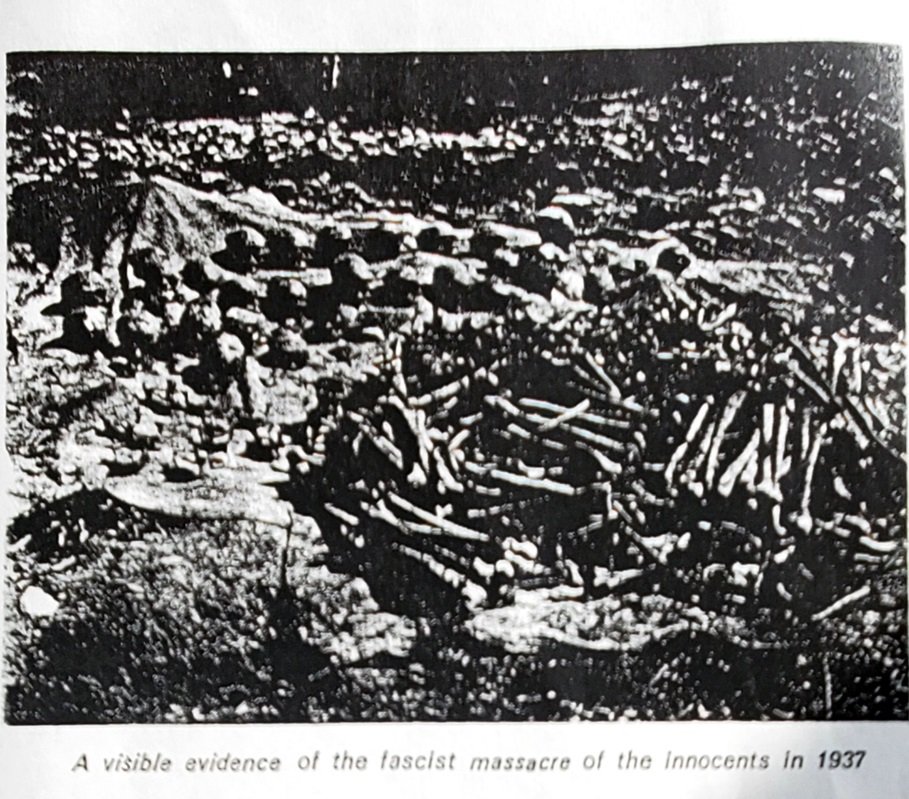
The official proclamations of the Italian colonial empire over Ethiopia never admitted the presence of such strong local opposition forces in order to project a picture of stability and peace in the country. However, in contrast, during the first year of the Italian occupation of Ethiopia, the indigenous people showed strong resistance to the invaders. The struggle was intensified in and around the capital city.
The Italians who had a mere nominal control in the face of the courageous and determined Ethiopian Patriot boldly claimed in Europe that the “war in Abyssinia” is completely over. Whereas, in reality such claims were a fiasco. Opposing such claims of the Italians, the famous English writer Evelyn Waugh in his eye-witness account explained the situation as follows: “the Italians are starving, the soldiers live on a piece of bread a day. Nothing can be bought in the shops. No one will accept the Italian money (lira). The Abyssinians are encamped all around the town. The Italians hold Addis Ababa, the railway line and the road to Makale- beyond that nothing. No one can go a hundred yards outside the town (Addis Ababa). Ethiopians are fighting every day in the center of the town.”
Therefore, it remained an open secret that the Italians, during their occupation of Ethiopia, lived to a large extent in a state of siege. The famous and devoted patriots’ groups, under the leaderships of Abebe Aregai and Mesfin Sileshi, carried on their fierce fighting against the enemy within a radius of fifty miles of Addis Ababa throughout the occupation. At this time the enemies were very nervous and the desperate Graziani was driven to extremes of panic violence.
The possibility of Marshal Graziani being entangled in such an inescapable situation seemed likely and in a very frustrated mood the viceroy sent the following telegram to the Ministry of Colonies in Rome: – “The situation I inherited was the opposite of happy; on the contrary it looked more and more serious as each single aspect was examined. In the capital there are only 7,000 of our men, virtually surrounded by the reins of the Ethiopian armies.”
However, the above-mentioned circumstances did not seriously weaken the strength of the enemy’s force. In the meanwhile, repressive measures began in the areas which the Italians regarded as the main centers of the patriots’ resistance. To crush the existing patriotic revolt the desperate Marshal, whose position was very precarious, intensified his reign of terror. He maneuvered his war generals and the collaborators Akeris (bandas) declaring the continuation of their atrocities for the total elimination of his threats particularly the Amhara people.
As the struggle to crush the Ethiopian mainly the Amharas resistance proceeded, war prisoners and civilians faced the brutal public executions that Graziani had imposed upon them. The shame of the Italians lay in their violations of basic humanitarian principles by killing the wounded and incapacitated captives. This was classical evidence of the white people’s savage acts of crime of humanity.
It should be borne in mind that the Ethiopians had not yet recovered from the tragic carnage that occurred during the first phase of their national resistance against the invaders. As a logical consequence of the trend of events, Graziani, continuing his atrocities, started to hunt and shoot the young Amhara elite Ethiopians who had European education. Also being the de-facto rulers of the country, the Italians began to follow a policy of racial segregation, already established in Eritrea.
The afore-mentioned account lays bare to the reader the real nature of Italian fascism: it is not too difficult to weigh the extreme suffering of Ethiopians while they were victims of this by products of Italian capitalism. Therefore, it should be understood that this was the real picture of the Italians’ first year of colonial administration before the notorious Yekatit 12 Addis Ababa massacre.
On the 19th of February, 1937, Yekatit 12, 1929 according the Ethiopian Calendar, the viceroy, Marshal Graziani, and his civil and military officials were assembled outside the new palace in the little Ghebi (now Addis Ababa University, Sidist kilo campus) on the pretext of celebrating the birth of the Prince of Naples. However, the real reason for such an assembly was to win over the Ethiopians’ sympathy and win support; which they believed would be gained by giving alms to the poor and gifts to the notables of the city, who were forcibly brought to attend the occasion. This they (the Italians) believed would change the Ethiopians’ view towards them and they would start to see them as friendly and generous administration.
In the middle of the ceremony, an explosion was heard in the compound. By this time all the Ethiopians who had gathered there had shouted ‘Sidist Sa’ at’ meaning twelve o’clock. This was because it was normal to hear artillery firing at noon in order to indicate time. Obviously, such a custom had not been abandoned by the Italians. However, after a moment; explosions were again heard repeatedly; now it was realized that someone among the Italian officials had been injured.
Two young Ethiopians, Abraha Deboch and Moges Asgedom, had resolved to assassinate Graziani as an action of revolt against the discriminatory fascist colonial administration. The two friends deliberately hurled hand grenades in an attempt to kill Graziani. However, even if they didn’t hit their principal target accurately, they were able to cause the death of some high-ranking Italian officials; among them were General Liotta, Guido Cortese, the mayor of Addis Ababa, Mario Appelius, the journalist, Ciro Peggale, and another thirty or so people were injured.
The climax of the fascists’ harsh policy came immediately after the incident. The Italian soldiers in the Palace compound began firing their guns indiscriminately against the defenseless Ethiopians in the crowd. As stated by the Italian historian Angelo Del Boca, “the firing went on continuously for three hours where the compound was lettered with dead Ethiopian bodies.”
Subsequently, the colonial administration declared “Carta Bianca” meaning white paper. This was a free hand to the Italians and their troops to kill and destroy all Ethiopians they encountered without humanity, conscience or mercy. People were slaughtered in the streets and in the squares, in their gardens and in their homes. Bombs, machine-guns, and rifles were used indiscriminately. The city, Addis Ababa was surrounded by barbed wire over which the colonial army mounted guards. Chances for escape were very rare. Anyone found attempting to escape was in most cases shot or arrested.
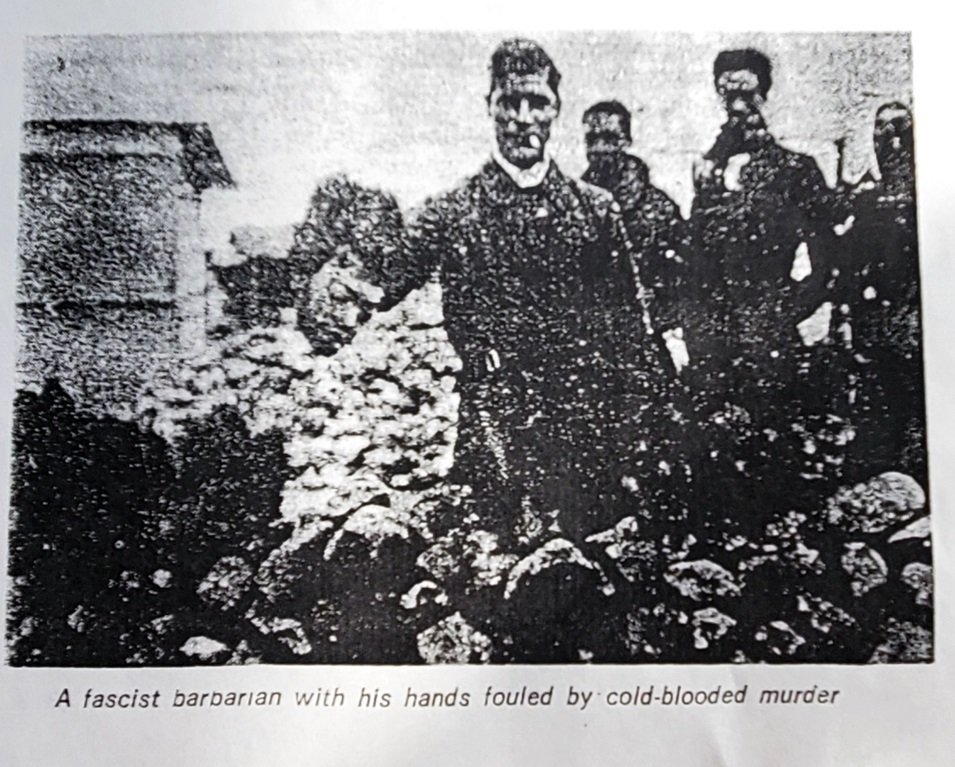
The worst of this barbarity was to come late on Friday evening. A few hundred squads of Black Shirts, drivers and colonial askaris (local collaborators – bandas) carried out their mass execution. They began to play “hunt the moor” to an inexplicable degree. They soaked houses with petrol, set them alight, and as the dwellers tried to escape, finished them off with hand grenades.
Describing the Italians retaliatory massacre Richard Pankhurst writes quoting an eye-witness account released by the Ethiopian Legation in London; “The streets were strewn with dead bodies…No one dared venture out. From that time began which was followed thoroughly during the three long days…This method consists of setting fire to the houses, waiting for the inhabitants to driven out by the fire and massacre them without distinction, with daggers, bayonets, hand grenades, cudgels, stones and, at times with guns. One could see groups of fascists chaining the Ethiopians to lorries and amusing themselves by dragging them along from one part of the town to the other until their bodies fell to pieces.”
During the three days of the reign of terror, the Italian soldiers also intensified their looting. They rushed into the Ethiopian houses and robbed what valuables they could find. In the case of bigger houses, the soldiers marked them with their names to keep them for themselves. When the Italian soldiers rushed into the houses, if by accident they found no one was inside, it was most probable that they were already arrested or executed, or possibly had managed to escape from the city.
For the purpose of further clarification of the Yekatit 12 massacre in conformity to what has been said above, the following was told by one informant; “The greatest slaughter began after 6 o’clock in the evening. During that night, Ethiopians were thrust into lorries, heavily guarded by armed Italian soldiers. Every black person seen anywhere was arrested, either shot on the spot or taken to custody. After a thorough search at the natives’ houses, the Italians then burnt them with petrol, in some cases with the inhabitants still inside. That day, the behavior of the Italians and their troops was atrocious to the point of insanity.”
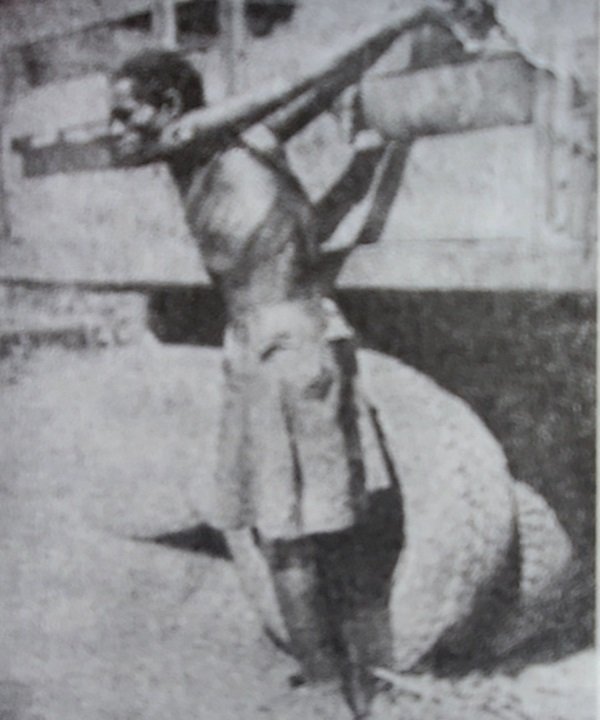
From all witnesses’ accounts of the nature of the Italians’ barbarity one can conclude in conformity with what is stated by Del Boca; “Even if Graziani had never uttered the famous phrase “The Duce shall have Ethiopia, with or without the Ethiopians just as he pleases’ he was putting the second of these alternatives into practice with highly undesirable results.” The attempt on the life of Graziani gave a chance to the Italians to carry on their draconic and cruel repression. In the capital city the soldiers were fully engaged in wholesale arrests and massacres. No attempt was made to distinguish the innocent from the ‘would-be guilty’. In the seventy-two hours of terror, the Italians caused considerable damage to human life and property. Though the actual victims’ figure on the subsequent causality list is a matter of speculation, certain tangible sources indicate that at least 30,000 (thirty thousand) civilians had been executed during the three days of mass slaughters.
No matter where the estimate lies, we are left with the fact that the Italians could not escape the responsibility of the crimes they had committed. The fact that one can’t reach a reliable estimate of the numbers involved should not put one in any doubt as to the horrific and wholesale massacre that constituted Yekatit 12. The simple reason why such a scarcity of evidence occurs is that the Italians maintained secrecy concerning the follow-up massacre. In order to hide all traces of the victims, what followed was done in a very cautious manner. No foreigner could be aware of the true facts. Further evidence for this is contained in Graziani’s telegram to Mussolini which states, “I beg to state, however, that executions ordered in consequence of an attempt on my life are invariably carried out in isolated spots where no one can witness them.”
In actual fact, whatever speculation is made in respect to the probable number of victims, it was an undeniable fact that retaliation was swift and ferocious. On Friday, February 19, 1937, immediately after the bombs exploded, the Italian guards at the ceremony panicked and emptied their rifles into the defenseless civilians. Two surviving men (my informants) estimate that around 2,000 people lost their lives on the spot as a result of the open firing in the palace compound.
In the three days of mass slaughter, the Italians exploited the incident to carry out the cruel murder of the hand-full of western-educated young Ethiopians whose majorities were Amhara ethnic groups. Among the Ethiopian intelligentsia who were ruthlessly killed for no apparent reasons were: Tsige Markos, Gebre Medhin Awake, Ayana Biru, Yohannes Birru and Yusuf and Benjamin Martin, all of whom had been students in London and Besha Wurred Habte Wolde and Makonnen Haile who had both studied in the United States, and Kifle Nassibu who was French educated. The policy of the Italians’ ruthless repression reached its culmination with the Debre Libanos massacre. Graziani’s vengeance fell on the monks of the famous old monastery of Debre Libanos for suspicion of an alleged complicity in the attempt to assassinate him. Consequently, four hundred and forty-nine (449,000) monks were savagely executed.
Theoretically, on Friday 22, 1937 the seventy-two hours proclamation of Carta bianca was declared null. However, Graziani’s reprisals did not cease at all. Following the incident, he intensified repression all over the country. Mussolini, on receiving his viceroy’s first report, immediately telegraphed back, “that without attributing to the incident greater importance than it really had it showed the need for the radical sweep which, in my mind, is absolutely necessary in Shoa.” One of the viceroy’s generals, Nazi in Harrar, received the viceroy’s order to shoot all Abyssinians who had received pardon in many places; thus, on April 23, the general executed 600 chiefs and followers after their surrender in the Bale region.
In the capital city, after three days of wholesale massacre, terror and shootings had continued, Graziani reported to the Duce on March 21 that, “excluding the repression of February 19, and 20, there had been 324 summary executions in a month and that 1,100 men, women and children had been sent to the concentration camp at Danane.”
In retrospect, those who survived the wholesale massacre by chance were imprisoned in the so-called ‘Nebse Gedai Whehini Bet’ There the situation was very frustrating. For some days prisoners were not supplied with food or water. Due to the Italians’ harsh treatment, the arrested Ethiopians were psychologically caught between life and death.
In the above-mentioned notorious prison, the Ethiopian detainees ranged in number from 2,500 to 3,000. Obviously, murder and psychological torture in the prison was a daily occurrence. Finally, some of the arrested detainees were deported to concentration camps in Danane, Azinara and Nakhura. The former concentration camp is in Somalia Mogadishu and the latter two are in Italy and the Red Sea respectively.
To be Continued:
Ethiopian Prisoners in the Italian concentration camps: Azinara, Danane and Nakhura
Note: The author, while he was a senior history student in 1980 at Addis Ababa University, conducted academic research on Italy’s colonial activity in Ethiopia. He currently holds a Master of Science degree in Technology and Satellite Engineering from George Mason University, USA, a Bachelor of Science in Computer Information System, and a Bachelor of Arts in History from AAU in 1981.
__
Editor’s Note : Views in the article do not necessarily reflect the views of borkena.com
__
Subscribe: https://borkena.com/subscribe-borkena/
Join our Telegram Channel : t.me/borkena
Like borkena on Facebook
Add your business to Ethiopian Business Listing / Ethiopian Business Directory
Join the conversation. Follow us on X (Formerly Twitter) @zborkena to get the latest Ethiopian News updates regularly. Subscribe to YouTube channel To share information or for submission, send e-mail to info@borkena.com