
By: Sirak Zena
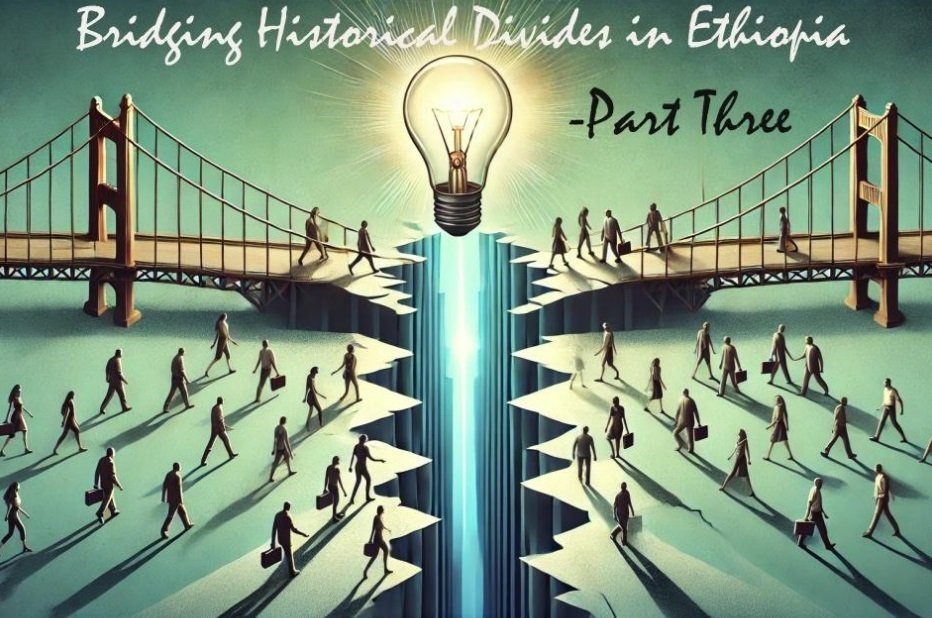
Introduction:
In the concluding segment of our series, we critically examine the substantial challenges that hinder Ethiopia’s journey toward reconciliation and unity. This section will address obstacles, implement transformative change, and envision a unified future for Ethiopia, building upon the historical context detailed in Part One and the strategic framework delineated in Part Two.
We commence by assessing strategies to combat extremism and mitigate the impulse for revenge, both essential in disrupting cycles of conflict. Subsequently, we identify barriers to narrative reconciliation and propose targeted solutions for entrenched issues. The discussion will then progress to actionable steps for actualizing reconciliation efforts. Finally, we will draw on comparative insights from the reconciliation experiences of other nations, providing pertinent lessons that may apply to Ethiopia’s unique context.
X. Combating Extremism and Discouraging Revenge
Educational Initiatives to Counter Extremism
Education serves as a vital instrument in preventing radicalization and fostering tolerance. Incorporating curricula emphasizing critical thinking, conflict resolution, and civic values within Ethiopian educational systems is essential for reshaping mindsets and diminishing the allure of extremist ideologies. Highlighting Ethiopia’s rich and diverse history in schools can cultivate an appreciation for each ethnic group’s contributions, dismantle stereotypes, and encourage constructive approaches to addressing grievances.
Promoting Public Narratives of Unity and Forgiveness
Public figures and community leaders must champion unity and forgiveness as fundamental tenets of reconciliation. Media platforms should enhance the visibility of narratives related to inter-ethnic cooperation and individual experiences of forgiveness, thereby shifting public sentiment from revenge toward a cohesive national identity. By accentuating shared aspirations, such narratives can promote a culture of reconciliation.
Community-Based Rehabilitation Programs
Rehabilitation programs targeting individuals affected by extremism—whether as perpetrators or victims—can promote healing and reintegration. Programs that offer vocational training, counseling, and opportunities for community service equip participants with constructive skills while promoting societal healing. Community—centric efforts advance environments where the conditions favorable to extremism are significantly diminished.
Clear Legal Frameworks and Enforcement Against Extremism
A robust legal framework is essential for deterring extremist actions, including hate speech and incitement to violence. Fair and transparent law enforcement is critical to maintaining public confidence and upholding human rights; it ensures accountability and reinforces a national commitment to peace and justice.
Supporting Local and Religious Leaders as Peace Advocates
Local and religious leaders possess significant influence and can serve as peace advocates. Training these leaders in conflict resolution and peacebuilding enables them to mediate tensions before they escalate. Encouraging their active promotion of messages of nonviolence and forgiveness strengthens grassroots reconciliation efforts.
Comprehensive Approach to Combating Extremism
Combating extremism necessitates a multifaceted strategy that addresses the root causes of division while promoting unity. By integrating education, public narratives, rehabilitation programs, legal frameworks, and the leadership of influential local figures, Ethiopia can establish an environment where extremism is less likely to take root and where revenge is less likely to be sought. This holistic approach lays the foundation for a stable, inclusive society.
XI. Overcoming Obstacles to Narrative Reconciliation
Achieving narrative reconciliation in Ethiopia encounters significant obstacles, ranging from entrenched vested interests to competing historical interpretations. Addressing these challenges necessitates a multi-pronged approach that acknowledges the complexity of Ethiopia’s social landscape and promotes cooperation among all stakeholders. By tackling these key obstacles, Ethiopia can create the conditions necessary for a unified national identity built on mutual understanding.
| Challenge | Proposed Actions |
| Addressing Entrenched Narratives | – Facilitate inter-ethnic historical dialogue forums. – Support academic research for balanced historical accounts. – Encourage media outlets to present diverse perspectives on Ethiopia’s history. |
| Mitigating the Fear of Identity Loss | – Emphasize the coexistence of national and ethnic identities. – Highlight successful multicultural societies. – Develop initiatives for cultural preservation in conjunction with efforts to promote unity. |
| Countering Political Exploitation | – Implement transparency in political processes. – Form multi-ethnic coalitions focused on common interests. – Establish ethical guidelines to discourage divisive rhetoric. |
| Balancing Recognition and Unity | – Create monuments or museums that acknowledge the contributions of all ethnic groups. – Develop inclusive educational curricula. – Institute national days of remembrance. |
| Addressing Resistance to Educational Reform | – Engage educators, historians, and community leaders in curriculum development. – Implement pilot programs for inclusive historical education. – Train educators to present balanced narratives. |
| Managing Media and Information Challenges | – Support fact-checking initiatives and enhance media literacy. – Encourage responsible journalism. – Utilize social media to promote reconciliation and counter misinformation. |
| Bridging Intergenerational Differences | – Create forums for intergenerational dialogue. – Develop mentorship programs that pair youth with elders. – Support initiatives for reconciliation led by young people. |
| Building Trust Among Ethnic Groups | – Implement community-based reconciliation programs. – Facilitate cultural exchange initiatives. – Support inter-ethnic business partnerships and economic collaborations. |
While the table summarizes critical challenges and responses, it is essential to recognize the complex interplay between these issues. The constitutional challenge, for instance, is intrinsically linked to fears of identity loss and concerns over self-determination. Any constitutional reform must delicately balance national unity with ethnic autonomy, a task complicated by deeply entrenched historical narratives. Additionally, reconciling narratives involves risks; although it is crucial for long-term stability, it may initially exacerbate tensions by challenging long-held beliefs.
The success of these strategies heavily depends on the genuine commitment of political elites across ethnic lines and the active participation of civil society and diaspora communities. Importantly, these challenges are not isolated but interconnected, requiring a holistic, long-term approach that addresses multiple issues simultaneously while remaining responsive to Ethiopia’s evolving social and political landscape.
By addressing these obstacles with targeted, actionable strategies, Ethiopia can make significant progress in reconciling narratives and promoting a more unified national identity. The process requires sustained effort, patience, and commitment from political elites and all segments of society, but it is essential for the country’s long-term stability and prosperity.
XII. The Path Forward: From Narrative to Action
Reconciling historical narratives in Ethiopia necessitates concrete actions from political elites and stakeholders. The following are essential steps to translate reconciliation into tangible progress:
1. Establish a National Dialogue Forum: Create an inclusive platform for historical reconciliation, bringing together representatives from all major ethnic groups, political parties, civil society, and academia. The goal is to develop a consensus on critical historical events and interpretations (Kefale, 2019).
2. Issue Joint Declarations and Revise Political Rhetoric: Following productive dialogues, issue statements that acknowledge diverse perspectives while emphasizing shared experiences and aspirations. Refute divisive narratives and advocate for an inclusive interpretation of Ethiopian history. Align public speeches and party manifestos with these reconciled narratives.
3. Promote Cross-Ethnic Coalitions: Form and encourage political alliances based on shared policy goals and national interests, thereby demonstrating the viability of trans-ethnic cooperation.
4. Perform Symbolic Acts of Reconciliation: Engage in and promote reconciliatory acts such as joint visits to historical sites, participation in cross-cultural festivals, or public apologies for past wrongs.
5. Support Educational Reform: Advocate for revising history curricula at all educational levels, ensuring that these curricula present reconciled narratives and provide a balanced depiction of Ethiopian history. This should include recognition of diverse perspectives while promoting national unity.
6. Institutionalize Reconciliation Mechanisms: Establish a Truth and Reconciliation Commission tailored to the Ethiopian context to acknowledge historical injustices and facilitate healing. Additionally, it creates permanent bodies dedicated to promoting national unity and overseeing the integration of reconciled narratives into public discourse and policy.
7. Promote Media Responsibility: Collaborate with media stakeholders to formulate guidelines for responsible reporting on historical and ethnic issues. This collaboration should emphasize fair representation and the creation of platforms for varied historical perspectives.
8. Engage Diaspora Communities: Actively incorporate the Ethiopian diaspora into the reconciliation process, recognizing their significant impact on historical narratives. Their perspectives should be included, emphasizing fostering support for unity rather than division.
9. Develop Inclusive National Symbols: Formulate or redefine symbols, holidays, and commemorations that embody reconciled narratives and celebrate Ethiopia’s diversity as a source of strength.
10. Lead by Example: Political elites must consistently commit to reconciled narratives through their actions, statements, and policies. They should model respectful dialogue, acknowledge past mistakes, and prioritize national unity over ethnic interests.
These measures empower political elites and stakeholders to establish a common ground for a unified and stable Ethiopia. This undertaking requires sustained commitment, the courage to confront entrenched narratives, and the prioritization of national cohesion over short-term political objectives. Through these concerted efforts, Ethiopian leaders can pave the way for a future in which historical narratives serve to unite rather than divide.
XIII. Pathways to Reconciliation: Comparative Insights for Ethiopia
This article raises concerns regarding direct government involvement in the reconciliation process, recognizing that the government has frequently viewed such initiatives as antagonistic, anti-government, or attempts to replace existing authority with a transitional one.
The primary objective of this analysis is to investigate pathways for reconciling historical narratives and critically assess the type of federalism that Ethiopia should adopt. The current model contributes to crises, conflict, and polarization, ultimately threatening the nation’s cohesion.
Furthermore, the current model’s impact extends beyond inter-ethnic tensions, penetrating to the core of individual ethnic groups themselves. It is not only causing polarization and marginalization among various ethnic groups, but it has become apparent that it feeds divisions within ethnic communities formerly called Awraga/Woreda and linguistic dialects. This intra-ethnic fragmentation undermines the cultural cohesion that ethnic federalism aims to protect. The system inadvertently creates sub-ethnic identities that compete for resources and recognition by emphasizing district-level and dialectical differences, further complicating the national unity equation. This unintended consequence highlights the urgent need for a governance model that can unite not just diverse ethnic groups but also bridge the growing divides within ethnic communities themselves.
However, in a hypothetical context where the government is receptive to endorsing a bottom-up reconciliation process, its role could be crucial if administered judiciously. The foundation of reconciliation efforts should emanate from diverse stakeholders, including grassroots initiatives, civil society organizations, political parties, religious and community leaders, and citizens from all ethnic backgrounds.
In this context, the government’s potential contribution is contingent upon its willingness to function as a facilitator rather than a director of the reconciliation process, thus ensuring that all voices are acknowledged and respected.
The government could advance an enabling environment for authentic reconciliation by providing resources, legal frameworks, and institutional support while honoring the autonomy of community-led initiatives.
This approach necessitates that the government:
- Recognize and legitimize diverse reconciliation endeavors initiated by various communities, political parties, civil society organizations, and grassroots entities.
- Offer financial and logistical assistance without imposing ideological restrictions on participants.
- Adapt national policies and institutions to accommodate and reinforce initiatives from political elites, opposition parties, religious leaders, and local communities.
- Ensure transparency and establish independent oversight mechanisms to uphold the integrity of the process. This will promote trust among all participants and provide security and confidence.
- Facilitate dialogue platforms that unite representatives from different ethnic groups, political ideologies, and socio-economic backgrounds.
- Support the active engagement of women, youth, and marginalized groups in the reconciliation process.
- Encourage the participation of the Ethiopian diaspora, utilizing their diverse perspectives and resources.
If these conditions are satisfied, government involvement could be a potent catalyst, linking local efforts with national resources and policy frameworks. The synergy between bottom-up initiatives—driven by a broad spectrum of political actors, civic organizations, and community leaders—and top-down support could yield a comprehensive and sustainable approach to addressing Ethiopia’s intricate historical narratives and ethnic divisions. However, the government’s role must remain an enabler, ensuring that the reconciliation process genuinely reflects the diverse voices and experiences of all Ethiopians, from rural communities to urban centers, across all political and ethnic lines.
Comparative Analysis of Reconciliation Approaches: Non-Governmental vs. Government-Facilitated Initiatives and Blended Model:
| Aspect | Without Government Involvement | With Government Involvement*1 | Blended Model*2 |
| Resources | Limited to non-governmental organizations (NGOs), civil society initiatives, and diaspora funding. | Access to substantial government resources and infrastructure. | The government allocates resources while civil society spearheads grassroots initiatives. |
| Legitimacy | High grassroots legitimacy, though requiring more official recognition. | Broad official legitimacy, but potential risks of alienating opposition groups. | Integrates grassroots authenticity with formal state endorsement for enhanced acceptance. |
| Scale of Implementation | Localized implementation, emphasizing community-level initiatives. | Potential for large-scale, nationwide execution. | Flexible scaling—leverages grassroots insights for broader national application. |
| Inclusivity | Often excludes pro-government perspectives. | May marginalize opposition or historically marginalized groups. | Promotes inclusive participation across political and ethnic divides within a neutral framework. |
| Flexibility | Highly adaptable to local requirements and contexts. | Bureaucratic processes may impede responsiveness. | Balances local adaptability with institutional consistency. |
| Trust from Participants | Establishes trust with groups skeptical of governmental intentions. | Trust levels may be diminished due to perceived government bias or manipulation. | Fosters trust through transparent processes and collaborative leadership roles. |
| Political Influence | Minimal risk of political interference. | Significant risk of manipulation for political purposes. | Demands robust safeguards to mitigate political co-optation risks. |
| Risk of Obstruction | Vulnerable to potential government suppression or obstruction. | Less likely to encounter direct obstruction but risks politicization. | Mitigates obstruction risks by aligning objectives between the state and civil society. |
| Economic and Legal Support | Limited capacity to implement structural or legal changes. | Strong capacity to reform laws and allocate resources for reconciliation efforts. | Combines legal and economic instruments with priorities driven by grassroots initiatives. |
| Sustainability | Dependent on sustained grassroots funding and momentum. | More sustainable due to long-term institutional backing from the government. | Integrates grassroots innovation with state-supported durability and resources. |
| Perception | Regarded as an authentic, community-driven process. | It may be viewed as a top-down, state-imposed reconciliation effort. | Perceived as a balanced partnership, underscoring inclusivity and shared objectives. |
1. Government Involvement: The government is responsible for designing, overseeing, and implementing initiatives, positioning it as the central driver of reconciliation efforts.
2. Blended Model: In this model, the government assumes an enabling role rather than a controlling one.
The table outlines three key pathways for promoting reconciliation in Ethiopia, highlighting their distinctive strengths and limitations:
- Grassroots and Civil Society-Led Approach (Rwanda)
- Focus: This approach emphasizes local initiatives and community engagement, with grassroots organizations and civil society playing a central role in encouraging dialogue, resolving conflicts, and addressing grievances at the community level.
- Strengths: Deeply rooted in local contexts, this approach is inclusive and culturally sensitive, ensuring reconciliation reflects the people’s lived experiences.
- Limitations: Limited resources and fragmented efforts may diminish its impact without the support of government or institutional structures.
2. Government-Facilitated Approach (South Africa)
- Focus: The government facilitates reconciliation by providing resources and platforms for dialogue while maintaining a position of neutrality.
- Strengths: Government involvement can lend legitimacy, mobilize resources, and ensure national-level outreach.
- Limitations: Risks of political manipulation or bias may undermine trust among stakeholders, particularly among marginalized groups.
3. Blended Model Approach (Colombia)
- Focus: This approach combines the strengths of grassroots leadership and government facilitation, balancing local ownership with national coordination.
- Strengths: The hybrid model ensures broad representation, maximizes resource utilization, and promotes collaboration between civil society and the state.
- Limitations: Effective functioning requires strong trust and transparency between the government and civil society.
XIV. Conclusion
Ethiopia stands at a pivotal moment in its history. Throughout this three-part series, we have explored the complex tapestry of historical narratives, the challenges of ethnic federalism, and the strategies for reconciliation and unity that can shape Ethiopia’s future.
In Part One, we examined the competing historical narratives that have shaped Ethiopia’s political landscape and analyzed the paradox of ethnic federalism. We observed how these factors, alongside economic disparities, have contributed to the nation’s current challenges.
Part Two presented a comprehensive set of strategies for national reconciliation and unity. These strategies range from promoting inclusive dialogue among elites to ensuring grassroots participation and from addressing ethnic nationalism to constructing an inclusive historical framework. Collectively, they offer a roadmap for bridging divides and promoting a shared national identity.
In Part Three, we addressed the challenges to reconciliation, explored strategies to counter extremism, and examined concrete steps for implementing change. Additionally, we gained valuable insights from comparative international experiences in reconciliation.
The path forward for Ethiopia necessitates courage, creativity, and steadfast commitment from all sectors of society. It requires:
● Inclusive dialogue that transcends political, ethnic, and social divides
● A critical examination and reframing of historical narratives
● Robust grassroots participation in the reconciliation process
● Educational reforms that promote a balanced understanding of Ethiopia’s diverse history
● Economic initiatives that address regional disparities and advance shared growth
● A reconfiguration of the federal system to balance ethnic rights with national cohesion
This endeavor will not be easy, nor will it yield immediate results. It requires patience, transparency, and the courage to confront harsh realities. However, the potential rewards are substantial: a stable and united Ethiopia that serves as a model of reconciliation and coexistence for other multi-ethnic nations.
Now is the time for action. By transforming its challenges into opportunities, Ethiopia can chart a course toward peace, democracy, and prosperity. The future depends on the ability of all Ethiopians to come together, guided by a shared commitment to justice, equity, and unity in diversity. With collective resolve, Ethiopia can become a beacon of hope for its people and the region.
Across Ethiopia’s diverse landscapes and ethnic mosaic, a common thread unites its people: a shared yearning for peace, justice, economic prosperity, and the freedom to shape their destiny. By embracing these common aspirations and collaborating to overcome divisions, Ethiopians can forge a future that honors their rich heritage while building a strong, unified nation.
The journey of reconciliation and unity is not solely about addressing the past; it is about crafting a vision for the future that celebrates Ethiopia’s diversity while advancing a unified identity. As this series has illustrated, the challenges are formidable, but so too are the opportunities. With determined effort and a commitment to inclusive dialogue and reform, Ethiopia can emerge more robust, united, and poised to take its place as a leader on the African continent and the world stage.
Author’s closing remarks:
The populists and admirers of Stalin in Russia depicted, and the people aspired to, the opulent confines of ethnic nationalism. They constructed formidable barriers, convinced they would safeguard their cherished heritage, sacred language, and right to self-determination. Their elites instructed the populace to chant slogans, embrace flags, and believe that unity through ethnic ties constituted the ultimate strength. What have they achieved? A prison of their design. Once vibrant and dynamic, cherished traditions now wither under the stifling embrace of isolation, a loss that must not be overlooked. The very structures established to protect the community are strangling the essence of their identity.
The government usurps self-rule, heritage erodes, and languages deteriorate, leading to tyranny, division, and armed conflict. The fortifications of ethnic nationalism, intended to protect ethnic groups, instead suppress them and fail to prevent conflict with other ethnicities while also inciting discord within the ethnic group itself. The tragedy of losing vibrant traditions and integration, once the nation’s heartbeat, cannot be ignored.
We find ourselves engulfed in conflicting historical narratives, each serving as a damning indictment, tearing us apart. Resentment-driven finger-pointing is undermining our common ground. While blaming offers a comfortable delusion, the truth is stark: this cycle inevitably leads to devastation. Our national identity is shaped by shared experiences and mutual existence, not abstract ideals. It is found not in ballots but in our collective breath, laughter, and burdens. Let us endeavor to build bridges, selecting unity over division, hope over hatred, and crafting a future of reconciliation rather than retribution.
Across Ethiopia’s diverse landscapes and ethnic tapestry, a unifying thread connects its people: a shared yearning for peace, a steadfast demand for justice, a collective aspiration for economic prosperity, the freedom to traverse without restrictions, and a profound desire to escape the cycles of conflict. Moreover, Ethiopians seek the right to select their leaders, free from the imposition of external powers. These fundamental human needs and democratic rights transcend regional borders and ethnic distinctions, forming the foundation of our collective Ethiopian identity. These are not merely demands but heartfelt pleas for justice, freedom, and dignity.
Political elites must resist the allure of promoting a singular, dominant narrative that marginalizes alternative perspectives and intensifies existing tensions. Instead, we need a fundamental shift in mindset: moving away from the divisive, fundamentalist mentality of “my history is right, yours is wrong” towards a more inclusive approach that recognizes the validity of diverse historical experiences. This entails promoting open dialogue, supporting a wide range of historical scholarship, and actively cultivating a national identity that celebrates the richness and complexity of Ethiopia’s multifaceted past. By acknowledging and respecting the legitimacy of various historical interpretations, Ethiopia can pave the way for a genuinely unified and prosperous future.
The solution to our political problems lies not only in policy debates but in addressing the psychological barriers to compromise. The ego—an individual’s perception of their value or significance, encompassing self-image, self-esteem, and a comprehensive perspective of their identity—often prevents leaders from seeing beyond their positions. By acknowledging that the desire for conflict often stems from the ego rather than a genuine commitment to opposing viewpoints, we can begin to build bridges. It is not you who wants the adversary; it is your ego. This recognition is the key to unlocking meaningful dialogue and achieving lasting solutions.
From Fasil Ghebbi in Gonder to the remote villages of Guraferda in the Bench Maji Zone; from St. Mary of Zion in Axum, Tigray, to the mosques of Harar; and from Tulu Lafto Forest in the Kelam Welega Zone to Derbé Belanbel in the Somali region, Ethiopians unite in their quest for a dignified existence free from the shadows of war and inequality. This universal longing for a better future is a powerful rallying point, a common ground where we can construct bridges of understanding and forge a path toward genuine national reconciliation. Let us heed their call together and pursue a future that prioritizes every voice, values every narrative, and empowers every individual.
Let us remember that the DNA mark of Ethiopia is unity in diversity.
Part I – available here
Part II – available here
References:
● Abbink, J. (2021). The politics of heritage in Ethiopia: Conflicts and their resolution in cultural heritage management. Journal of Eastern African Studies, 15(1), 141–158.
● Anderson, B. (1983). Imagined communities: Reflections on the origin and spread of nationalism. Verso Books.
● Clapham, C. (2017). The Horn of Africa: State formation and decay. Oxford University Press.
● Halbwachs, M. (1992). On collective memory. University of Chicago Press.
● Hechter, M. (1975). Internal colonialism: The Celtic fringe in British national development, 1536–1966. University of California Press.
● Horowitz, D. L. (1985). Ethnic groups in conflict. University of California Press.
● Kebede, M. (2017, January 15). Ethnicity is not about descent.
EthiopiaNege.https://ethiopianege.com/2017/01/15/ethnicity-is-not-about-descent-prof-messay-kebede/
● Kefale, A. (2019). Ethnic decentralization and negotiating statehood in urban Ethiopia: The case of Hawassa city. Journal of Eastern African Studies, 13(3), 451–468.
● Kymlicka, W. (1995). Multicultural citizenship: A liberal theory of minority rights. Clarendon Press.
● Lederach, J. P. (1997). Building peace: Sustainable reconciliation in divided societies. United States Institute of Peace Press. — (2005). The moral imagination: The art and soul of building peace. Oxford University Press.
● Lijphart, A. (1977). Democracy in plural societies: A comparative exploration. Yale University Press.
● Mengisteab, K. (2020). Federalism in Ethiopia’s transformation. In Oxford Research Encyclopedia of Politics. Oxford University Press.
● Tareke, G. (2018). The Ethiopian Revolution: War in the Horn of Africa. Yale University Press.
● Toggia, P. (2018). History writing as a state ideological project in Ethiopia. African Identities, 16(3), 282–298.
● Vaughan, S. (2020). Revolutionary democratic state-building: Party, state, and people in the EPRDF’s Ethiopia. Journal of Eastern African Studies, 14(1), 113–133.
● Verhoeven, H. (2020). The African Union: From non-intervention to non-indifference. In T. Karbo & T. Murithi (Eds.), The African Union: Autocracy, diplomacy, and African peacebuilding (pp. 9–39). I.B. Tauris.
● Winslade, J., & Monk, G. (2000). Narrative mediation: A new approach to conflict resolution. Jossey-Bass.
● Záhořík, J. (2019). Reconsidering Ethiopia’s ethnic federalism. Journal of Eastern African Studies, 13(4), 665–684.
● Zehr, H. (2015). The little book of restorative justice: Revised and updated. Good Books.
● Zewde, B. (2018). A history of modern Ethiopia, 1855–1991. Ohio University Press.
Editor’s note : Views in the article do not necessarily reflect the views of borkena.com
__
To Publish an Article On borkena , please send submission to info@borkena.com for consideration.Join our Telegram Channel : t.me/borkena
Like borkena on Facebook
Add your business to Borkena Business Listing/Business Directory Jobs
Join the conversation. Follow us on X (formerly Twitter ) @zborkena to get the latest Ethiopian news updates regularly. Ethiopia To share information or for submission, send e-mail to info@borkena.com
A great admiration and respect for the Author. His research paper is a precise chemotherapy for toxins of ultranationalist and narrow nationalists. I urge the Author Amharic translation is paramount.