
By SUJAJA
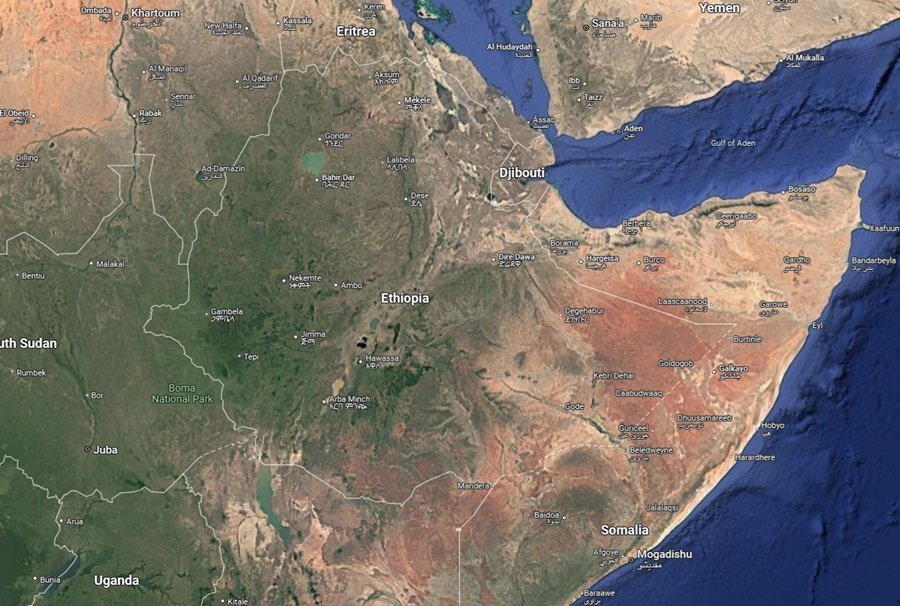
The Horn of Africa has long been a region defined by political instability, historic rivalries, and complex alliances. However, recent developments have signaled a new era of cooperation and hope, particularly between Somalia and Ethiopia. The reconciliation agreement, brokered by Turkey and announced on December 11, 2024, marks a turning point in the region’s geopolitical landscape, prompting Egypt and other regional powers to reassess their roles.
For years, Somalia and Ethiopia have been at odds over various issues, most notably Ethiopia’s relationship with the breakaway region of Somaliland, which sharply escalated tensions between the two countries. This culminated in Somalia’s decision to exclude Ethiopian forces from the African Union mission in Somalia, further highlighting the fractured relationship. But with Turkey’s mediation, the two nations have opted for dialogue over confrontation, emphasizing economic cooperation and mutual interests, while leaving contentious military issues for future discussions.
This shift has caught Egypt off guard, as it risks losing its influence in the region. Egypt has long relied on its alliances with Somalia and Eritrea to secure its strategic interests, particularly its control over key maritime routes such as the Bab el-Mandeb Strait and the Suez Canal. However, with Somalia and Ethiopia moving toward reconciliation, Egypt finds itself in a precarious position.
The reconciliation agreement, known as the “Ankara Declaration,” does not directly address the core disputes between Somalia and Ethiopia, but it lays the foundation for a new chapter in their relationship. Ethiopia is seeking access to Somali ports for economic reasons, while Somalia is hoping for stability and new economic opportunities. This cautious approach, although avoiding direct military cooperation for now, underscores the importance of pragmatism in navigating regional complexities.
Turkey, having successfully positioned itself as a key mediator in this process, benefits from this shift in the regional balance. The Turkish government, which has already made significant strides in gaining influence in Somalia through economic aid and military support, now stands as a major player in the Horn of Africa. Turkey’s role is crucial in facilitating dialogue, providing a counterbalance to Egypt’s traditional dominance in the region.
For Egypt, this new phase of diplomacy presents both challenges and opportunities. Historically, Egypt has supported Somalia militarily, but its growing military ties with the country may no longer be enough to counterbalance the economic cooperation between Somalia and Ethiopia. Moreover, Ethiopia’s potential access to the Red Sea, if granted, could significantly diminish Egypt’s control over the Bab el-Mandeb Strait and further complicate its relationship with regional partners.
The rise of Turkey as a diplomatic sponsor further complicates Egypt’s position. While Turkey’s influence in Somalia grows, it is unlikely that Ankara would want to jeopardize its newly improved relations with Egypt, particularly over issues that affect the Suez Canal and Red Sea shipping lanes. As such, Egypt must navigate this diplomatic challenge carefully, recognizing the growing role of Turkey while maintaining its strategic interests.
However, there is a darker side to this shifting regional dynamic, one that seems to be driven by the ambitions of Egypt’s president, Abdel Fattah el-Sisi, and the aggressive stance of Eritrean leader Isaias Afwerki. As Somalia and Ethiopia move toward reconciliation, Sisi and Afwerki, who have long plotted to maintain divisions and prevent peace, are visibly uneasy. Both leaders have historically relied on conflict to assert their regional dominance, and the prospect of Somalia and Ethiopia forging stronger ties threatens to upend their strategies.
Eritrean President Isaias Afwerki, whose bloodthirsty ambitions have kept the region in a constant state of tension, is particularly troubled by the peace process. His sleepless nights, driven by the fear of losing influence, reflect the growing unease among regional actors who have benefited from instability. Likewise, Egypt’s Sisi, who has supported divisive policies to maintain leverage over the Horn of Africa, may be quietly attempting to orchestrate new plots to disrupt the reconciliation between Somalia and Ethiopia, aiming to keep these nations at odds and prevent the rise of a more unified, stable region.
Despite these efforts, however, the Somali-Ethiopian reconciliation continues to push forward. Somalia and Ethiopia, recognizing their shared interests, have prioritized economic cooperation and peace over the agendas of their traditional regional antagonists. This shift highlights the resilience of these nations and their commitment to breaking free from the chains of conflict and division.
The broader message from the Somali-Ethiopian reconciliation is one of cooperation over conflict. The long-standing animosities that have characterized the Horn of Africa are gradually being replaced by efforts to build prosperity. While this poses challenges to traditional powers in the region, it also offers opportunities for a more stable and prosperous future. The focus on unity and shared interests is key to breaking the cycle of conflict and ensuring that the people of these nations, bound by common history and culture, can move forward together.
In conclusion, “One people, one blood, nothing can apart us” — resonates strongly. The Horn of Africa’s future should be defined by collaboration, not division. With peace efforts taking root, it is now up to all regional players, including Egypt, to adapt and align themselves with this new paradigm of cooperation. The success of this reconciliation process will not only shape the future of Somalia and Ethiopia but also send a powerful message to the rest of the region: that peace, driven by shared goals, is the path forward.
Editor’s note : Views in the article do not necessarily reflect the views of borkena.com
__
To Publish an Article On borkena , please send submission to info@borkena.com for consideration.Join our Telegram Channel : t.me/borkena
Like borkena on Facebook
Add your business to Borkena Business Listing/Business Directory Jobs
Join the conversation. Follow us on X (formerly Twitter ) @zborkena to get the latest Ethiopian news updates regularly. Ethiopia To share information or for submission, send e-mail to info@borkena.com
It is just reported that el-Sisi is said to have told his media that he has been watching the recent Ethiopia and Somalia agreement in Ankara very closely.
Everyone, silence! Brutus speaks!!! Watch out Ethiopia and you better behave. Otherwise, El-Sisi’s fearless army will be at your door in Addis/Finfinne in less than 30 minutes flanked by the indomitable army of the other pure Arabs at Villa Mogadishu. I have already moved over to the other side and singing this from the top of my lung:
Belâdi, belâdi, belâdi
Lake ḥobbi wa-fuâdi
Maṣr jâ ‘omme l-belâd
‘Ânte gâjti wal-morâd
Wa għalâ kolle l-għabâd
Kam le-Nilek men ‘âjâdi
Maṣr ‘ante âglâ dorrah
Fawqe ġebin ad-dahr gorrah
Jâ belâdi għâjẋi ḥorrah
Wa aslami ragam al-‘agħâdi
You guys should join me and sing that along until you memorize it. Meanwhile, keep killing each other like rival wild animals in Amhara and Oromia regions until the entire population in those two regions is on the move.
For now, everyone, silence! Brutus speaks!!!