
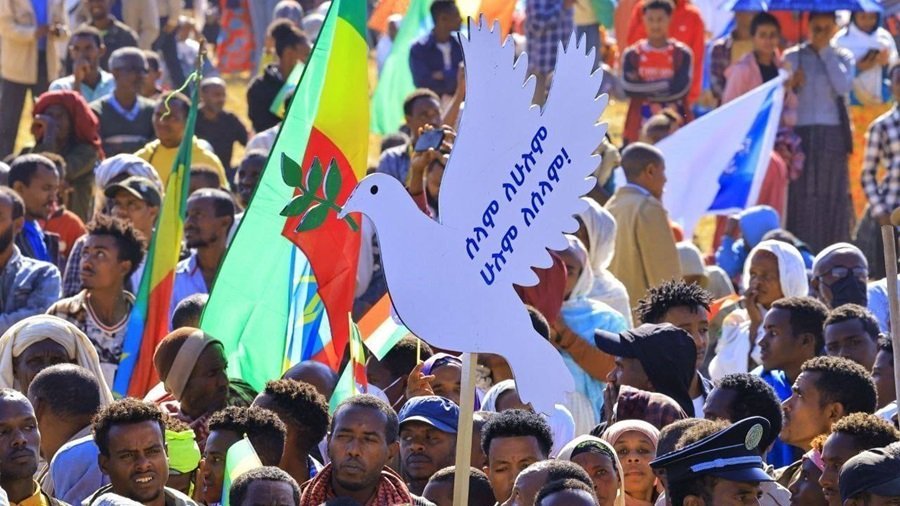
Anti-government rallies reported in some towns that are under Fano control in the Amhara region of Ethiopia
Borkena
Toronto – Coercive pro-government rallies reportedly took place on Wednesday in several cities across Ethiopia’s Amhara region. However, grenade attacks in multiple locations disrupted the rallies shortly after they began.
Ethiopian Media Service (EMS), a reliable outlet with ties to sources in the region, reported that the government coerced residents—particularly beneficiaries of the Safetynet program and government housing—to participate in the rallies. The goal was to denounce Fano forces and support the ongoing “law enforcement operation in the region.” Residents were reportedly threatened with losing their benefits if they refused to attend.
Reputable human rights organizations, both local and international, have documented civilian massacres, targeted drone strikes, and extrajudicial killings since the operation began in the Amhara region.
The federal government claims, as stated by the Federal government Minister for communication services, “the interests of the people in the Amhara region and the government are one and the same.”
State-owned Ethiopian News Agency quoted Legesse Tulu, the Minister, as saying, “The people’s demand in the region and the government’s interest is to strengthen peace, pave the way for development, and ensure the community benefits.”
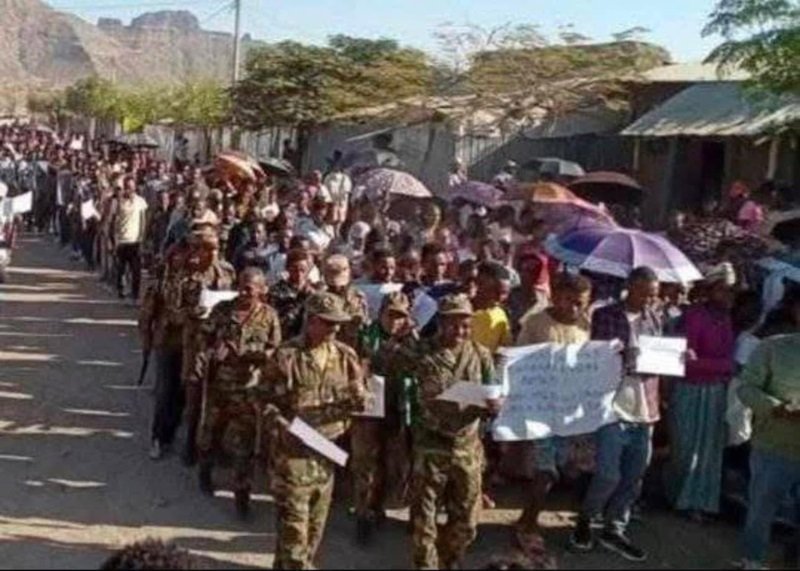
However, critics from Fano forces, activists, and opposition politicians have dismissed the government’s “peace initiatives” as misleading.
Fano forces have taken up arms, claiming to reverse existential threats to ethnic Amharas while addressing their long-standing demands for equality and justice across Ethiopia.
Since Prime Minister Abiy Ahmed took office in 2018, tens of thousands of ethnic Amharas have been massacred in regions like Oromia and Benishangul Gumuz. The government blames “Shene,” an ethnic Oromo nationalist group allegedly supported by elements within the government. Oromo extremist forces have also carried out recurring attacks in the Amhara region, notably in Shewa Robit and Ataye before the Fano movement emerged in the region.
Moreover, the government has reportedly banned entry of ethnic Amhara to the capital Addis Ababa while many ethnic Amhara who lived in the city for generations were systematically uprooted after their houses were demolished. The government undertook this widely unpopular program – which appears to be politically motivated – under the guise of “corridor development. Many other ethnic Amharas faced similar situations in other cities and towns including what is now Adama (Nazret) and Bishoftu (Debre Zeit).
The government denies existential threats to ethnic Amharas. Its “call for peace” asks Fano forces to lay down their arms and support Arega Kebede’s administration in Bahir Dar, the Amhara regional capital. Prime Minister Abiy Ahmed reiterated this stance during his visit to Bahir Dar earlier this year.
Pro-Government Rallies Shift to Pro-Fano Demonstrations
Reports indicate that rallies were held in cities such as Bahir Dar, Debre Markos, Dessie, Woldia, Gondar, and Debre Berhan. Defense Force personnel were deployed to oversee the rallies, but clashes reportedly broke out with Fano forces in some areas.
In Bahir Dar, grenade explosions were reported at six locations. EMS cited Yohannes Alemayehu, spokesperson for the Gojjam Fano forces, as stating that four police officers were killed in a grenade attack at the city’s 2nd police division.
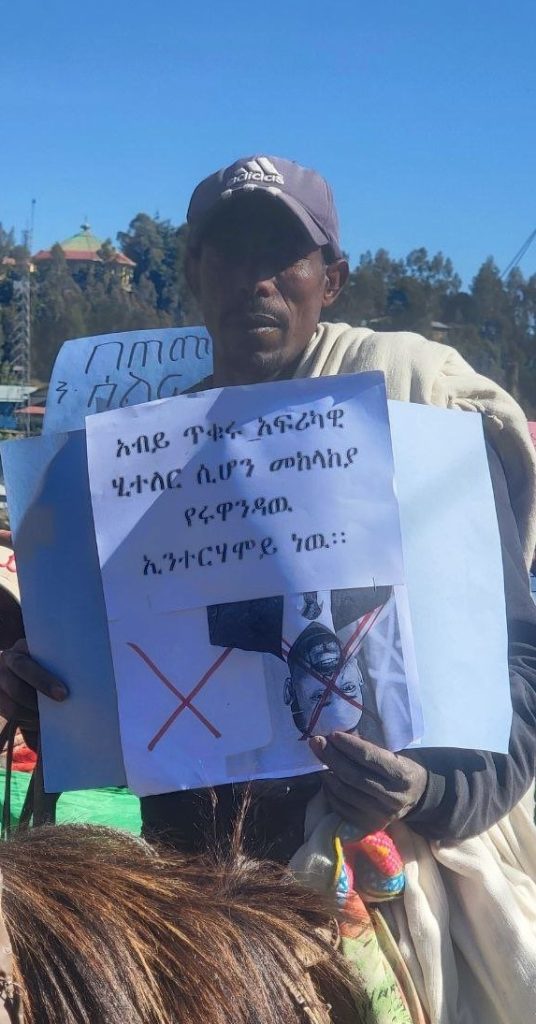
Residents coerced into chanting slogans in support of Abiy Ahmed reportedly shifted to praising Zemene Kassie, a prominent Fano leader in Gojjam. The rally was dispersed after participants began chanting anti-government slogans.
Similar incidents were reported in Woldia and Dessie, where grenade explosions disrupted rallies. In Hayk, a town 30 kilometers from Dessie, a pro-Fano rally was held. Government forces reportedly detained over 300 youth in the area.
On Tuesday, Fano forces in Gojjam warned they would not be held responsible for any incidents stemming from government-orchestrated rallies in the region. Arega Kebede was appointed as President of the Amhara region after the Federal government launched a military operation in August 2016.
In several cities, the rallies failed to materialize.
“It is proof that we have won,” local sources cited Zemene Kassie, chair of Gojam Fano forces, as saying after disruption of government orchestrated rallies in many cities in the region.
Meanwhile , an anti-government protest was organized in some towns that are under the control of Fano forces.
Growing Support for Fano Forces
Fano forces enjoy significant grassroots support in the Amhara region, a factor that has repeatedly hindered government military operations aimed at eliminating them. When the federal government launched the operation in August 2024, it planned to “complete the operation within a few weeks.”
However, Fano forces now control over 80% of the region, primarily in rural areas and small towns. With an estimated 400,000 armed members across the Amhara region, it remains uncertain whether the federal government can impose its terms of “peace” or restore stability.
Critics accuse Prime Minister Abiy Ahmed of prioritizing his hold on power above all else including acceptable peace deals. This year, his government received financial support from the IMF and World Bank, ostensibly to fund “economic reform projects.” While critics claim the financial institutions dictate these reforms, no official statement has confirmed this.
__
Join our Telegram Channel : t.me/borkena
Like borkena on Facebook
Add your business to Ethiopian Business Listing / Ethiopian Business Directory
Join the conversation. Follow us on X (Formerly Twitter) @zborkena to get the latest Ethiopian News updates regularly. Subscribe to YouTube channel To share information or for submission, send e-mail to info@borkena.com