
By Amsal Woreta
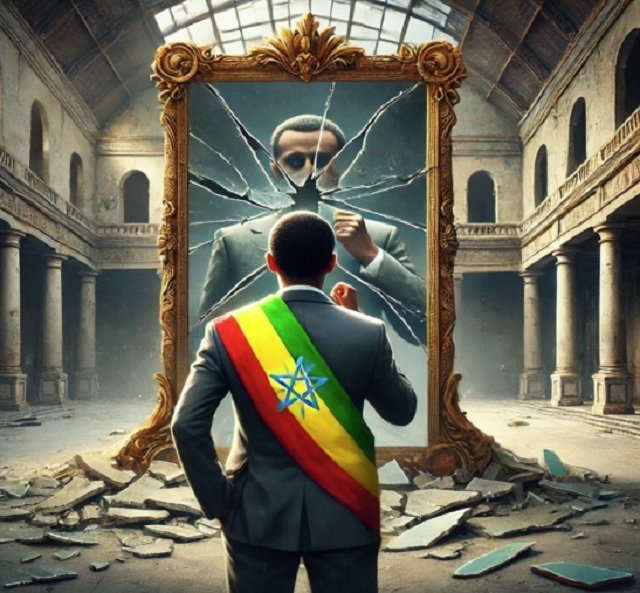
This article critically examines the governance of Abiy Ahmed who, while promising to be a transformative figure for his nation, has presided over a series of humanitarian crises, civil conflicts, and profound socio-economic disparities. With a public image crafted as a “messiah” and peacemaker, this leader has overseen infrastructure projects that prioritize aesthetics over urgent social needs. Despite the ongoing crises, which include civil wars, displacements, and humanitarian emergencies affecting millions, he projects an image of national prosperity. This article investigates how his leadership approach has juxtaposed superficial progress with deepening societal challenges, examining the impacts of healthcare, infrastructure, and public morale.
In recent years, the governance of certain political leaders has sparked both international praise and severe criticism. Such leaders may initially present themselves as reformers or visionaries, cultivating an image of unity, progress, and modernization. However, their actions reveal a leadership style focused more on image and power than on substantive change. Exploring the paradoxical leadership style of one such figure, who declared last week during the inauguration of Beynouna Village resort in Metahera that he has built “heaven on earth” for Ethiopians. While leading his nation from one crisis to another, most people cannot even afford to eat one meal a day let alone afford a five-star resort.
The focuses are on his investments in infrastructure, such as palaces, luxury resorts, and beautification projects, alongside the concurrent social and humanitarian crises affecting millions, including civil wars, educational disruptions, and lack of essential services.
This article synthesizes research on themes relevant to the governance style in question, including:
1. Messianic Leadership and Populism: Scholars such as Jan-Werner Müller and Ruth Ben-Ghia argue that leaders who position themselves as “saviors” often employ populist strategies, creating a cult of personality that emphasizes their indispensability. These leaders leverage symbolism, framing their rule as a period of miraculous progress, even when underlying societal issues remain unresolved.
2. Crisis Leadership and Public Relations: Research on crisis governance, as explored by Patrick Lagadec and others, indicates that leaders may use selective narratives and media manipulation to redirect public focus. In contexts of severe crisis, such leaders often emphasize superficial achievements to distract from unaddressed issues, including human rights abuses and economic decline.
3. Political Economy of Infrastructure: Studies by Daron Acemoglu and James Robinson highlight that grand infrastructure projects can serve as symbols of state power but may not reflect economic or social progress. When a state prioritizes lavish projects over addressing basic needs, it often indicates a desire to reinforce authority rather than genuinely improve public welfare.
The article employs a qualitative approach, drawing on data from governmental reports, humanitarian organizations, academic sources, and media coverage. The analysis relies on case studies of specific crises, including conflicts, educational impacts, and public health challenges, to contrast these with government spending on symbolic projects. This approach allows for an exploration of both the tangible and psychological effects of this leadership style.
Governmental publications, humanitarian reports, and media investigations provide evidence on the crises, while project records give insight into the allocation of resources to infrastructure projects.
Political economy and conflict studies frameworks are used to assess the gap between the leader’s image and the on-ground realities affecting citizens.
1. “The Image of a “Messiah”: Cultivating a Visionary Persona
This leader’s public image was meticulously crafted from the beginning of his tenure. He presented himself as a unifier and reformer, invoking religious and symbolic language to cast his leadership as a transformative period in the nation’s history. His speeches emphasized themes of peace, unity, and prosperity. However, this messianic imagery often obscured the deeper issues plaguing the nation.
. Contrasting Rhetoric and Reality: While the leader promised peace, conflicts erupted in multiple regions, resulting in substantial loss of life and displacement. Regions with ethnic or political grievances reported significant unrest, with the overwhelming majority accusing the administration of inciting violence to maintain control.
-Selective Symbolism: The leader’s frequent use of religious or cultural symbolism served as a powerful tool to rally popular support and distract from economic and humanitarian issues.
2. Conflict and Crisis: The Toll on Education and Healthcare
Under this leader’s tenure, millions have been affected by conflicts, resulting in a massive disruption of essential services like education and healthcare:
– Impact on Education: Due to armed conflicts, especially in regions with significant populations, an estimated eight million children are out of school. A number of schools have been destroyed and occupied by armed forces, leading to long-term consequences for the affected communities. This section examines how neglecting education in favor of infrastructure projects can perpetuate cycles of poverty and instability.
– Healthcare Infrastructure Damage: Like the education sector, healthcare facilities in conflict zones have been systematically damaged or destroyed. Drone attacks and active combat zones have resulted in the direct targeting of healthcare facilities, further exacerbating the crisis. This paper analyzes the disparity between healthcare needs and government expenditure on non-essential projects, emphasizing the public health implications.
3. The Economics of Symbolic Infrastructure
The leader’s administration has funneled billions into projects like the construction of a luxurious palace, resorts, and beautification efforts such as fountains and ornate street lighting. While these projects are portrayed as signs of progress, they serve a symbolic purpose.
– Disproportionate Spending: Infrastructure projects like the $15 billion palace and luxury resorts stand in stark contrast to the daily struggles of citizens who lack consistent access to water, electricity, and basic services. This analysis contrasts the budget allocated to these projects with the spending required to address pressing social needs.
– Public Perception and Disillusionment: While initially supportive, citizens increasingly express disillusionment with the administration’s focus on aesthetics over substance. By highlighting instances of public dissent and commentary from citizens, this section explores how these projects have become symbols of excess and mismanagement.
4. Political Image Management: The Illusion of “Heaven on Earth”
The leader’s administration has aggressively controlled the narrative through media and public relations, portraying the nation as progressing under a visionary plan. However, this “heaven on earth” is experienced by only a privileged few.
– Media Control and Censorship: State-controlled media emphasizes aesthetic improvements, while reports of crises, civilian casualties, and human rights abuses are minimized or censored. Through an analysis of government media tactics, this section reveals how narratives are used to maintain a controlled image.
– Psychological Impact on Citizens: The contrast between state propaganda and lived reality has led to psychological strain for most citizens, who feel disconnected from the “prosperity” narrative. Interviews and reports illustrate the sense of alienation and discontent that results from this gap between image and reality.
5. Economic Consequences: Debt and Dependency
While the leader’s administration promotes development through infrastructure, the economic reality reveals rising debt, poverty, and reduced foreign investment.
– Debt Crisis and Financial Instability: The massive debt incurred to fund infrastructure projects has created an economic strain that affects long-term financial stability. This section analyzes the risks of debt dependency and the economic impact of reduced foreign investment due to conflicts and instability.
– Missed Opportunities for Sustainable Development: By prioritizing symbolic infrastructure over essential public services, the leader has missed critical opportunities for inclusive, sustainable development.
This analysis of the leader’s tenure reveals a governance style marked by contradictions and an emphasis on superficial image over substantive change. The key findings highlight:
1. Psychological and Social Costs: The image-centric leadership has alienated citizens, especially those in conflict-affected regions, undermining public morale and deepening divisions.
2. Short-Term Prestige vs. Long-Term Consequences**: The emphasis on prestige projects over essential services risks deepening poverty and perpetuating instability.
3. Implications for International Relations: The contrast between international praise for the leader’s initial promises and the reality of ongoing crises poses a challenge for foreign relations and potential investments.
Lessons from Abiy Ahmed’s Leadership
Abiy Ahmed’s leadership in Ethiopia provides a critical case study on the risks of the “Messiah Complex” in governance, particularly within diverse and complex societies. When leaders begin with noble intentions but believe themselves uniquely capable of “saving” their country, it can lead to authoritarian tendencies and a narrow, self-referential approach to governance. While Abiy’s initial reforms seemed promising, his subsequent leadership reveals how even the most well-intentioned agendas can falter if a leader neglects the importance of inclusivity, collaboration, and adaptability.
Abiy’s efforts to unify Ethiopia were undermined by his reliance on grandiose projects that emphasized his vision rather than the collective will of the people. Instead of fostering genuine dialogue and reconciliation among Ethiopia’s diverse ethnic communities, his approach leaned heavily on symbolism and top-down control. This approach not only alienated various groups but also led to a cycle of crises and conflict, deepening the divisions within Ethiopian society and weakening public trust in leadership.
Moving Forward: Embracing Inclusivity and Collaboration
As Ethiopia grapples with internal challenges, it becomes increasingly clear that the path forward cannot rest on the shoulders of a single leader. Sustainable progress and unity demand a commitment to inclusive governance and collaborative decision-making. By embracing Ethiopia’s rich diversity and fostering a system of shared power, the nation can hope to build a stable and cohesive future. Leaders must remember that true, lasting progress comes not from a savior figure but from a leadership style that is open to listening, adapting, and working in concert with others.
Conclusion
Abiy Ahmed’s leadership trajectory exemplifies both the allure and the dangers of the Messiah Complex in governance. While charismatic leaders often inspire hope, a nation’s true path to stability lies in a system that values inclusivity, accountability, and adaptability. Ethiopia’s experience under Abiy shows that even the most ambitious visions are insufficient without a commitment to shared power and diversity. Leaders must recognize that no single person can serve as a nation’s ultimate savior; real progress requires a willingness to engage with others, to listen, and to respond to the complexities of governance with humility and flexibility. Only through collaborative, inclusive leadership can nations hope to achieve lasting unity and prosperity.
In conclusion, this leader’s tenure serves as a case study of how a focus on symbolic infrastructure, image control, and superficial projects can mask severe socio-economic and humanitarian challenges. For genuine stability and prosperity, governance must prioritize transparency, address root causes of conflict, and invest in sectors like education, healthcare, and economic empowerment. The article underscores the risks of prioritizing image over substance and the consequences of a leadership style that values optics more than tangible progress.
The in-depth critical examination of the contradictions in the leader’s governance approach illustrates the costs of prioritizing image over actual development and stability.
Editor’s note : Views in the article do not necessarily reflect the views of borkena.com
__
To Publish an Article On borkena , please send submission to info@borkena.com for consideration.
Join our Telegram Channel : t.me/borkena
Like borkena on Facebook
Add your business to Borkena Business Listing/Business Directory Jobs
Join the conversation. Follow us on X (formerly Twitter ) @zborkena to get the latest Ethiopian news updates regularly. Ethiopia To share information or for submission, send e-mail to info@borkena.com