
The views, statements and opinion in the article reflects that of the writer’s , NOT borkena.com ‘s
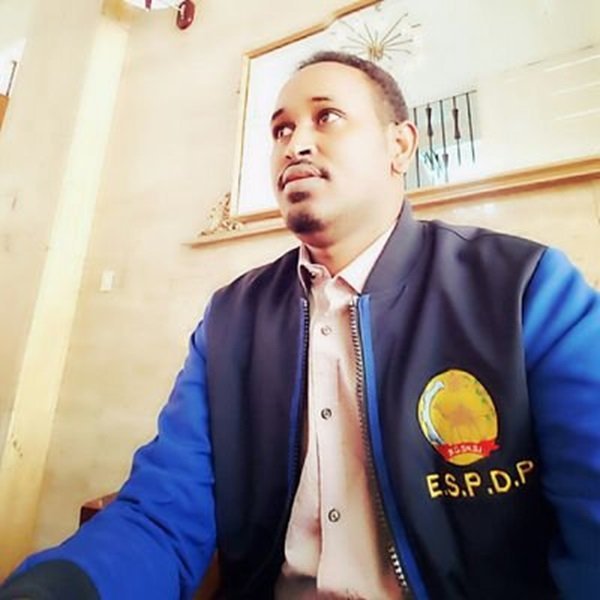
By Abdirezak sahane Elmi
What is the hidden history between the SRS people and the rest of Ethiopia that has led to the Somali people being treated as second- class citizens?
Abstract:
The Article tends to examine the issue of the misguided perception promoted by former Government Systems in Ethiopia, portraying the Somali people as enemies of the nation and its citizens. This false narrative has had adverse effects on the Somali community living in the Somali Regional State (SRS). The narrative emerged as a result of past regimes pressuring the Somali community based on their identity and religion, leading to damage full oppressions and the denial of their rights. This personal Opinion, sheds light on the incorrect perspectives that previous regimes instilled between the Ethiopian people, creating divisions among brothers and sisters.
INTRODUCTION:
Ethiopia is situated in East Africa, specifically in the Horn of Africa. The current land area of Ethiopia is estimated to be 1.1 million square kilometers, with a population of around 120 million. Many regions of the country have a long history of unity, with a proud record of never having been invaded, despite some historical incursions that are not widely documented.
Ethiopia boasts abundant natural resources, particularly rich agricultural land, water, minerals, fuel, sunlight, and favorable weather conditions.
The population of Ethiopia comprises 86 ethnic groups, each with its own language, culture, and region. Additionally, the diverse population practices various religions and lifestyles.These 86 ethnic groups trace their origins to different ancestral roots, including Cushitic, Semitic, and Omotic lineages.
The largest segment of the country’s population is of Cushitic Ancestry, exemplified by ethnic groups such as Somalis, Oromo, Sidama, Afar, Hadia, Gaamo, Aggow, and others. They account for an estimated above 70% of the total population of the country, residing in over 80% of Ethiopia’s land area.
Prior to 2018, these ethnic groups had never governed Ethiopia. In that year, Prime Minister Abiy Ahmed, an Oromo, assumed leadership of the nation.
Before the fall of the Derg government in 1991 and the subsequent establishment of a federal government, these groups did not have the opportunity to fully practice their cultural, linguistic, religious, and citizenship rights. Although progress has been made since then, many of these rights have yet to be fully realized.
Somalis make up an estimated About 10% of Ethiopia’s population which is making the third Ethnic Group . They inhabit an area of over 354 thousand square kilometers, which accounts for approximately 34% of the country’s total land Which is making the second largest region in Ethiopia. The Somali region is rich in natural resources, with over 30% of the country’s resources located there. It is also home to the largest oil reserves in the Horn of Africa. Additionally, the agricultural sector in the Somali region is second only to Oromia, which leads in terms of agricultural land area.
Content;
Let’s delve into the specific reasons why Somalis, as introduced in the Article , are still perceived as second-class citizens, despite the population, land, and resources in their country. In discussing this issue, I will break it down into two parts.
Firstly, we will examine the perspective of the rest of Ethiopia towards Somalis and the underlying reasons behind it.
Secondly, we will explore the viewpoint of Somalis regarding the rest of Ethiopia and their level of understanding.
Let’s start by addressing the first topic and providing a concise explanation.
#The views of other Ethiopians regarding the Somali community
Ethiopia comprises 86 diverse ethnic groups with varying cultures, languages, and religions. However, there are commonalities among them, particularly in how they perceive Somalis. There is a prevailing belief that Somalis are not willingly Ethiopian but rather have been assimilated into Ethiopia against their will.
The reason behind the belief that Somalis are distinct from Ethiopians or do not identify with Ethiopia can be traced back to the perceptions held by a majority of Ethiopians, particularly the northern rulers who historically governed the region before 2018. Previous Ethiopian regimes, such as those under King Haile Selassie, the Derg, and the TPLF/EPRDF, imposed the idea of a forced unification of Ethiopia rather than a genuine desire from the people. Despite the fact that Ethiopians are known for their honesty and love for their country, these false narratives were readily accepted due to the influence of the ruling elite. This sentiment of animosity has perpetuated over time.
During the armed conflict between the Somali people and Ethiopia, the Somalis were fighting for their independence, with support from the Somalia government.
The history began with the 1964 war, followed by the conflict in 1977, and culminated in the ONLF war against the Government of Ethiopia. Over time, the perception among the people of Ethiopia has been shaped to view Somalis as a disruptive force that cannot be trusted as fellow Ethiopians. This negative sentiment has permeated throughout the the most population of Ethiopia.
*The negative impact that this issue has had on the people of Somali Region.
This particular issue, involving the misperception of the people of Ethiopia towards Somalis, has resulted in numerous adverse effects on the residents of the Somali region. Some of the primary consequences include:
– The people are deprived of their rightful economic share and are marginalized in the distribution of the country’s wealth, major projects, and fundamental citizen rights.
– The people lack political representation and involvement in the Federal Government across various levels, as they face a lack of trust in critical areas such as security agencies, the national army, intelligence, and foreign policy.
– This biased political stance was initially propagated by politicians from the North who historically have dominated the country’s representation.
A significant shift occurred with the appointment of Prime Minister Abiy Ahmed, an individual from the Oromo ethnic group, to the highest governmental position.
The country’s politics has undergone significant changes, with Prime Minister Dr. Abiy and his ruling party implementing positive measures to empower the Somali people. One notable shift is the move away from alienating Somalis and recognizing them as valuable members of Ethiopian society, which has the potential to address various challenges.
Since assuming office, Prime Minister Abiy has restructured the ruling party to be more inclusive of all regions, including appointing Adan Farah, a Somali representative, as Vice President of the PP Party. This move has brought previously marginalized regions into the decision- making process.
Furthermore, there has been a push to increase trust in Somalis to serve in various positions of responsibility. As a result, Somalis have been appointed to key roles, such as leading the Ministry of Finance and Economy for the first time, highlighting their growing importance in shaping the country’s future.
I still cannot say that Somalis have fully obtained their rights in the country. We are still waiting for Somalis to be appointed to positions in the House of the People that are equivalent to their population. Furthermore, it is crucial that Somalis are represented in key roles such as generals, security officers, the deputy prime minister, and other important positions. I believe that a collective effort is essential to ensure that this progress continues.
#The view of the Somali community in this region toward the rest of Ethiopia
The Somali community in the region became part of Ethiopia in 1954 when British European colonialists handed them over to King Haile Selassie without consulting the local population. Since then, various Ethiopian regimes have subjected the Somali people to oppression, including massacres, widespread displacement, and killings within the community.
As a result of these historical injustices, the local population has been compelled to resist this form of colonialism, leading to a collective conflict where Ethiopia is perceived as an adversary that cannot be reconciled with. This has left the Somali people feeling marginalized and without a pathway to integration.
Misconceptions:
Many Somalis in Ethiopia have misconceptions that the Amhara ethnic group is the largest in Ethiopia, excluding only the Somali community. This misconception stems from a lack of awareness among the Somali people that Ethiopia is not solely comprised of the Amhara and Tigray ethnic groups.
Somalis need to understand that there are numerous ethnic groups in Ethiopia that have faced similar oppression as the Somali community under past Northern rulers.
Since the governmental system changes in 1991, this narrative has been gradually fading away. However, some incorrect perspectives still persist.
*Negative Effects Arising From Such Mindset.
The segregation of ethnic groups and the subsequent alienation of others, refusing to acknowledge their shared humanity, leads to the marginalization of Somali individuals as distinct from the rest of the Ethiopian population. This outdated narrative, perpetuated by past rulers as previously discussed, poses a significant challenge for Somalis seeking opportunities in other regions of Ethiopia, affecting their access to employment, education, and integration.
Distrust and conflict within the community, fueled by the remnants of past regimes’ divisive tactics, contribute to this issue. I am aware that many ethnic groups in Ethiopia do not harbor animosity towards their Somali counterparts as a whole.
I believe that the root cause of this issue lies in a lack of understanding about the origins and intentions behind this narrative.
Conclusion and Recommendations
It is crucial for the Somali people to shift their mindset from old ways of thinking and seize the opportunities available to
them today. By engaging with and supporting the new Ethiopia, they can uphold their rights and aspirations while respecting the diverse Ethiopian ethnic groups individually, rather than using the term “Habasha” to group them together.
*WHAT OPPORTUNITIES DO THEY HAVE TODAY THAT WERE UNAVAILABLE BEFORE:
One key opportunity that the Somali people have today is the ability to actively participate in the political landscape of a country where they are no longer considered outsiders. This newfound political influence was previously limited, but has expanded following the resolution of conflicts between the ONLF and the government through dialogue and a peace agreement.
Hence, the Somali people and the Somali region, currently the most peaceful areas in Ethiopia, must be prepared to maintain their peace and stability by refraining from aligning themselves with political leaders or organizations. Social security rights must be upheld.
The Somali society should actively participate in pursuing and safeguarding the nation’s interests, fulfilling their constitutional duties as citizens. Moreover, they should strive to secure all their rights that have been neglected in a peaceful manner.
#The_Somali community must unite and avoid unnecessary division based on clan mentality, which is the primary obstacle hindering us from successfully participating and influencing the political landscape of our country, Ethiopia. We should recognize that being Somali is an ethnic identity, while being Ethiopian is a matter of citizenship; these are not conflicting facts. Instead, understanding and leveraging this distinction can make us stronger and help us make the most of our potential.
Editor’s note : Views in the article do not necessarily reflect the views of borkena.com
__
To Publish an Article On borkena , please send submission to info@borkena.com for consideration.
Join our Telegram Channel : t.me/borkena
Like borkena on Facebook
Add your business to Borkena Business Listing/Business Directory Jobs
Join the conversation. Follow us on X (formerly Twitter ) @zborkena to get the latest Ethiopian news updates regularly. Ethiopia To share information or for submission, send e-mail to info@borkena.com