
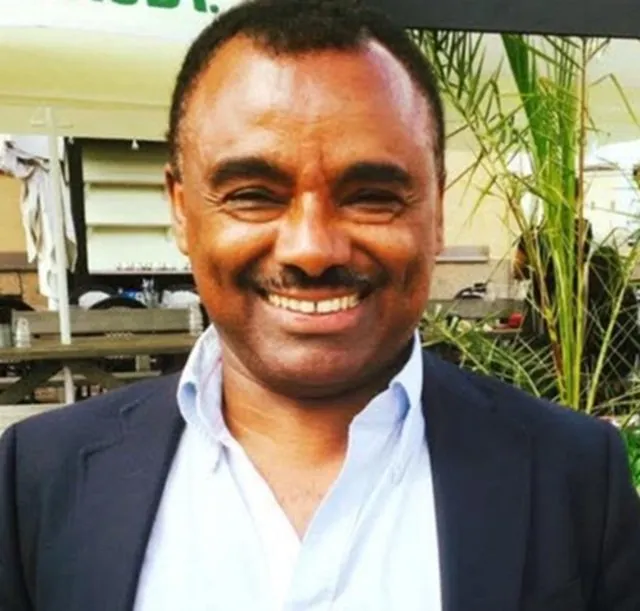
Girma Berhanu (professor)
Gothenburg, Sweden
For many years, I have been engaged in campaigns advocating for the rights of marginalized, oppressed, and disadvantaged people, including women, ethnic minorities, refugees, religious or belief minorities, LGBTQ+ people, persons with disabilities, older adults, and those experiencing economic hardship.
What has always troubled me, however, is that some people passionately defend the rights of certain marginalized groups while ignoring—or even rejecting—the rights of others, as though some human beings are less deserving of dignity, protection, and equal treatment.
Some time ago, a man from the Middle East contacted me and encouraged me to become more involved in advocating for marginalized communities living in segregated suburbs. I agreed wholeheartedly that these communities deserve support, equal opportunities, and protection from discrimination. I then mentioned that attacks and hostility toward LGBTQ+ people have also increased, even in Sweden, and that they too deserve equal rights and protection.
His reaction surprised me. He became angry and asked what homosexuality had to do with our discussion. He then appealed to religious arguments that, in my view, did not accurately reflect the teachings he claimed to represent. Eventually, our conversation broke down, and we parted on unfriendly terms.
What disappointed me most was not that we disagreed, but that he failed to see my central point. Marginalized groups should not compete for compassion or recognition. Whether people are discriminated against because of their ethnicity, religion, disability, age, poverty, gender, or sexual orientation, they all deserve equal respect and equal protection under the law.
This conviction has also been shaped by my own research.
More than a decade ago, a PhD student from Ethiopia contacted me. He told me that he had been imprisoned because the authorities suspected him of supporting an opposition movement. During his detention, security officers repeatedly raped him. He described it simply by saying, “They sodomized me.” He also told me that sexual violence against male political prisoners was widespread but remained almost entirely hidden because male-on-male rape is one of the greatest taboos in Ethiopian society.
Before ending our conversation, he said something that I have never forgotten:
“You are a brave and caring person. I count on you to let the world know.”
His words stayed with me. I eventually contacted more than twenty survivors who had experienced sexual torture and abuse. Many described severe physical injuries and lifelong psychological trauma.
The investigation was difficult. Members of my family, close friends, and acquaintances urged me to stop. Some feared for my safety, while others believed the subject was simply too sensitive to discuss publicly. Despite the pressure, I continued my research and eventually published several empirically based articles documenting sexual violence against political prisoners under both the previous Ethiopian government and the current one. Many survivors expressed gratitude because someone had finally acknowledged their suffering, while others chose to deny or ignore the problem.
That experience taught me an important lesson. Society often condemns one form of injustice while remaining silent about another that is equally serious. Human rights lose their meaning when compassion becomes selective.
The same pattern can be seen in attitudes toward LGBTQ+ people. Speaking publicly about homosexuality in Ethiopia remains extremely difficult because the subject is surrounded by fear, stigma, and hostility. Yet LGBTQ+ people exist in every society and deserve the same dignity as everyone else.
Some time ago, I saw a video circulating on social media showing the private wedding ceremony of two Ethiopian women living in the United States. The video had apparently been shared without their consent. I read thousands of comments, and the overwhelming majority expressed hatred, insults, and threats. Some people even tried to identify and locate the couple. Among the comments were calls to “stone them to death” or “burn them alive,” often accompanied by references to God or Jesus Christ.
As a Christian, I find such responses deeply troubling. Jesus preached love, mercy, forgiveness, and compassion. He never taught people to hate or kill those with whom they disagreed. Whatever one’s religious beliefs, violence and hatred cannot be justified by invoking faith.
My commitment to universal human rights was strengthened many years earlier, shortly after I arrived in Sweden.
I came during the recession of the early 1990s, when the right-wing populist New Democracy party entered the Swedish Parliament and contributed to a political climate marked by fear of diversity and immigration. During that same period, I learned about two murders. One victim was a Black man from West Africa who was stabbed to death by neo-Nazis in southern Sweden. The other was a gay man who was murdered only a hundred meters from where I now work in Gothenburg.
Although the victims came from different backgrounds, I immediately recognized what connected them. They were targeted because they were perceived as different. The hatred was directed not at who they were as individuals, but at what they represented—a minority challenging social prejudice.
As a young man in my twenties, I concluded that the struggle against racism, homophobia, religious intolerance, and other forms of discrimination must be one and the same. More than thirty years later, I am still surprised that some people fail to recognize this connection.
The same pattern continues today. Recently, a young Democratic politician of Ethiopian heritage was elected to Congress in the United States. Rather than celebrating the success of a talented young leader, many people focused on her family’s ethnic background in Ethiopia or speculated about her sexual orientation. I have no idea whether she is gay, nor is it relevant. Yet some people even advised me not to congratulate her because of her parents’ political views or because of rumors about her private life.
I find this deeply disappointing. Why should a person’s ethnicity, family background, or presumed sexual orientation overshadow her achievements? Such reactions reflect prejudice, narrow-mindedness, and a tendency to categorize people instead of judging them by their character and contributions.
A just and peaceful society cannot be built by defending the rights of only those with whom we personally identify while ignoring others. Human rights are universal. If we genuinely believe in justice, we must be willing to stand up for everyone—not only for those whose struggles align with our own beliefs, identities, or experiences.
Unfortunately, selective compassion is not confined to any one religion, nationality, ideology, or political movement. It is a human tendency that appears across societies. Too often, people advocate passionately for one form of justice while remaining silent—or even hostile—toward others.
Selective compassion ultimately undermines the very principles of equality and human rights that advocacy seeks to promote. The true measure of our commitment to justice is not whether we defend those who are like us, but whether we defend the dignity and rights of every human being.
Professor Girma Berhanu teaches at the Department of Education and Special Education, Gothenburg University. He can be reached at girma.berhanu@ped.gu.se
Editor’s Note: Views in the article do not necessarily reflect the views of borkena.com
__
Join our Telegram Channel: t.me/borkena
Like borkena on Facebook
To submit a press release, send the submission to info@borkena.com
Add your business to Ethiopian Business Listing / Ethiopian Business Directory
Join the conversation. Follow us on X (formerly Twitter) @zborkena to get the latest Ethiopian news updates regularly.
To Support Borkena : https://borkena.com/subscribe-borkena/—one- time support or small monthly options available. Inquire information about it : info@borkena.com
You raised a very controversial social issues especially those who hold religious conservative convictions. I applauded your courage.