
Girma Berhanu
A few weeks ago, two boys who are enthusiastic about football asked me a difficult question: why are Black footballers insulted in stadiums with monkey chants, images of apes, or even by fans throwing bananas? Why apes of all animals?At the time, I struggled to respond. I tried to explain, in my own way, the role of history, human hierarchies, the theory of evolution, and scientific racism. Yet I felt inarticulate, as if I had not fully captured the depth and cruelty of the issue.
Since then, I have reflected more deeply. One recent incident involved a social media post by the president of the United States, who shared an image depicting a former president and his wife as apes or monkeys. After pressure from members of his own party, the post was deleted. But what was the intended message? That they look like apes, think like apes, or are somehow less evolved?
Public reaction followed a familiar pattern: initial shock, followed by quick dismissal. Many people brushed it aside as a childish or impulsive act, ignoring the deeper structural, institutional, and historical precedents behind such imagery. Yet we know that presidential communication is rarely accidental; it is often carefully crafted within inner political circles.
Around the same time, I revisited How Fascism Works by Jason Stanley, which examines how authoritarian politics divide societies into “us” and “them.” While I cannot explore his full argument here, his framework helps us understand how dehumanizing language and imagery function politically.
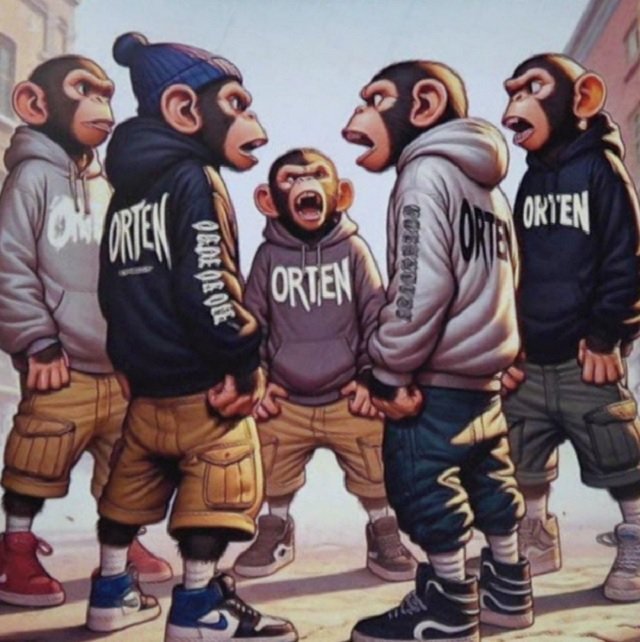
A third incident occurred closer to home, Sweden. The newspaper Göteborgs-Posten reported that Lars Arrhenius was pursuing a legal case concerning educational material used by a social services department in northeast Gothenburg. The material, titled Angry Apes, was intended as a pedagogical tool for young people facing social challenges. It included images such as an ape wearing a hijab and other apes in a sweater labeled “Orten” (the neighborhood).
The material was widely criticized and later withdrawn. A complainant argued that it “clearly contains racist and discriminatory images” and risks creating an exclusionary environment for children and youth. It is difficult to understand how associating already marginalized young people with apes could be considered educational. My purpose here is not to enter the legal debate, but to examine the cultural message embedded in such representations. Where does this deeply pejorative association between certain groups and apes originate?
We live in a visual culture. Images shape how we perceive the world, others, and ourselves. Yet many people lack the tools to critically interpret visual representations. As bell hooks observed, it is troubling that mass media increasingly uses powerful imagery for specific effects, while simultaneously encouraging us to believe that these images are insignificant.
Even the Swedish curriculum (Lgr 2011) emphasizes that images play a crucial role in how people think, learn, and understand the world. Visual literacy is essential for democratic participation. While powerful images can serve as effective pedagogical tools, degrading representations—particularly those targeting marginalized groups such as ethnic minorities, women, disabled individuals, and LGBTQ+ communities—can reinforce harmful stereotypes and produce lasting damage.
To understand the enduring power of the “ape” insult, we must turn to history. Many of us learned about racism and colonialism in school, often alongside the ideas of Charles Darwin. Although Darwin’s work in On the Origin of Species and The Descent of Man revolutionized biology, his ideas were widely misunderstood and misused.
Evolution does not claim that humans descended from modern apes. Rather, it posits that humans and apes share a common ancestor. However, this nuance was lost in public discourse. The simplified claim that “humans came from apes” made it easier to weaponize the comparison. Calling someone an “ape” came to imply that they are primitive, less intelligent, or less civilized.During the 19th and early 20th centuries, these distortions merged with scientific racism and Social Darwinism. Thinkers misused evolutionary ideas to construct racial hierarchies, falsely claiming that some groups were “closer to apes” than others. As The Mismeasure of Man (by Stephen Gould)demonstrates, such pseudoscientific claims were used to justify colonialism, slavery, segregation, and the dehumanization of non-European peoples. This history helps explain why the “ape” insult persists today. Biologically, humans are primates; the insult has no scientific basis. Its power lies instead in centuries of cultural conditioning, visual propaganda, and racial hierarchy. The question, then, is not only why the insult exists, but how we confront it. How can we protect new generations—especially Black, Indigenous, and other racialized communities—from such deeply dehumanizing representations? What role should schools play? What responsibilities do media and political institutions carry?
Legal measures alone are not enough. What is required is a broader transformative agenda: one that promotes historical awareness, critical visual literacy, and a deeper understanding of human dignity. Only then can we begin to dismantle the cultural foundations that allow such insults to persist.
Editor’s Note : Views in the article do not necessarily reflect the views of borkena.com
__
Join our Telegram Channel : t.me/borkena
To Support Borkena : https://borkena.com/subscribe-borkena/ – one time support or small monthly options available. Inquire information about it : info@borkena.com
Like borkena on Facebook
To submit Press Release, send submission to info@borkena.com
Add your business to Ethiopian Business Listing / Ethiopian Business Directory
Join the conversation. Follow us on X (Formerly Twitter) @zborkena to get the latest Ethiopian News updates regularly.
The author wrote , “targeting marginalized groups such as …………TQ+ communities ?
The author(Mr G. Birhanu) appears to openly sympathize with Western gender ideologies and seems intent on influencing readers to accept these repulsive notions of the Woke. Furthermore, it is evident that his motivation is to favor this so-called vulnerable community by normalizing their detrimental ideas across cultures and borders. Honorable Ethiopians are not open to your negative influences. Initially, the author extensively discussed collective grievances and challenges of Black people. Subsequently, he subtly introduced repugnant ideas of the woke, carefully crafted to influence readers—not an accidental task.
—Borkena must ban these kinds of authors——