
In the volatile chessboard of the Horn of Africa, where ancient rivalries intersect with modern ambitions, Ethiopia’s audacious memorandum of understanding (MoU) with Somaliland in January 2024 stands as a pivotal, yet ultimately self-defeating, maneuver. Landlocked since Eritrea’s independence in 1993, Ethiopia—Africa’s second-most populous nation with over 120 million souls—has long chafed under its dependency on foreign ports, funneling 95% of its trade through Djibouti at exorbitant costs that drain its coffers. The MoU, which promised Ethiopia a 50-year lease on 20 kilometers of Somaliland’s coastline for naval and commercial use in exchange for recognizing the breakaway region’s sovereignty, was heralded by Prime Minister Abiy Ahmed as a triumphant stride toward “sovereign access to the sea”.
Yet, this bold projection of intent and power stemmed not from unassailable strength, but from profound weakness—a desperate bid to alleviate economic strangulation amid internal strife and external isolation. What ensued was a cascade of counter-responses from neighbors and distant powers alike, transforming a calculated risk into a geopolitical quagmire that has rendered Ethiopia more vulnerable than ever. As the dust settles into late 2025, with diplomatic ties tentatively restored between Ethiopia and Somalia, the endgame remains unwritten, but the path forward is labyrinthine, far exceeding Ethiopia’s strained resources without the intervention of global heavyweights.
The Roots of Desperation: Ethiopia’s Structural Vulnerabilities
To grasp the MoU’s genesis, one must confront Ethiopia’s inherent fragilities. As a landlocked colossus, Ethiopia pays dearly for its isolation: annual port fees to Djibouti exceed $1.5 billion, a hemorrhage that exacerbates its chronic trade deficits and stifles growth.
The economy, once Africa’s fastest growing, has faltered under the weight of civil wars, including the devastating Tigray conflict that claimed hundreds of thousands of lives and displaced millions. By 2025, poverty rates have surged to 43% (now at about 72%), fueled by inflation hovering at 30%, a devalued birr (that has lost 200% of its purchasing value since 2024), and foreign exchange reserves dipping below three months of import cover—a perilous threshold signaling acute vulnerability. Militarily, too, Ethiopia’s forces are teetering: the Tigray war exposed logistical shortcomings, eroded experienced leadership, and left the army overstretched amid insurgencies/wars in Oromia and Amhara. Prime Minister Abiy, facing domestic unrest and a ballooning debt crisis—with external obligations topping $30 billion—sought to project resolve through the MoU, framing it as a reclamation of historical maritime rights. This was no act of imperial hubris, but a gambit from frailty, an attempt to mask internal decay with external bravado, hoping to diversify trade routes and bolster national morale.
The MoU: Projecting Power Amid Peril
Signed on January 1, 2024, in Addis Ababa, the MoU with Somaliland’s President Muse Bihi Abdi was a masterstroke of opportunism. Ethiopia pledged shares in its national airline and potential recognition of Somaliland’s independence—long coveted by the self-declared republic since 1991—in return for basing rights at Berbera port and a naval outpost on the Gulf of Aden. Abiy’s rhetoric soared: this was Ethiopia’s “natural right” to the sea, a step toward regional integration and prosperity. Yet, beneath the flourish lay calculation: Somaliland’s stability contrasted with Somalia’s chaos, offering a low-risk entry point. The move aimed to signal Ethiopia’s resurgence, deterring adversaries and attracting investors. But in a region scarred by territorial disputes, such projections often ignite rather than illuminate.
The Backlash: A Coalition of Counterforces
The MoU’s ink had scarcely dried before it unleashed a torrent of opposition, uniting erstwhile rivals against Ethiopia’s perceived overreach. Somalia, viewing Somaliland as integral to its territory, denounced the deal as a “null and void” assault on its sovereignty, expelling Ethiopia’s ambassador and severing ties. Mogadishu swiftly pivoted to forge alliances: a defense pact with Turkey in February 2024, granting Ankara naval basing rights, and deepened ties with Egypt, which dispatched troops to Somalia under the African Union mission despite Ethiopian objections.
Egypt, already at loggerheads with Ethiopia over the Grand Ethiopian Renaissance Dam (GERD)—which Cairo fears will curtail Nile waters essential for its 100 million people—seized the moment to encircle its rival. By mid-2025, Egyptian forces in Somalia numbered in the thousands, ostensibly for counterterrorism but strategically positioned to counter Ethiopian influence. Compounding this, in late 2025, Egypt inked discreet agreements with Eritrea and Djibouti to upgrade and develop the ports of Assab in Eritrea and Doraleh in Djibouti, moves explicitly interpreted as escalating pressure on Ethiopia’s sea access ambitions. These pacts, signed amid Eritrean President Isaias Afwerki’s visit to Cairo in October 2025, include infrastructure enhancements for Egyptian warships—destroyers, submarines, and carriers—potentially granting Cairo de facto military footholds in these strategic Red Sea and Gulf of Aden chokepoints.
For Djibouti, which handles 95% of Ethiopia’s trade, this development threatens Addis Ababa’s economic lifeline, while Assab’s upgrade revives historical tensions, positioning Egypt as a gatekeeper in waters Ethiopia once controlled.
Turkey, too, mediated talks in Ankara, culminating in a declaration that sidelined the MoU, while Djibouti—fearing economic losses—strengthened security pacts with Somalia. Even Eritrea, Ethiopia’s northern foe, eyed the fray warily, as Addis Ababa’s claims rekindled border tensions. Beyond the Horn, the African Union and EU urged restraint, while Israel’s recent recognition of Somaliland in December 2025—prompting denunciations from Somalia, Egypt, and Turkey—has injected fresh volatility, potentially emboldening Ethiopia but isolating it further in Arab and African circles. This chorus of countermeasures, from diplomatic rebukes to military deployments and port encroachments, exposed the MoU’s fatal flaw: it galvanized an anti-Ethiopian front, transforming bilateral opportunism into multilateral confrontation.
Heightened Insecurities: From Projection to Peril
Far from securing Ethiopia, the gambit has eroded its safety, amplifying threats in an already tinderbox region. The Red Sea, a chokepoint for 12% of global trade, now bristles with militarization: Egyptian and Turkish presences in Somalia create proxy battlegrounds, while Ethiopia’s rhetoric has stoked fears of invasion, pushing Eritrea toward defensive postures. Egypt’s port deals in Assab and Doraleh further entrench this encirclement, potentially allowing Cairo to monitor or disrupt Ethiopian trade routes, exacerbating vulnerabilities tied to the GERD standoff. Somalia’s fragility risks becoming a theater for Egypt-Ethiopia rivalries, with al-Shabaab insurgents potentially exploiting the chaos. Domestically, Abiy’s adventurism diverts resources from pressing needs—exacerbating poverty and unrest—while externally, it has strained relations with the U.S. and EU, key donors wary of escalation.
Ethiopia’s military, despite drone acquisitions, remains outmatched in a multi-front scenario, its weaknesses laid bare by recent analyses highlighting depleted ranks and economic ruin. In essence, the MoU’s projection of power has boomeranged, fostering encirclement and instability that imperil Ethiopia’s borders and economy.
The Labyrinth Ahead: Beyond Ethiopia’s Grasp Without Great Power Redress
As 2025 draws to a close, the MoU’s legacy is one of complication, not conquest. Diplomatic overtures, like the restoration of ties with Somalia and ongoing Somaliland visits to Addis Ababa hint at de-escalation, yet underlying tensions—amplified by Israel’s move and Egypt’s port incursions—persist, with the Red Sea’s over-militarization demanding vigilant navigation. Ethiopia’s quest for sea access is legitimate, a lifeline for its burgeoning population and economy, but the path now winds through alliances it cannot forge alone. With resources stretched thin—GDP growth projected at a tepid 6.5% amid debt woes—Addis Ababa lacks the leverage to untangle this knot without big-power mediation. Projecting forward, the most viable trajectory involves multilateral diplomacy: the United States, leveraging its influence in Egypt and Ethiopia, could broker confidence-building measures, such as joint Red Sea patrols or shared port management frameworks under African Union auspices. China, with its investments in Djibouti and Eritrea, might facilitate economic incentives, like debt relief tied to de-militarization pacts, averting a slide into proxy conflicts. Without such redress, escalation looms—Egypt’s port footholds could evolve into permanent bases, triggering Ethiopian countermeasures and risking broader instability, including disruptions to global shipping lanes. The endgame, indeed, is yet to be scripted, but in this high-stakes drama, the Horn’s fragile peace hangs by a thread, demanding wisdom over bravado to prevent a descent into open confrontation.
Happy New Year!
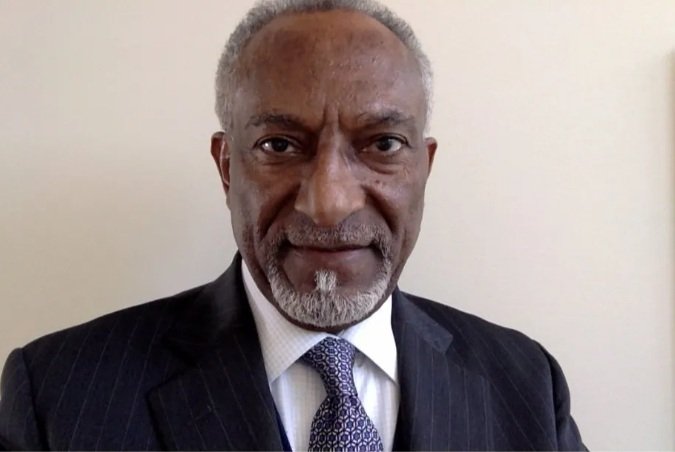
Teshome Abebe, PH.D., a former Provost and Vice President for Academic Affairs at two Universities, is Professor of Economics and Faculty Laureate
__
Support Borkena : https://borkena.com/subscribe-borkena/
Join our Telegram Channel : t.me/borkena
Like borkena on Facebook
Borkena Ethiopian News Youtube Channel
To submit Press Release, send submission to info@borkena.com
Add your business to Ethiopian Business Listing / Ethiopian Business Directory
Join the conversation. Follow us on X (Formerly Twitter) @zborkena to get the latest Ethiopian News updates regularly.