
Elena Bantiwa
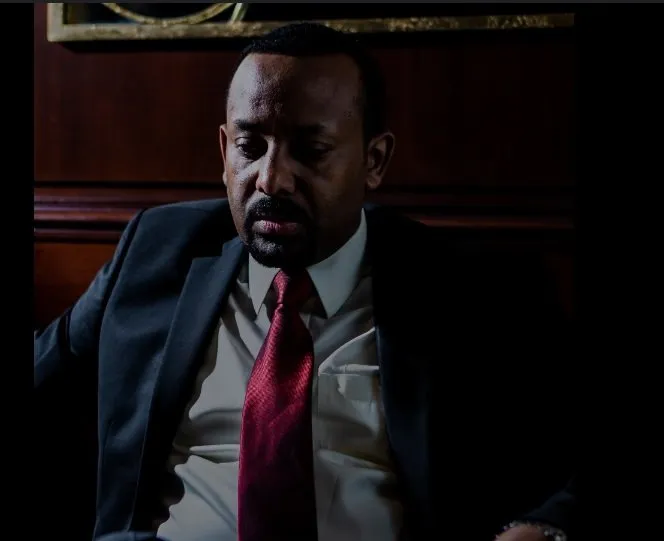
In contemporary Ethiopia, power is not simply seized—it is taught, rehearsed, and collectively performed. The figure of Prime Minister Abiy Ahmed, often portrayed as the singular architect of Ethiopia’s descent into authoritarianism, may in fact be its most gifted student. His lessons come not from political theory or ideology, but from the fragmented conscience of a society that continually instructs him—through its leaders, institutions, and silences—how to rule absolutely. The unsettling question is not merely how Abiy became a dictator, but who taught him how to be one.
Across Ethiopia’s political spectrum, familiar names emerge as co-authors of this tragic pedagogy. Politicians like Jawar Mohammed, Gedu Andargachew, Lemma Megerssa, Berhanu Nega, and Belete Molla, though claiming different visions of reform or resistance, have each reinforced the same ethnonationalist reflexes and zero-sum moralities that sustain authoritarian governance. Their public performances of rivalry do not dismantle the logic of domination; they replicate it, teaching the Prime Minister that political survival depends not on dialogue but on spectacle and control.
The media, too, has become a classroom of manipulation. The state media—ETV, FANA, EBS, OBN—serves as the echo chamber of this pedagogy, scripting the narrative of the benevolent ruler while vilifying dissent as chaos. Commentators such as Tewodros Tsegaye, Moges Zewdu, Fasil Yenealem, Dereje Hailewold and others turn national trauma into a consumable drama, replacing deliberation with outrage. Through their daily broadcasts of anger, accusation, and conspiracy, they condition the public to think emotionally, not rationally—an environment in which authoritarian power thrives.
Even the church and mosque have entered the political fray: figures like Abune Mathias, Abune Sawiros, and Sheikh Haji Inrahim Tufa embody a moral duality where faith becomes both resistance and complicity, sanctifying the state’s moral authority while lamenting its sins. Pastors and prophets like Eyu Chufa, Yonatan Aklilu, Zelalem, and Yohannes Girma sacralize this political theatre, baptizing nationalism with divine legitimacy and teaching the leader that moral absolution can be found not in justice, but in performance.
And then there is the military—the final and most decisive instructor. Generals like Birhanu Jula, Abebaw Tadesse, and others like Getachew Reda, Tsadkan Gebretinsae, and Kindeya Gebrehiwot embody the state’s ultimate lesson: that power, in its purest form, is sustained through violence. Their actions, whether framed as defense, liberation, or order, continually reaffirm to Abiy that political stability is not negotiated—it is enforced.
Together, these political actors, clerics, commentators, and generals form the anatomy of Ethiopia’s self-made authoritarianism. They are the architects of their own despot, sculpting him through applause, critique, loyalty, and betrayal. The Prime Minister thus emerges not as a solitary tyrant, but as a Leader-Learner—a man continuously educated by a morally fractured society in the art of domination. In the end, Abiy Ahmed does not simply rule Ethiopia; Ethiopia teaches him how to rule it.
- Abiy Ahmed the Opportunist Leader
The Opportunistic Ascent Dr. Abiy Ahmed’s rise to the position of Prime Minister in April 2018 can be described as a product of fortune meeting opportunity amidst a crisis, rather than a meticulously planned political trajectory. His elevation followed years of sustained anti-government protests, primarily in the Oromia and Amhara regions, which eventually destabilized the ruling Ethiopian People’s Revolutionary Democratic Front (EPRDF) coalition. The resignation of his predecessor, Hailemariam Desalegn, created a power vacuum. As a relatively uncontentious figure within the EPRDF’s Oromo component (the Oromo People’s Democratic Organization, later the Oromo Democratic Party), Abiy emerged as a compromise candidate. His selection was not an inevitability but a contingent outcome of internal power struggles, securing him a position from which he could then project his vision and consolidate power. His early actions—releasing political prisoners, inviting exiles home, and making peace with Eritrea—were not solely the results of an established political mandate but of seizing the moment to garner immense public goodwill, an indicator of an opportunistic leader capitalizing on a thirst for change.
II. The Political Landscape: A De Facto One-Man Show
While Ethiopia ostensibly operates under a parliamentary system, the practical reality of its political landscape is a stark one-man show centered on the Prime Minister. The formal structures of governance, including the House of People’s Representatives (HPR), have been effectively sidelined. The customary meetings of the HPR, designed to be the nexus of legislative debate and government accountability, are frequently described by critics as little more than a “talkatorium.” In this scenario, Prime Minister Abiy is often the sole speaker, presenting his decisions and vision, while the vast majority of representatives are relegated to the role of listeners and endorsers. Dissent is minimal and procedural compliance supersedes genuine legislative scrutiny. This operational reality suggests that the formal parliamentary rule is a veneer, with executive power exercised in an essentially unchecked manner, reducing political engagement within the established institutions to an act of choreographed assent.
A Suicidal Leadership of the People
The central thesis here posits that in contemporary Ethiopia, the Prime Minister does not strategically lead the populace but rather is led and directed by a volatile public sphere. This dynamic is not democratic; it is a destructive feedback loop between an ambitious leader and a polarized society. The prevailing, often zero-sum, nature of Ethiopian interethnic politics, amplified by the sharp, unmoderated edge of social media, forces the leader’s hand, giving him his agenda and direction. The public sphere has transformed into a constantly performing “salon,” where all groups partake in a strenuous, often vitriolic, discourse. Through this continuous national audition, the people inadvertently teach Abiy their collective weaknesses, strengths, profound ignorances, immoralities, and myopia, thereby charting their own political—and often suicidal—destinies.
Example 1: Mortality Blindness and the Descent to War (The Tigray Conflict)
The public’s tolerance, or even casual acceptance, of widespread daily violence, mob justice, and large-scale massacres has arguably taught Abiy Ahmed that the Ethiopian populace is a “mortality blind society,” deeply tolerant of its own deaths. A stark illustration of this is the pervasive violence and targeted attacks against ethnic Amhara civilians in regions like Oromia and Benishangul-Gumuz. The frequent reports of such atrocities, and the general public’s compartmentalized outrage or relative silence outside the immediate victim communities, signaled a profound lack of moral interconnectedness. This observation, which Abiy himself seemed to acknowledge when he reportedly characterized the people as suffering from a “civilization of forgetting,” became a guiding principle for his leadership style.
If the public proved to be morally blind and tolerant of death, Abiy was trained to adopt political assassination, conspiracy, and, crucially, massive military confrontation as viable primary tools of governance. It is through this lens of learned public tolerance for death that Ethiopia plunged into the devastating Tigray War (November 2020 – November 2022). The war, characterized by its immense human cost—with estimates of hundreds of thousands of combatant and civilian deaths, massive internal displacement, and widespread sexual violence—was a direct consequence of this feedback loop. Abiy opted for a full-scale military solution, seemingly confident that the Ethiopian public’s demonstrated tolerance for internal violence and death would prevent a national political collapse or widespread unified dissent. The scale of the war’s atrocities thus reflected the leader’s chilling calculation that the people were ultimately tolerant of their own deaths.
Example 2: The Autopsy of the Amhara War
The Prime Minister’s current conflict in the Amhara region is a further, more refined example of the people teaching the leader his strategy. During the Tigray War, Abiy actively invited Amhara regional forces, including regional special forces and Fano militias, to fight alongside the federal army. In doing so, these forces taught Abiy a critical lesson: the immense strength and warrior capability of the Amhara people. This display of military prowess inadvertently created an existential threat in Abiy’s perception. A community that could mobilize so effectively to save his administration could also effectively mobilize to depose him. This realization likely became the hidden, primary cause of the subsequent, illusive war against Fano militias in the Amhara region. Today, the stated initial causes for the conflict have largely faded, yet the military maneuvers persist. The continuation of this war is driven by new, learned political lessons:
Amhara Fragility and Elite Manipulation: The conflict has exposed the Amhara community as susceptible to internal manipulation, where a pragmatic yet self-serving elite is decoupled from an often-ignorant general populace concerning their own long-term well-being and security.
For these elites, the Amhara war has ceased to be a collective struggle for justice or security—it has become a war of survival among themselves, a ruthless contest for political relevance in a collapsing moral landscape. Factionalism, suspicion, and egoism dominate what should have been a unified front against systemic marginalization. As a result, the conflict has turned inward, consuming the very social and moral capital that once sustained Amhara resilience.
Meanwhile, the broader Amhara struggle—the centuries-old pursuit of dignity, protection, and equitable citizenship within the Ethiopian polity—has been forgotten or deliberately sidelined. The ordinary people, who once fought to preserve their existence and identity, now find themselves trapped in a war whose objectives have drifted far from their original cause. In the absence of visionary leadership or unified purpose, the Amhara question has been reduced to a tragic cycle of self-inflicted destruction, where each new battle erases a fragment of collective memory. The people who once sought liberation now bleed in wars waged in their name but not for their benefit.
Collective Moral Blindness: Most critically, Abiy has learned that the rest of Ethiopia’s nations and nationalities remain “mortality blind” to the suffering and deaths of the Amhara people. This interethnic indifference grants the Prime Minister impunity, assuring him that there will be no unified national accountability for his military misdeeds in the region.
ellaborate the following paragraph based on the following idea: your moral blindness today will multiply your sufferings tommorrow, the sameway that the amharas multiplied their suffering when they decided to join Abiy’s military expedition to the Tigray war. Collective Moral Blindness: Most critically, Abiy has learned that the rest of Ethiopia’s nations and nationalities remain “mortality blind” to the suffering and deaths of the Amhara people. This interethnic indifference grants the Prime Minister impunity, assuring him that there will be no unified national accountability for his military misdeeds in the region.
The Amhara community’s decision to enthusiastically support the Tigray War taught Abiy that state violence against a designated ‘enemy’ is met with political silence, not unified resistance. This lesson enabled him to later turn the same massive military apparatus against the Amhara, confident that the rest of the nation would view it as “adiaphora”—a matter of moral indifference—thus granting him selective impunity to pursue his personalistic rule. This interethnic indifference creates a vicious political economy of suffering with a devastating predictive consequence: your moral blindness today will multiply your suffering tomorrow.
By remaining silent on the violence in the Amhara region, other groups (Oromo, Tigray, Southern groups, etc.) are implicitly ratifying the principle that the Ethiopian state has the absolute license to use crushing force against any internal opponent without national accountability. This inaction is not a shield; it establishes an easily deployable institutional precedent that will inevitably be turned against the next group that challenges the Prime Minister’s power. When that time comes, the currently indifferent communities will find their own cries for justice met with the very same devastating silence they are practicing now, ensuring their future suffering is politically isolated and maximally multiplied.
Abiy Ahmed is not a leader defined by a coherent political philosophy or strategic goals. He is not a good leader or a bad one in the traditional sense; he is neither a consistent reformist nor solely a mass killer. Instead, he is a heartless leader of emotional impulses, leading not by strategy, but by trial and error based on the continuous, devastating lessons he learns from the “salon” of the public sphere. He leads the people where they (by their emotional volatility, interethnic animosity, and tolerance for violence) lead him. His primary skill is not statecraft but the cold-blooded political calculus of exploiting a politically destructive, emotionally charged, and mortality-blind public for the maintenance of his own power.
Editor’s Note : Views in the article do not necessarily reflect the views of borkena.com
__
Support Borkena : https://borkena.com/subscribe-borkena/
Join our Telegram Channel : t.me/borkena
Like borkena on Facebook
To submit Press Release, send submission to info@borkena.com
Add your business to Ethiopian Business Listing / Ethiopian Business Directory
Join the conversation. Follow us on X (Formerly Twitter) @zborkena to get the latest Ethiopian News updates regularly.
A Response to Elena Bantwe’s Article on Borkena
Elena Bantwe’s provocative article on Borkena drew my attention. While it contains some compelling reflections worth considering, it also shows a misunderstanding of the realities on the ground.
The idea that the Amhara “multiplied their suffering” by joining Abiy Ahmed’s military expedition against the TPLF is an oversimplification. For more than 27 years under TPLF rule, the Amhara people endured systematic marginalization. They were demonized in the national discourse, stripped of their dignity, and robbed of their fertile lands in Wolkayit and Raya.
Thus, when Amhara forces joined the campaign against the TPLF, it was neither a miscalculation nor a blind alliance—it was a defense against a group that had long oppressed them. The TPLF initiated the conflict and massacred Amhara military officers in cold blood. It then attempted to penetrate Amhara territory through Kirakir in Gondar, aiming to destabilize the region. The TPLF’s leaders—such as Getachew Reda and Tsadkan Gebretensae—openly declared their intent to eliminate Amhara elites once they regained power. Under such circumstances, it would have been irresponsible for the Amhara people to sit idly by while their historical enemies reorganized to strike again. It is ridiculous not to fight against the TPLF signed a pact with OLF, marched towards Addis Ababa, and reached the gate of Debre Berhan
What many warned Ethiopians from the start, however, was that Abiy Ahmed should not be trusted. The ANDM (Amhara National Democratic Movement) failed to develop a strategic “Plan B” independent of Abiy’s ambitions. Dr. Ambachew Mekonnen fell into contradiction with General Asaminew Tsige instead of joining forces to build an independent Amhara defense structure—a decision that ultimately cost him his life.
From 2018 to 2020, most Amhara elites chose to side with Abiy, believing he represented a new beginning. But there were also aware and principled Amharas who recognized Abiy’s deceptive politics early on. Programs such as Ethio 36, Addis Dimts, and Reyot Media consistently warned of the dangers ahead and tried to expose the truth about his leadership.
Nonetheless, Elena is right on one crucial point: Abiy’s rule thrives on studying the behavior of those around him and exploiting public inaction. His strength lies not in vision, but in manipulation and the passivity of society.
The article offers a nuanced examination of the complex interplay between leadership and societal influences, moving beyond a simplistic depiction of Abiy Ahmed as a solitary dictator. By highlighting various societal actors, it emphasizes that authoritarianism is not merely the result of one individual but rather a collective phenomenon. This analysis places Ethiopia’s political situation within a broader historical and cultural context, alluding to deep-rooted issues that shape the current governance landscape.
While the article identifies several political figures and their roles, it would benefit from more concrete examples illustrating how these dynamics manifest in real life. Incorporating specific case studies or events would significantly strengthen the argument. The focus primarily on how society instructs Abiy in governance overlooks the potential for resistance movements or counter-narratives within Ethiopia, which could provide a more balanced perspective.
Additionally, portraying the public as largely passive or indifferent risks oversimplifying the complexities of Ethiopian society, where various groups exhibit diverse responses to governance and conflict. Although the piece touches on the concept of moral blindness, it does not fully delve into the long-term implications for both the populace and governance. A more comprehensive exploration of how public complicity might affect future political stability would enhance the analysis.
In summary, Elena Bantiwa’s article presents a compelling analysis of Abiy Ahmed’s rule as a reflection of societal dynamics in Ethiopia. However, it could be further enriched by including detailed examples, recognizing resistance, and examining the consequences of societal complicity. This would lead to a deeper understanding of the complexities of Ethiopian governance and the challenges that lie ahead.