
By Amsal Woreta
This article presents a comprehensive comparative analysis of the leadership philosophies and governance strategies of Prime Minister Abiy Ahmed of Ethiopia and Captain Ibrahim Traoré of Burkina Faso. While Abiy Ahmed has embraced high-profile development projects often criticized for their elitist and image-driven focus, Traoré’s leadership is rooted in anti-colonial rhetoric, popular mobilization, and economic nationalism. By examining these two figures through lenses of economic policy, governance style, public perception, and national priorities, this paper explores the broader implications of their leadership on their respective countries and on African political transformation.

1. Introduction
Leadership in Africa today stands at a crossroads. As the continent faces escalating insecurity, economic dependency, and demographic shifts, the choices of national leader’s shape whether nations collapse or rise. This article compares two emblematic leaders: Abiy Ahmed of Ethiopia, once hailed as a reformer and peacemaker, now criticized for building lavish palaces amid displacement and war; and Ibrahim Traoré of Burkina Faso, a young military leader whose rise reflects a resurgence of pan-Africanist aspirations and grassroots empowerment. The contrasting visions they embody—technocratic centralism versus revolutionary populism—reveal deeper questions about the future of African leadership.
2. Abiy Ahmed: Image, Development, and Crisis
The Hidden Cost of Ethiopia’s Chaka Project: Palaces Rise While Schools Wait
The Chaka Project in Ethiopia stands as a glaring example of misplaced priorities in modern governance. Prime Minister Abiy Ahmed’s government pushes forward with a new palace project costing $10-15 billion while twenty million Ethiopians need emergency food aid.
The project’s reality becomes more concerning as 69% of Ethiopians live in multidimensional poverty, according to UNDP’s 2024 index. The Ethiopian government seeks a $67 billion international aid package, with $28.8 billion marked for reconstruction. The Addis Ababa Chaka Project moves ahead despite eating up 14% of Ethiopia’s GDP. The Ethiopian currency’s value has dropped by almost fifty percent from 30 ETB to 1 USD in 2019 to 57 ETB today. This decline has pushed inflation rates to 35% and created systemic economic problems.
Let us take a closer look at Abiy Ahmed’s Chaka Project’s actual cost. This massive undertaking pulls resources away from vital needs like education and healthcare. The impact shows clearly – 2.3 million children stay out of school and 3 million more people now live below the absolute poverty line.
What Is the Chaka Project and Who Benefits?
Prime Minister Abiy Ahmed’s most ambitious project yet, the massive Chaka Project, sits atop Yeka hill in Addis Ababa. This enormous development covers 503 hectares – bigger than Windsor Castle, Versailles, the White House, the Kremlin, and the Forbidden City put together. While officially called a “Smart City” development, this controversial megaproject raises fundamental questions about priorities in a country grappling with systemic poverty.
Overview of the Ethiopian Chaka Project
The Chaka Project (also known as the “Forest Project”) is Ethiopia’s second-largest public project, right after the Grand Ethiopian Renaissance Dam. A group of companies now builds it, including the Ethiopian Construction Works Corporation, China’s Governmental Construction Company, and the Ethiopian Roads Administration.
This sprawling complex is much more than just a palace. It has:
A main national palace for the Prime Minister
The luxurious “Sky View Hotel”
Three artificial lakes with artificial palm trees
A 29-kilometer road network that costs about 15 billion birr ($275 million)
Ministerial residences and high-end housing blocks
Guesthouses for visiting heads of state
Underground tunnels for emergency evacuation
The Ethiopian Roads Administration has built 9 kilometers of roads so far . A company called “e-tollo” has also finished the foundation work for one of the three artificial lakes.
The project’s cost tells an interesting story. It started as a 49-billion-birr project, but Prime Minister Abiy Ahmed later told Parliament the actual cost could be between 300-400 billion birrs. When MPs asked him about rumors of a $912 million palace, Abiy revealed the truth: it would cost about $10 billion. It is estimated that the final cost could exceed $15 billion, which is comparable to Ethiopia’s entire annual budget of $14.6 billion.
Luxury features vs. public needs
The project’s extravagance becomes hard to justify when you look at Ethiopia’s urgent public needs. They are building three artificial lakes just for looks while many Ethiopians cannot get clean drinking water. The complex will have a luxury hotel and high-end homes in a country where millions live in poverty.
The road network alone costs fifteen billion birr – money that could help build vital infrastructure in struggling communities. This palace is just one of Abiy’s expensive showcase projects, along with Unity Park (five billion birr) and Meskel Square (renovated for 2.5 billion birr).
Abiy says the project will create jobs and boost tourism. Critics point out that these benefits do not match the immediate needs of millions of Ethiopians who face food insecurity and lack basic services. The project puts prestige ahead of practical needs in a nation where resources are desperately needed elsewhere.
Supporters say the Chaka Project will improve Ethiopia’s infrastructure, governance, and tourism potential. But the cost runs deeper than money. Thousands lost their homes as houses were torn down into a clear space for construction. Only a handful got poor compensation, leaving many with nowhere to go.
Political symbolism and elite access
The Chaka Project clearly serves as Abiy Ahmed’s administration’s power symbol. The prime minister often visits the construction site, showing how much this monument to his leadership means to him.
Security is tight around the development area, with checkpoints controlling who gets in and out. People who used to use the area – worshippers at the Washa Mikael Rock-Hewn Church and athletes who trained in the hills – cannot get in anymore. Police in plain clothes watch the perimeter to stop anyone from taking pictures, creating mystery around what should be a public project.
Abiy’s palace has inspired other officials to build their own grand projects. Oromia’s president, Shimales Abdisa, started his own billion-dollar palace project. This trend shows how the project benefits political elites instead of regular citizens.
The Chaka Project shows Abiy’s plan to reshape Ethiopia’s imperial history. He turns existing palaces into museums (Menelik II’s palace is now a museum and zoo, Emperor Haile Selassie I’s palace has become an artifact and car museum), while building himself something grander. It looks like he is creating his own legacy while pushing aside historical preservation.
This development serves political elites and their international partners more than the public. Though they call it national development, the Chaka Project really shows how resources are being misused in a country facing serious humanitarian challenges.
The Price Tag: A $15 Billion Question
The financial scale of Ethiopia’s Chaka Project keeps growing, which raises fundamental questions about spending priorities in one of Africa’s poorest nations. The project started with a budget of forty-nine billion birr, but this number has shot up over time. Prime Minister Abiy Ahmed later told Parliament the actual cost could be between 300-400 billion birr. These figures now seem modest compared to recent estimates.
Chaka Project budget in context of GDP
Members of Parliament asked about rumors of a $912 million palace. Abiy Ahmed revealed the real number: about $10 billion. Some reports now say the final cost might reach $15 billion. This is a big deal as it means that the project costs almost as much as Ethiopia’s entire yearly budget of $14.6 billion .
The numbers become even more striking when compared to other presidential palaces around the world:
The cost is eight times more than Turkey’s 1,100-room “White Palace” ($615 million)
The price tag is nearly 17 times higher than Egypt’s new presidential palace, which is part of their $59 billion New Administrative Capital
The road infrastructure alone for this project needs 15 billion birr ($275 million) . This amount surpasses many critical public service budgets. The Grand Ethiopian Renaissance Dam remains the only public project that costs more, having used over 130 billion birr.
The size of this spending raises red flags about its economic effects. Ethiopia struggles with foreign exchange shortages and rising inflation, which hit 35% as mentioned earlier. Using such huge resources for a presidential complex does not make economic sense.
Comparison with national reconstruction needs
The massive spending comes at a tough time given Ethiopia’s urgent reconstruction needs. The government needs about $20 billion to rebuild after the war. This includes fixing infrastructure destroyed during recent conflicts.
About 20 million Ethiopians need emergency food aid right now. War and drought have created this crisis. The Ethiopian government also seeks billions in foreign loans to fix its war-damaged economy. The International Monetary Fund has been requested to provide at least $2 billion to address urgent economic issues.
Despite these pressing needs, work on the Chaka Project moves ahead at full speed. The Ethiopian Roads Administration has finished nine kilometers of planned roads. This shows where the government’s priorities lie.
Funding sources and lack of clarity
The funding sources for the Chaka Project remain murky. Abiy told Parliament, “I did not come here to ask you for money to build it.” He claimed private donations would pay for the project instead of state money.
The United Arab Emirates seems to be a major donor, but exact amounts stay hidden. This follows a pattern from 2018 when Abiy got a three-billion-dollar aid and investment package from the UAE. They have funded several of his key projects since then.
Local business owners also fund the project – though not always willingly. One businessperson told reporters about “endless phone calls, threats and warnings” about losing government contracts if he did not donate. This raises ethical concerns about how they get funding.
Parliament cannot review the project’s finances. This means no oversight for what could be one of Ethiopia’s biggest public expenses ever. Security checkpoints and plain-clothes police block access to the construction site and stop people from taking photos.
The funding setup bypasses normal financial checks. Abiy defended this in 2023, saying “The money doesn’t sit with us to audit; it goes to those building the projects”. Officials say this makes things faster, but it raises valid concerns about corruption.
Ethiopia faces severe economic challenges. The question remains – does spending $15 billion on a palace complex make sense, whatever the source of money?
Displacement and Destruction in the Name of Progress
The magnificent Chaka Project hides a dark reality that keeps unfolding in Addis Ababa. Prime Minister Abiy’s grand vision now pushes thousands of Ethiopian families from homes they have known for generations, as bulldozers tear through their neighborhoods.
Evictions in Addis Ababa Chaka Project zone
The Chaka Project has forced thousands from their homes. Amnesty International reports mass evictions happening in the capital and fifty-eight other urban centers under what officials call the “Corridor Development Project.” These removals violate basic human rights. Residents lose their homes without proper discussion, advance notice, or any money to help them start over—rights they should have under international law.
Ethiopian authorities have created a tight security net around the construction area. Armed soldiers check IDs and watch everyone passing the access roads. Military forces run temporary detention centers where they question people. Some residents say they face physical abuse there. This show of force seems meant to stop anyone from speaking against the project.
Government spokesperson Billene Seyoum claims that “a majority of the land being developed by the Chaka Project is uninhabited.” Yet displaced residents tell a different story, and documents show thriving communities living in these areas.
Loss of ancestral land and homes
Real people’s stories reveal the actual cost of these displacements. Alemayehu Tadesse, a 74-year old farmer who lives near the palace site, shared his story: “We lived in this land for over a century and it was passed to us by our ancestors, but all of a sudden I was told I did not have a title deed to my own home and was forced to vacate it with no compensation” . He added, “I have not just lost my home but also my livelihood as a farmer.”
Kibret Getahun’s story echoes this pain. He lost most of his farmland and received almost nothing in return. Now working as a church security guard, he says: “Our farms have now been replaced with paved roads. We are becoming strangers in our own home.”
The government’s eviction tactics seem designed to prevent resistance. Bezunesh Taddesse, a 67-year-old widow who taught math, learned about her eviction by chance. She saw her name on a notice posted on a church wall. Like others, she had no time to fight back or negotiate.
Reports show an even more troubling pattern. Officials tell evicted residents to move to different regions based on their ethnicity—Debre Berhan in Amhara or Welega in Oromia. This practice suggests ethnic segregation might be part of the displacement plan.
Environmental impact: deforestation and bulldozing
Yeka Hill’s transformation tells another sad story. This peaceful, tree-covered hill that watched over Addis Ababa has turned into a massive construction site. Excavators and bulldozers now workday and night in this 503-hectare area. The noise never stops, affecting nearby diplomatic houses. One ambassador said: “The noise runs at all hours. It is becoming a nuisance and has disturbed our living arrangements.”
Environmental damage includes:
State-owned forests cut down
Productive farmland destroyed
316 historic buildings demolished
Athletes’ training grounds wiped out
The project skipped proper environmental checks, unlike other Ethiopian developments that need detailed impact studies. This oversight raises red flags, given how big this project is.
Sacred spaces have also become off-limits. People cannot freely worship at the historic Washa Mikael Rock-Hewn Church anymore. Athletes who trained on these hills now face barriers.
Plain-clothes police officers guard the area, stopping anyone from taking pictures of the construction. This secrecy around a public project raises more questions about who answers to whom.
The concrete presidential complex rising from this once-green hillside changes more than just the land. It tears apart the communities that called this place home, leaving permanent scars on both the environment and society.
Education on Hold: Schools Wait While Palaces Rise
Ethiopia pours $15 billion into the Chaka Project while its education system falls apart from years of neglect and underfunding. The gap between grand palace dreams and the reality of education has reached unprecedented levels, leaving millions of children without schools nationwide.
Number of non-functional schools
The educational crisis in Ethiopia has reached staggering proportions. Right now, conflict, violence, natural disasters, and displacement keep more than nine million children out of school across the country. The Amhara region paints a particularly grim picture – about 35% of all students (over 4.1 million children) cannot attend school this academic year.
Conflict-affected areas show devastating damage to educational facilities:
Conflict and climate shocks have damaged over 10,000 schools (18% of the country’s total)
More than 6,000 schools remain shuttered nationwide
Ongoing insecurity has forced 4,178 schools to close in Amhara (41% of the region’s total)
Conflicts have left about 300 schools damaged and 350 non-operational in various Amhara zones.
Western Oromia has seen 730 school closures, leaving approximately 210,000 students displaced
Three regions stand at the epicenter of this educational catastrophe: Amhara with 4.4 million children out of school, Oromia with 3.2 million, and Tigray with 1.2 million . Tigray’s situation looks particularly bleak – after two years of conflict, 85% of schools show serious or partial damage, and public schools remain completely closed.
Budget cuts to education sector
The education sector faces brutal austerity measures while billions flow into Abiy Ahmed’s Chaka Project. ActionAid’s report highlights how IMF-driven budget cuts have devastated education systems in several African countries, including Ethiopia. Education spending’s real value dropped by 23% between 2017/18 and 2021/22.
Resources have become scarce in schools. Teachers in surveyed countries (87%) lack simple teaching materials and often pay for supplies themselves. Many Amhara districts have completely shut down schools because they do not have basic supplies. About 1.7 million Amhara children need basic school materials.
Higher education faces its own fiscal crisis. University leaders warn they might not feed students next academic year. Student meals have been cut in half – “Previously, the allocation provided for one student is now being split between two students.” Each student receives just twenty-two birr ($0.40) per day for meals, which does not match today’s food prices.
Impact on children and teachers
This educational breakdown carries an enormous human toll. Tigray’s children missed about three years of education due to COVID-19 and two years more from conflict. Many students saw their education end suddenly – “We were forced to leave the campus before the final exam, having only just finished our mid-terms,” said one Ambo University student.
Teachers struggle just as much. Tigray’s 22,500 teachers have not received pay for more than two years. ActionAid’s survey shows teacher salaries in multiple countries dropped by up to 50% in the last five years. Healthcare workers (97%) report their income no longer covers food and rent.
Education quality has plummeted. Last year, 43% of students failed their grade 12 secondary school exams, and 96% scored below 50%. Just 3.2% of students reached the minimum score needed for higher education.
The ongoing construction of the Ethiopian Chaka Project, set against this educational crisis, shows a clear disconnect in national priorities. While Addis Ababa sees new palaces with artificial lakes and luxury facilities, millions of children sit without classrooms, books, or teachers – their futures sacrificed for symbols of political power.
Healthcare, Water, and Basic Services Neglected, Medical doctors underpaid
The Chaka Project’s construction cranes pierce Addis Ababa’s skyline while Ethiopia’s healthcare systems crumble. This stark contrast between failing public services and extravagant new palaces shows the country’s misplaced priorities.
Hospitals without supplies
Ethiopian healthcare facilities now operate under increasingly desperate conditions. Tigray faces the worst situation, where Ayder Referral Hospital in Mekelle has not received any medicine or equipment since June 2021. Doctors watch helplessly as patients die from conditions they could easily treat if they had simple supplies.
Healthcare workers paint a grim picture of their reality. “Signing death certificates has become our main job,” reads a hospital staff’s presentation to international aid agencies. One story captures the tragedy – a child injured in an airstrike bled to death while doctors, who had no gauze bandages, tried desperately to stop the bleeding with their bare hands.
The hospitals lack:
Simple medications, including insulin and antibiotics
Intravenous fluids for dialysis patients
Gauze, gloves, and wound dressings
Cancer treatments and chemotherapy drugs
Diagnostic equipment and test kits
Ayder Hospital’s essential drug supply dropped from 82% a year ago to just 17.5% by late 2021 . The dialysis unit now reuses equipment meant for one patient among five patients. This practice has led to thirty-five deaths among dialysis patients since the conflict started.
Water scarcity in urban and rural areas
The Chaka Project builds artificial lakes while sixty million Ethiopians cannot access safe drinking water. This represents 7% of the global water crisis. More than 112 million people live without simple sanitation facilities, and twenty-two million still practice open defecation.
Poor health follows these conditions. Contaminated water and poor sanitation spread diseases like cholera and diarrhea. Water-related diseases ranked as the second leading cause of death in Ethiopia in 2017, surpassed only by undernutrition. The Global Water Security and Sanitation Partnership found that poor access to clean water and proper sanitation links to more than 60% of all communicable diseases in the country.
Only 8% of Ethiopians can wash their hands with soap and water. This number becomes even more shocking when compared to the Chaka Project’s $15 billion cost.
Electricity blackouts and infrastructure decay
Power outages have become part of daily life for Ethiopians. December 2023 brought a nationwide power blackout. Just months earlier, in March, another five-hour national blackout affected most regions.
Old infrastructure cannot keep up with growing power needs. Ethiopian Electric Utility’s (EEU) district distribution head points to “unbalanced electricity consumption” as the root cause. These outages affect everyday life deeply. Dagmawit Yilma, who has three children, struggles to prepare school lunches during frequent blackouts.
EEU studies show power outages last about 46 hours. Earth faults and landslides cause 47% of all outages. Short circuits account for 24%, operational problems for 22%, and overcurrent issues for 8%.
The math doesn’t add up: $15 billion goes to the Chaka Project while Ethiopia’s power grid falls apart. EEU’s financial health shows the strain – it covers only 71% of its expenses according to its quarterly report. Meanwhile, vital infrastructure improvements remain unfunded.
The Political Economy of Vanity Projects
A deeper question emerges beyond the construction dust and displaced communities of the Chaka Project: What does this reveal about Ethiopia’s priorities? The pattern of building monuments during national hardship shows a troubling gap between leadership dreams and what people need.
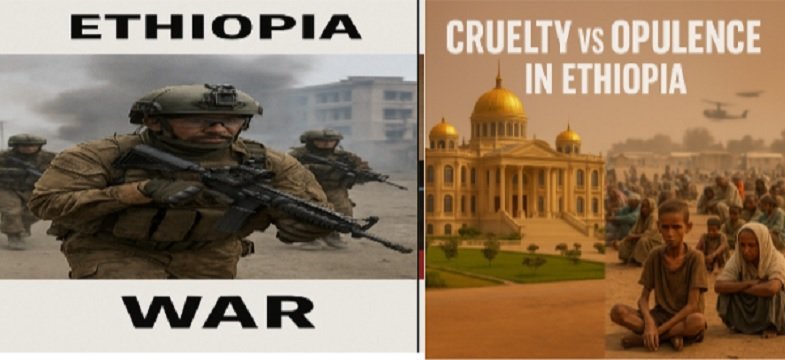
Abiy Ahmed Chaka Project as a power symbol
The Chaka Project exceeds simple infrastructure development and symbolizes Prime Minister Abiy Ahmed’s quest for prestige and authority. His approach to the project shows his increasingly autocratic leadership style. The prime minister’s response to parliament’s questions about palace funding was telling: “I did not come here to ask you for money to build it.” This statement bypassed normal democratic oversight.
A commentator likened this to “the unchecked authority of 18th-century monarchs”. The government keeps the construction site hidden behind security checkpoints and bans photography. Abiy’s frequent visits to check progress highlight his personal connection to this monument of power.
Other regional vanity projects
Other officials have followed suit with similar extravagant projects. Shimales Abdisa, Oromia region’s president, launched his own palace project that costs over $1 billion. This six-hectare development forced residents out of their homes in one of Addis Ababa’s wealthy areas.
These status symbols go beyond palaces. Ethiopian Electric Power began building Africa’s tallest skyscraper in 2023, reaching 327.5 meters with a $445 million price tag. Government ministers often exaggerate achievements and share misleading information to justify these expenses.
Ethiopia’s construction boom puts image ahead of substance. UNDP reports show poverty has grown under Abiy’s administration, reversing decades of economic progress.
Public sector demoralization
Government functions have crumbled while palaces rise. Regional states cannot pay their employees, and public-school teachers wait months for their salaries. A former World Bank official called the Chaka Project a “vanity project” that shows “a lack of empathy for the suffering of millions.”
The stark difference between luxury and scarcity has crushed public sector spirit. Le Monde reported that the Chaka Project consumes billions while essential public services face cuts. Civil servants can barely afford shared housing in Addis Ababa, fueling growing resentment beneath the surface of construction announcements.
Public sector morale has hit rock bottom. Healthcare workers watch patients die from curable conditions due to missing basic supplies. Billions flow into symbolic constructions instead. The palace complex stands not just as wasted resources but as a testament to misguided priorities.
Global Aid, Local Misuse: The Donor Dilemma
A shocking case of resource mismanagement emerged alongside the Chaka Project development in March 2023. An American aid worker spotted something disturbing in Tigray – a truck loaded with USAID-donated grain heading away from starving communities instead of toward them. This observation led to the exposure of what officials would later call one of the largest food aid thefts that ever spread.
USAID’s investigation revealed a systematic diversion of thousands of tons of donated grain to commercial mills and Ethiopian markets. The scale became clear when a Tigrayan official admitted that thieves had taken more than 7,000 tons of wheat – enough food to sustain 450,000 people for a month. The theft was not limited to Tigray but operated at an “industrial level” throughout the country.
The most concerning revelation showed the UN World Food Program’s knowledge of these thefts for years without acting. USAID’s internal investigation found that Ethiopian and Tigrayan armies received diverted aid, which also made its way to illegal markets. The UN agency remained silent, fearing the Ethiopian government might restrict aid trucks to troubled regions if they spoke up.
The aftermath proved severe. Both organizations halted food distribution across Ethiopia, which left millions without supplies for at least five months. The consequences hit fixed. Tigray’s hospitals reported devastating increases in malnutrition – Ayder Hospital saw child cases rise by 28% while Axum Hospital experienced a 96% surge between March and April .
International donors now face a heart-wrenching choice: keep sending aid despite knowing some will be stolen, or stop assistance and watch vulnerable people suffer. USAID has decided to phase out WFP as its northern Ethiopia food distributor and work with other aid groups instead.
This crisis highlights a troubling pattern in Ethiopia. While projects like the Chaka complex consume billions, simple humanitarian needs go unmet – a situation that damages development goals and donor trust alike.
Part II will be published on Wednesday
Editor’s Note : Views in the article do not necessarily reflect the views of borkena.com
__
Subscribe : https://borkena.com/subscribe-borkena/
Join our Telegram Channel : t.me/borkena
Like borkena on Facebook
Add your business to Ethiopian Business Listing / Ethiopian Business Directory Business Listing Toronto
Join the conversation. Follow us on X (Formerly Twitter) @zborkena to get the latest Ethiopian News updates regularly. Subscribe to YouTube channel To share information or for submission, send e-mail to info@borkena.com
Abiy is brainless & unscrupulously Psychopath
1). Nazi Propagandist Joseph Goebbels’ Law of Propaganda: Repeat a LIE often enough & it becomes the TRUTH! The Nazis applied it to Dehumanize Jews! Why emulate that?
2). Traoré vs. Abiy: Traoré usurped power via coup d’état [putsch]! Abiy was elected PM by his party after his party won the election under on-site scrutiny by AU/EU/UN/US/etc.
3). War on Amaras by Pro-Egypt Fake Fanno [FF]: FF turned Amaras’ farms, schools, monasteries, etc. in to war zones to guarantee Egypt’s ‘Historical Nile Water Quota’. The war erupted when Amaras received more tractors: youtu.be/_ejBczkTHlA?t=300
4). War on Oromos by Pro-Egypt OLF-IFLO: These Thugs are Oromos’ worst enemies. The FF, OLF-IFLO, TPLF-RDF, EPLF-ELF (Eritrea) are all Egypt’s Proxy Dogs! They wreak havoc, destabilize Ethiopia, and drain Ethiopia’s economy to paralyze Ethiopia.
5). The “Abiy Built Palace” Misinformation Spree: youtu.be/6ov2XB2YLNo?t=210 Abiy has restored crumbling palaces: Fasil/Menelik-II/Haile-Selassie-I/Abba Jiffar/etc. [NB: Abiy to an MP ≈ “I haven’t taken a cent from Ethiopia for the ‘Chaka Project’!”]
6). Abiy Has Been Transforming Century-Old Life in Squalor a Neighborhood at a Time:
youtu.be/KJD0Tmysfyc [Why did all former regimes turn a blind eye? Cruelty, isn’t it?]
7). Building Schools: Abiy & Zinash go extra mile to raise funds for schools [book sales, royal charity, etc.]. The Boarding School for the Blind: youtu.be/WtrNZhpMhiM?t=806
8). ‘Displaced People’ Relocated from Squalor to Free Fully-furnished Modern Homes:
(i). Consulted/Full-compensation/Free Moving: youtu.be/bAe3tqBIkJw?t=23
(ii). Visually impaired man: youtu.be/1Ur5ME-j9jg?t=22
(iii). Visually impaired & physically handicapped man: youtu.be/Cv66FHZGsfY?t=132
(iv). Elderly lady with Grandchildren: youtu.be/ik4w9M4wXZ4
(v). Elderly lady on Oxygen [270,000 homes given away]: youtu.be/zekYqID4PDI
To i_mognu,
Thank you for your detailed comment. I will respond point by point, not to debate for its own sake, but to clarify and correct distortions:
1. On your “suggestion” about essay format:
A fair point on presentation — formatting and academic polish matter, and I always aim to improve. But the substance is what matters most here: Ethiopia is suffering under the weight of war, hunger, repression, and misgovernance — issues that cannot be dismissed by hiding behind academic technicalities.
2. On Goebbels and “Abiy-bashing”:
Equating criticism of state failure with Nazi propaganda is both dangerous and dishonest. Holding Abiy Ahmed accountable for:
• the collapse of education,
• $15 billion spent on vanity projects while over twenty million people depend on food aid,
• and the weaponization of state power against students, journalists, and entire communities
is not propaganda — it is civic duty. To silence criticism by invoking Goebbels is a tactic that deflects rather than defends the truth.
3. On “Putsch vs. Democracy”:
What democracy are we defending here? Under Abiy’s “democratic” government:
• Opposition parties are banned or co-opted,
• elections are postponed,
• Thousands are imprisoned or disappeared,
• and peaceful protest is met with drones and bullets.
A government that kills its citizens and jails its critics cannot claim moral high ground on “democracy.”
4. On industrial parks and “progress”:
Yes, industrial parks exist — but who benefits? Ask the millions displaced for development zones, the children out of school, and the farmers losing land to foreign corporations. True development is not measured in buildings, but in lives improved. Ethiopia’s crisis is not from lack of infrastructure, but from lack of leadership with vision and compassion.
5 & 6. On TPLF and MayKadra:
No one denies TPLF’s crimes — including MayKadra. But do not use past atrocities as a shield to cover ongoing atrocities under Abiy. Two wrongs do not make one right. Amhara people are being massacred now, and the government is silent or complicit. If your concern for Amhara is sincere, you would condemn all massacres — not only the politically convenient ones.
7. On “Fake Fanno” and criminality:
This is a tired government narrative. Labeling all Fanno fighters as terrorists while ignoring their roots in community self-defense erases the truth. Many young Amharas took up arms after the state abandoned or attacked them. If the government genuinely wants peace, it should stop killing, jailing, and starving its citizens and start listening.
8. On the ICC and international law:
You are right — crimes against humanity belong in front of international courts. But satellite imagery and global institutions do not lie forever. The day may come when all sides — including the current regime — will answer for what they have done. Truth and justice will prevail — no matter how much propaganda is thrown in the way.
Final word:
You accuse critics of “covering up” or “lying,” but what we are doing is uncovering what the state wants buried: hunger, repression, massacres, and corruption. No amount of drone shows, palaces, or praise posts can erase that.
Let us focus less on defending power and more on defending people — all Ethiopians, regardless of ethnicity or party.
To i_mognu,
Thank you for your detailed comment. I will respond point by point, not to debate for its own sake, but to clarify and correct distortions:
1. On your “suggestion” about essay format:
A fair point on presentation — formatting and academic polish matter, and I always aim to improve. But the substance is what matters most here: Ethiopia is suffering under the weight of war, hunger, repression, and misgovernance — issues that cannot be dismissed by hiding behind academic technicalities.
2. On Goebbels and “Abiy-bashing”:
Equating criticism of state failure with Nazi propaganda is both dangerous and dishonest. Holding Abiy Ahmed accountable for:
• the collapse of education,
• $15 billion spent on vanity projects while over twenty million people depend on food aid,
• and the weaponization of state power against students, journalists, and entire communities
is not propaganda — it is civic duty. To silence criticism by invoking Goebbels is a tactic that deflects rather than defends the truth.
3. On “Putsch vs. Democracy”:
What democracy are we defending here? Under Abiy’s “democratic” government:
• Opposition parties are banned or co-opted,
• elections are postponed,
• Thousands are imprisoned or disappeared,
• and peaceful protest is met with drones and bullets.
A government that kills its citizens and jails its critics cannot claim moral high ground on “democracy.”
4. On industrial parks and “progress”:
Yes, industrial parks exist — but who benefits? Ask the millions displaced for development zones, the children out of school, and the farmers losing land to foreign corporations. True development is not measured in buildings, but in lives improved. Ethiopia’s crisis is not from lack of infrastructure, but from lack of leadership with vision and compassion.
5 & 6. On TPLF and MayKadra:
No one denies TPLF’s crimes — including MayKadra. But do not use past atrocities as a shield to cover ongoing atrocities under Abiy. Two wrongs do not make one right. Amhara people are being massacred now, and the government is silent or complicit. If your concern for Amhara is sincere, you would condemn all massacres — not only the politically convenient ones.
7. On “Fake Fanno” and criminality:
This is a tired government narrative. Labeling all Fanno fighters as terrorists while ignoring their roots in community self-defense erases the truth. Many young Amharas took up arms after the state abandoned or attacked them. If the government genuinely wants peace, it should stop killing, jailing, and starving its citizens and start listening.
8. On the ICC and international law:
You are right — crimes against humanity belong in front of international courts. But satellite imagery and global institutions do not lie forever. The day may come when all sides — including the current regime — will answer for what they have done. Truth and justice will prevail — no matter how much propaganda is thrown in the way.
Final word:
You accuse critics of “covering up” or “lying,” but what we are doing is uncovering what the state wants buried: hunger, repression, massacres, and corruption. No amount of drone shows, palaces, or praise posts can erase that.
Let us focus less on defending power and more on defending people — all Ethiopians, regardless of ethnicity or party.