
Editor’s Note : Views in the article do not necessarily reflect the views of borkena.com
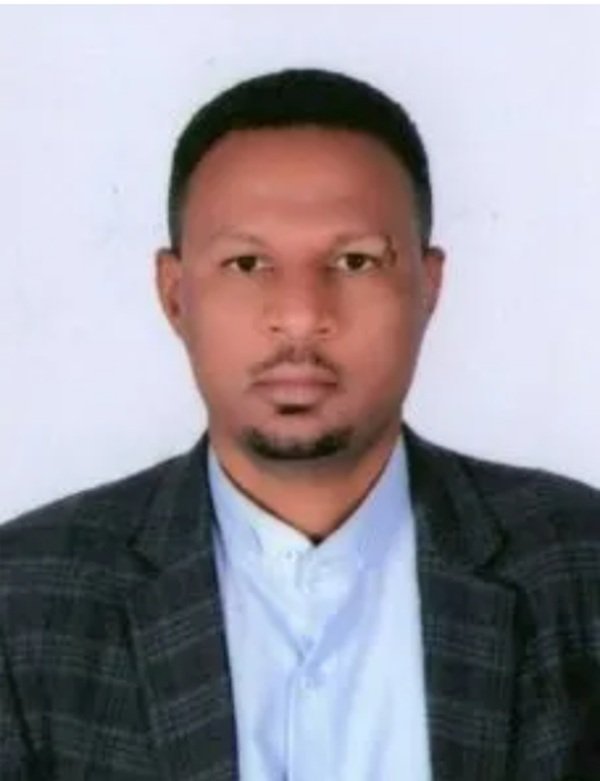
By Shimels Hussien (PhD)
The recent movement by Ethiopian health professionals pleading for better pay and treatment from Abiy Ahmed’s regime is not only misguided but unenlightened. Their frustrations over poor pay, crumbling healthcare facilities, and unbearable working conditions are valid. What could be more utterly heartbreaking than witnessing doctors—those who offer their healing hands and expertise for free—being violently beaten by the very people they sacrifice to serve? However, their approach fails to address the systemic rot that lies at the heart of the ruling regime. This op-ed seeks to unpack why this movement is poorly thought out and proposes bolder, more effective alternatives that health professionals must embrace if they are to secure their dignity and future. My take is that Ethiopia is effectively detached from its professionals to a point of no return, and the solution is secession from the country. Secession is good for both the professionals (to have a decent life) and the regime (because it proved anti-professional).
Why the Movement is Misguided:
1. Nothing Good Can Come from a Broken Political System: One cannot expect meaningful progress in a nation like Ethiopia governed by a failed political system. The 2024 Nobel Economic laureates (Daron Acemoglu, Simon Johnson, and James Robinson) conclusively demonstrated that bad politics is the root cause of poverty and national failure, and Ethiopia is no exception. Until the political framework is corrected, no sector—healthcare included—can thrive. Health professionals must realize that their demands for better working environment are futile in a system deliberately designed to fail them. The first step to any meaningful reform is political transformation.
2. Abiy Ahmed’s Regime Relies on Economic Despair: The professionals have failed to grasp the basic tenets of Abiy Ahmed’s regime. Among his six strategic objectives is the deliberate creation of widespread economic despair. By impoverishing the majority, particularly the educated and professional class, the regime ensures a helpless, disempowered population that is easier to control. Targeting professionals with poverty is not a byproduct of mismanagement—it is a deliberate policy. Asking the regime for better treatment is absurd because he is the architect of their misery. Ironically, their demands only validate that the regime’s oppressive policies are working.
3. Failure to Learn the Regime’s Modus Operandi: The movement reflects a failure to learn from the regime’s track record over the last seven years. Abiy Ahmed’s administration operates on Orwellian principles: poverty is prosperity, war is peace, ignorance is strength, and freedom is slavery. The policies are not accidental—they are deliberate efforts to dismantle Ethiopia’s educated middle class and replace it with an impoverished, ignorant, and dependent population. Health professionals must stop expecting reforms from a regime that thrives on their suppression.
4. The Problem is Bigger Than Healthcare: The issue of low wages is not exclusive to healthcare. Teachers, engineers, polices, academics etc. face equally degrading conditions. Teacher’s condition is even worse, enduring insultingly low pay while working in poorly equipped schools. Isolating the healthcare sector, while understandable, risks fragmenting professionals instead of uniting them against their common oppressor. The harsh reality is that Abiy Ahmed’s regime has rendered professional life unbearable in Ethiopia, with healthcare workers being just one of its many deliberate targets.
5. Abiy Ahmed’s Priorities are Elsewhere: Abiy Ahmed does not care about healthcare. His priorities lie in vanity projects: luxury hotels, palaces, and resorts. While ordinary Ethiopians suffer in dilapidated hospitals, Abiy and his inner circle enjoy access to world-class medical facilities abroad. Observe the medical centers in Sharjah or Dubai, and you will find numerous Ethiopian government officials, cadres, propagandists, and their cliques seeking treatment, often for minor ailments manageable within the country. This stark reality underscores the regime’s utter lack of interest in improving Ethiopia’s healthcare system, a sector that clearly does not serve their needs.
6. Salary Increments would be Meaningless: Even if the regime were to grant a salary increment, it would be insignificant in the face of Ethiopia’s skyrocketing cost of living. Currently, doctors earn a meager $100 per month, while nurses earn just $50. Even a 100% increase—which is unlikely—would still leave professionals in abject poverty. Ethiopia’s economic policies have detached professionals from any hope of living with dignity. A salary increment demand in this context is not just impractical—it is meaningless.
The Way Forward:
1. Secession from Ethiopia ((መፍትሄው ኢትዮጵያ ከምትባል አባካኝ አገር መገንጠል): Ethiopia’s constitution allows for the secession of ethnic groups—why should health professionals not apply the same principle? Professionals must seriously consider “professional secession” by leaving Ethiopia for countries that value their expertise. This is not an act of betrayal but one of survival. By taking their skills to nations that appreciate their contributions, health professionals can secure better opportunities, protect their families, and preserve their dignity. What could be more utterly heartbreaking than witnessing doctors—those who offer their healing hands and expertise for free—being violently beaten by the very people they sacrifice to serve? Until Ethiopia begins to value professionals, leaving is the best and most reliable viable option.
2. Rethink Service Valuation: Until securing a position in another country, healthcare workers must stop undervaluing their services. They should increase service charges to reflect the true value of their expertise. They need to abandon free services. In a society where no one offers free housing, food, or transportation, healthcare professionals must stop providing free services, even to friends and relatives. Charge for every service, no matter how small. This will force the public to recognize the value of their expertise and discourage exploitation. Romanticized but empty notions of free service as an “honor” must be abandoned.
3. Ignore the Regime’s Gaslighting Propaganda: Beware the regime’s insidious propaganda, which attempts to mask utter neglect with noble-sounding phrases: “serving is an honor,” “you have a professional obligation,” “you are serving your mother/father country.” These are not genuine calls to service; they are manipulative tactics, pure gaslighting intended to disarm your legitimate demands. Do not internalize this toxic narrative. No professional should be shackled by appeals to duty in a country that withholds fair pay and reduces their essential service to something indistinguishable from forced labor.
The author of the op-ed is a Writer, Ass. Prof of Public Health, Researcher and Consultant, based in Addis Ababa. He can be reached at: Email: shimelsh@gmail.com
Editor’s Note : Views in the article do not necessarily reflect the views of borkena.com
__
Subscribe : https://borkena.com/subscribe-borkena/
Join our Telegram Channel : t.me/borkena
Like borkena on Facebook
Add your business to Ethiopian Business Listing / Ethiopian Business Directory Business Listing Toronto
Join the conversation. Follow us on X (Formerly Twitter) @zborkena to get the latest Ethiopian News updates regularly. Subscribe to YouTube channel To share information or for submission, send e-mail to info@borkena.com
Even though I understand your frustration and the disappointment of millions of other Ethiopians about the state of health care and the treatment of medical professionals in Ethiopia, I don’t think the solution is to get them to abandon Ethiopia and go where their services would be valued, as you say. PM Abiy Ahmed and his government appear to have a problem prioritizing the country’s needs. He is more concerned with embellishing the cities rather than tackling the country’s fundamental structural issues, such as healthcare, education, and public services. The healthcare professionals’ problem is just one of the consequences of the Prime Minister’s inability to address the more pressing issues.
Sir, your articles emphasizes leaving your birth place and immigrate to a land of opportunity out side Ethiopia.If any country embroiled in civil wars, the outcome is an economic and social crisis. You can blame Abey Ahmad’s administration for not seeking a political solution such national dialogue instead of aggravating the situations uninterruptedly. I do not agree with your analysis that migration is a solution but many middle class young generation have low level of nationalism they emigrate whenever burdened with economic hardships
While I appreciate your concern for the issue,I think your solution is rather misguided. You suggest every health professional to leave the country with out mentioning how that would be possible. Do you have the destination country , the list of vacancies and the means to get there? Or just the individuals leave the country and be exposed for traffickers. Do you think the professionals missed that already? Again, would the same secession strargey apply next time when millions of tecahers and similar professionals ask for wage increase.
I’m a medical doctor (Gyneobs specialty). I read this article the same day to was published. I saved it to read it again after testing the abiy ahmed response to our legitimate demand. After almost 3 weeks of observing the regime response, I now fully agree with this authors recommendation. It is not only the regime that betrayed the health professionals, the public also betrayed us. No support from any religious or social organization.
So, why I should further waste my time????
My friends, if you’re a professional, leave Ethiopia now! Or, stay there, and ethiopia would make you good for nothing!!!
I left that wasteful land today to an east African country that offered me 60 times the amount Ethiopia was paying me.